
As parents, one of our greatest challenges is fostering positive behavior in kids. Encouraging good behavior is not just about discipline; it’s about creating a nurturing environment that promotes healthy emotional and social development. Positive behavior in kids can be nurtured through consistent reinforcement, clear expectations, and by being a strong role model.
By adopting effective parenting strategies like using positive reinforcement, setting clear rules, and establishing structured routines, parents can help their children develop strong values and healthy coping skills. In this guide, we’ll explore 10 proven ways to encourage positive behavior in kids, such as fostering empathy, encouraging problem-solving, and managing discipline calmly and consistently. These expert-backed strategies will not only improve your child’s behavior but also strengthen the parent-child bond, creating a more harmonious home environment.
Encourage Positive Behavior in Kids

Set Clear Expectations and Consistent Rules
Children need clear guidelines to feel secure and understand what’s expected of them. Setting clear rules is essential to avoid confusion and misbehavior.
How to Implement:
- Keep rules simple and age-appropriate. For example, “Use kind words” or “Pick up your toys after playtime.”
- Discuss the rules regularly and consistently enforce them to ensure your child knows exactly what behavior is expected.
Real-Life Example:
A 3-year-old girl named Sophie follows a rule set by her mom: “We always walk on the sidewalk, not the street.” Sophie hears this rule every time they leave the house, which helps her understand the importance of safety and makes it a habit.
Why It Works:
When children understand the rules and what is expected of them, they feel more secure. This reduces confusion and frustration, helping them internalize what behaviors are acceptable. Clear, consistent boundaries also help children make better decisions independently.
Use Positive Reinforcement
Positive reinforcement strengthens good behavior by rewarding it. When children know they will be praised for doing something right, they are more likely to repeat it.
How to Implement:
- Offer immediate praise for positive actions. Specific praise like, “I love how you helped clean up the toys!” is more effective than generic praise like, “Good job.”
- Consider reward systems like a sticker chart or extra playtime when your child consistently follows the rules.
Real-Life Example:
When 5-year-old Jack shares his toys without being prompted, his dad says, “That was so kind of you to share with your sister. You made her happy.” Jack beams with pride and is more likely to share again.
Why It Works:
Children seek approval and want to feel accomplished. Positive reinforcement helps them understand which behaviors lead to rewards, creating a positive cycle. It motivates them to continue displaying desirable behaviors because they are getting acknowledgment for it.
Be a Role Model
Children are observant, and they often learn from the behaviors they see in their parents. By modeling positive behavior, you teach your child to follow suit.
How to Implement:
- Model the behavior you want to see. If you want your child to be kind, show kindness in your interactions with others.
- Demonstrate patience and calmness, especially in challenging situations, so your child learns how to handle frustration.
Real-Life Example:
During a long wait at the grocery store, Mark, a father, says calmly, “I know waiting is hard, but let’s count how many red shirts we can see.” This shows his child how to remain calm and patient in frustrating situations.
Why It Works:
Children mimic their parents. When they observe adults behaving in ways that are respectful, calm, and kind, they are likely to replicate these behaviors. Being a good role model builds trust and strengthens the parent-child relationship, which encourages positive behavior.
Create Structured Routines
Children thrive on routine. When they know what’s coming next, it helps them feel secure and minimizes resistance to tasks.
How to Implement:
- Set consistent daily routines for meals, playtime, homework, and bedtime.
- Make routines predictable and involve your child in them by allowing them to choose activities (within reason).
Real-Life Example:
Julia, a mother of two, ensures that every morning follows the same structure: breakfast, brushing teeth, getting dressed. This predictability helps her 4-year-old daughter move through the morning routine with little resistance.
Why It Works:
Routine provides structure, which helps children understand what to expect throughout the day. It reduces anxiety and frustration, making it easier for them to transition between tasks and be more cooperative. Structured routines also foster independence as children learn to navigate their day confidently.
Use Time-Outs Effectively
Time-outs are a great way to give children a chance to cool down and reflect on their behavior. Used correctly, they can teach children to manage their emotions and behavior.
How to Implement:
- Time-outs should be brief—just a few minutes. The goal is not to punish, but to give the child time to calm down.
- Use time-outs consistently for behavior that breaks the rules, but follow up with a brief conversation about why the behavior wasn’t acceptable.
Real-Life Example:
When 3-year-old Alex throws a tantrum in the grocery store, his mom calmly says, “You need to calm down now. Let’s sit here for a minute.” Afterward, she explains that his behavior hurt others and reminds him of the rules.
Why It Works:
Time-outs help children regulate their emotions when they are overwhelmed or upset. It provides them with the space to cool off and reflect on their actions. This helps them learn how to manage their emotions and understand that poor behavior has consequences, which ultimately leads to positive behavior.
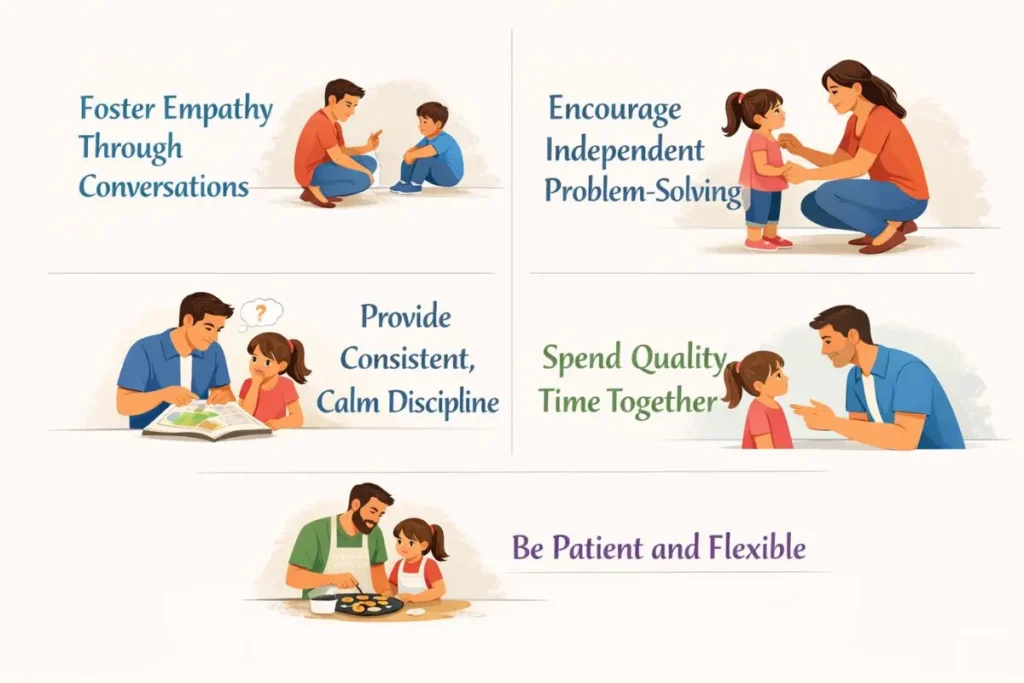
Foster Empathy Through Conversations
Teaching empathy is crucial to encouraging positive behavior. When children understand how others feel, they are more likely to act with kindness and consideration.
How to Implement:
- Talk about emotions regularly. Ask your child how they think someone else feels in a situation.
- Use role-playing or storytelling to discuss different emotional responses and outcomes.
Real-Life Example:
After a conflict with a sibling, Sarah, a mother, asks her daughter, “How do you think your brother feels when you take his toy without asking?” This helps her daughter develop empathy and understand the consequences of her actions.
Why It Works:
Empathy fosters emotional intelligence. Children who can put themselves in others’ shoes are more likely to act kindly and be considerate. By helping children understand how their actions affect others, you guide them towards positive, compassionate behavior.
Encourage Independent Problem-Solving
When children learn to solve problems on their own, they develop confidence and critical thinking skills that contribute to better behavior.
How to Implement:
- Encourage your child to think through problems rather than giving them immediate answers.
- Ask guiding questions like, “What do you think we should do next?” or “How can we solve this problem together?”
Real-Life Example:
When Emma can’t find her favorite toy, her dad asks, “Where did you last see it?” They work together to retrace her steps, helping Emma learn how to solve problems independently.
Why It Works:
Problem-solving builds confidence and encourages children to think critically about their actions. When children feel empowered to find solutions, they develop important life skills and are less likely to depend on others for answers. It fosters independence and helps them manage future challenges more effectively.
Provide Consistent, Calm Discipline
Discipline is not about punishment but teaching children the consequences of their actions. Being calm and consistent helps children understand what’s expected of them.
How to Implement:
- Use a calm voice when addressing misbehavior. Avoid yelling, as this can escalate the situation.
- Set clear consequences for breaking rules and follow through with them consistently.
Real-Life Example:
When 7-year-old Emma talks back at the dinner table, her father calmly explains, “We speak kindly at the table. If you speak that way again, we will need to take a break.” The consistent consequence helps Emma learn respectful communication.
Why It Works:
Calm, consistent discipline provides clear boundaries and teaches children about responsibility. When children understand the link between their actions and consequences, they are more likely to make better choices. This method helps reduce stress and anxiety for both parents and children.
Spend Quality Time Together
Spending quality time with your child builds a strong bond and helps reinforce positive behavior. It also gives you the opportunity to model good behavior in a relaxed setting.
How to Implement:
- Set aside one-on-one time with your child to engage in activities they love.
- Make this time distraction-free, putting away phones and other devices.
Real-Life Example:
Every Sunday afternoon, James spends time alone with his 5-year-old daughter, Lily, baking cookies. This not only strengthens their relationship but also gives James a chance to reinforce the values of cooperation and patience.
Why It Works:
Quality time deepens the parent-child bond and reinforces your child’s sense of security. When children feel valued and loved, they are more likely to behave positively because they want to please and connect with their parents.
Be Patient and Flexible
Parenting is an evolving journey. It’s important to stay patient and be willing to adapt your approach as your child grows and their needs change.
How to Implement:
- Adjust your expectations as your child develops. What works for a toddler may not work for a pre-teen, so stay flexible.
- Take care of yourself: Parenting can be tough, so don’t forget to take breaks and practice self-care.
Real-Life Example:
After noticing that his daughter responds better to verbal praise than rewards, Tom adapts his approach and praises her frequently for her good behavior, which encourages her to keep up the positive actions.
Why It Works:
Patience allows parents to maintain their calm in challenging situations. Flexibility helps parents adjust to their child’s evolving needs, ensuring that their approach remains effective. Self-care ensures that you can be your best self for your child, leading to a healthier, more positive parenting experience.