
Managing screen time for kids has become a significant concern for parents in today’s digital age. With children spending more time on devices, from educational apps to entertainment platforms, it’s important to find a healthy balance that supports their development while also ensuring they engage in physical, social, and creative activities. As a parent, you may find yourself wondering how to manage screen time for kids without guilt.
It’s normal to feel conflicted, but by setting clear boundaries, prioritizing quality over quantity, and using screen time as a tool for growth rather than a form of entertainment, you can create a balanced approach. In this guide, we’ll walk you through strategies on how to manage screen time for kids, focusing on effective time limits, positive reinforcement, and how to make technology work for your child’s benefit.
Understanding the Impact of Screen Time
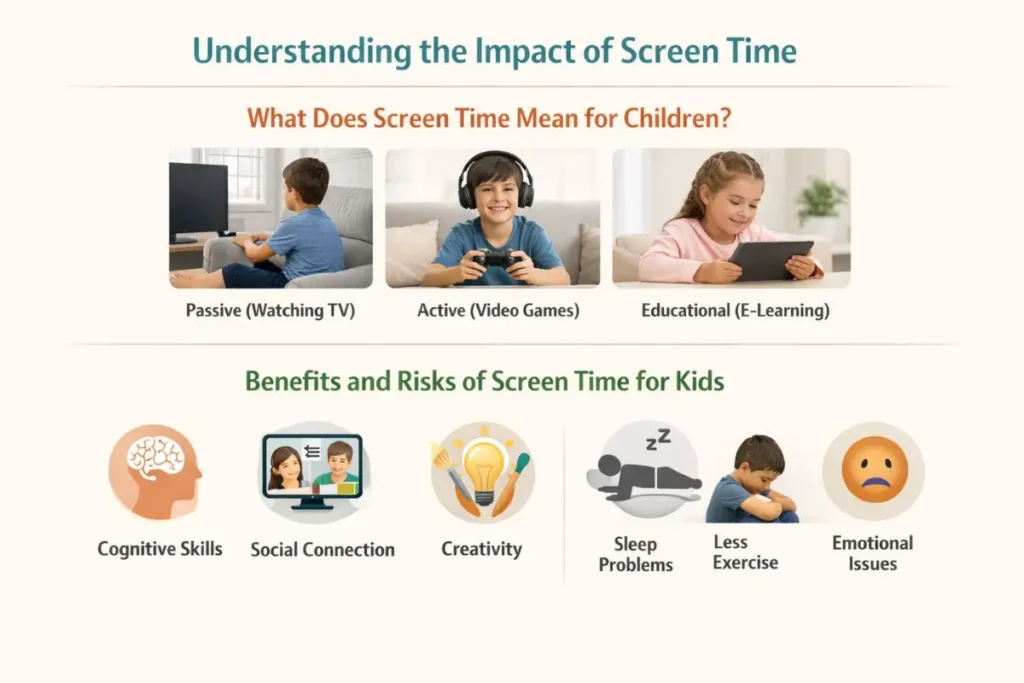
- What Does Screen Time Mean for Children?
Explain the different types of screen time: passive (watching TV), active (video games), and educational (e-learning). Discuss the varying effects of each on children’s development.- Keyword Variations: Children’s screen time definition, impact of screen exposure, digital engagement for kids.
- Benefits and Risks of Screen Time for Kids
Explore the positive aspects of screen time (improving cognitive skills, creativity, social connection via video calls) as well as the negative consequences (reduced physical activity, sleep disruption, emotional issues).- Keyword Variations: Pros of screen time, risks of excessive screen use, developmental impact of screens.
- In-Depth Info: For example, research shows educational apps enhance learning, but too much gaming may cause aggression.
Why Parents Feel Guilty
- The Pressure of External Expectations
Discuss societal norms and the overwhelming pressure to be a “perfect” parent by reducing screen time to the bare minimum. Highlight studies and parenting advice that add to the confusion.- Keyword Variations: Screen time pressure, guilt about kids’ screen time, parenting challenges with screen use.
- In-Depth Info: Many parents feel judged by peers and family members who impose rigid screen time rules without considering individual family dynamics.
- Concerns About Negative Consequences
Discuss how fear of screen time leading to physical issues (like eye strain or poor posture) or emotional damage (such as addiction or detachment) creates a sense of guilt.- Keyword Variations: Negative effects of screen exposure, emotional risks of screen use, child behavior and screen time.
- In-Depth Info: Reference studies on how excessive screen time can affect academic performance, social skills, and increase the risk of mental health issues like anxiety and depression.
How to Manage Without Guilt
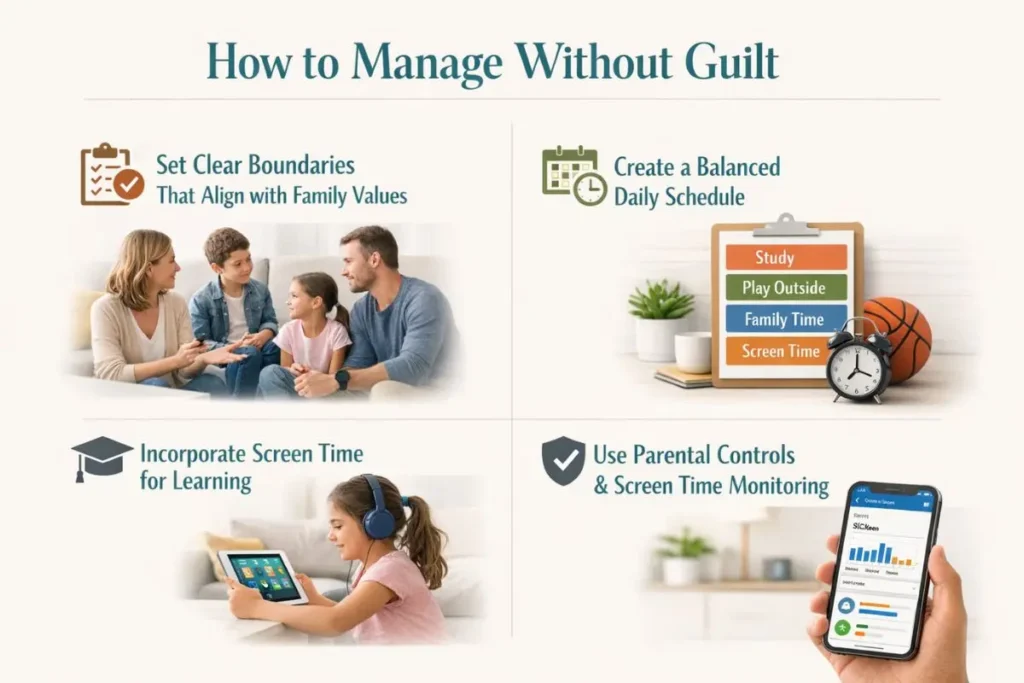
- Set Clear Boundaries That Align with Family Values
Encourage parents to set guidelines that align with their family’s lifestyle, rather than comparing themselves to others. Discuss setting realistic limits based on each child’s age, personality, and needs.- Keyword Variations: Personalized screen time rules, family screen time guidelines, age-appropriate screen time.
- In-Depth Info: For instance, toddlers might benefit from 20-minute educational videos, while teenagers might need an hour of recreational screen time alongside outdoor activities.
- Create a Balanced Daily Schedule
Suggest creating a schedule that includes time for schoolwork, physical activity, family meals, and screen time. Emphasize the need to vary screen activities to avoid monotony.- Keyword Variations: Screen time balance, kids’ daily routine, managing screen hours effectively.
- In-Depth Info: For example, parents could alternate between 30-minute educational apps and 30 minutes of physical play outside.
- Incorporate Screen Time for Learning
Promote using screens as a tool for learning—be it for educational YouTube channels, apps, or online courses. Suggest that parents choose high-quality educational content.- Keyword Variations: Learning through screen time, educational screen content, tech for learning.
- In-Depth Info: Highlight apps like Khan Academy for children or PBS Kids, which provide fun, interactive ways to engage children with educational material.
- Use Parental Controls and Screen Time Monitoring
Discuss the importance of setting up parental controls, using monitoring apps, and reviewing screen time regularly. Recommend tools like Screen Time, Family Link, or Qustodio.- Keyword Variations: Screen time apps, monitoring tools for kids, parental control settings.
- In-Depth Info: Emphasize that these tools allow for flexible adjustments, ensuring children get the right amount of screen time without feeling too restricted.
Balancing With Other Activities
- Encourage Outdoor Play and Physical Activity
Encourage parents to ensure their kids balance screen time with outdoor activities. Discuss the importance of physical activity in a child’s growth and development.- Keyword Variations: Outdoor screen time alternatives, physical activity for kids, balancing play and screens.
- In-Depth Info: Mention how playing outside not only counteracts sedentary screen habits but also enhances mood, improves attention, and builds motor skills.
- Foster Family Time Without Screens
Emphasize the importance of family bonding without technology. Suggest activities like board games, storytelling, or crafting as meaningful alternatives to screen time.- Keyword Variations: Family bonding without screens, non-screen time activities, quality family time.
- In-Depth Info: Mention that spending time together can help strengthen family relationships and help kids feel more secure emotionally.
Overcoming Guilt
- Understanding the Reality of Modern Parenting
Discuss the importance of self-compassion in parenting. Reassure parents that there’s no “one-size-fits-all” when it comes to managing screen time.- Keyword Variations: Overcoming parenting guilt, screen time balance, parenting confidence.
- In-Depth Info: Explain that it’s okay for children to have a little downtime with screens, especially when managed properly. Highlight the flexibility of setting rules based on each family’s situation.
- Focus on Quality Over Quantity
Encourage parents to focus on the quality of screen time rather than worrying about the time spent on screens. Highlight that engaging, educational content is more beneficial than simply limiting screen time.- Keyword Variations: Quality screen time, meaningful digital experiences, positive screen time habits.
- In-Depth Info: Discuss how one hour of immersive learning via an app is far more enriching than mindlessly scrolling or watching TV for two hours.
How to Talk to Your Kids About Screen Time Limits
- Have Open Conversations About Screen Time Expectations
Emphasize the importance of transparency when discussing screen time limits with children. Provide age-appropriate explanations about why screen time needs to be balanced with other activities. Open communication helps children understand the reasoning behind the rules, reducing frustration or resistance. - Involve Kids in Setting the Rules
Involve children in the process of setting screen time rules. This collaborative approach not only empowers them but also makes them more likely to stick to the rules. Ask for their input on what feels fair, and allow them to choose some of the activities they’ll do instead of screen time.