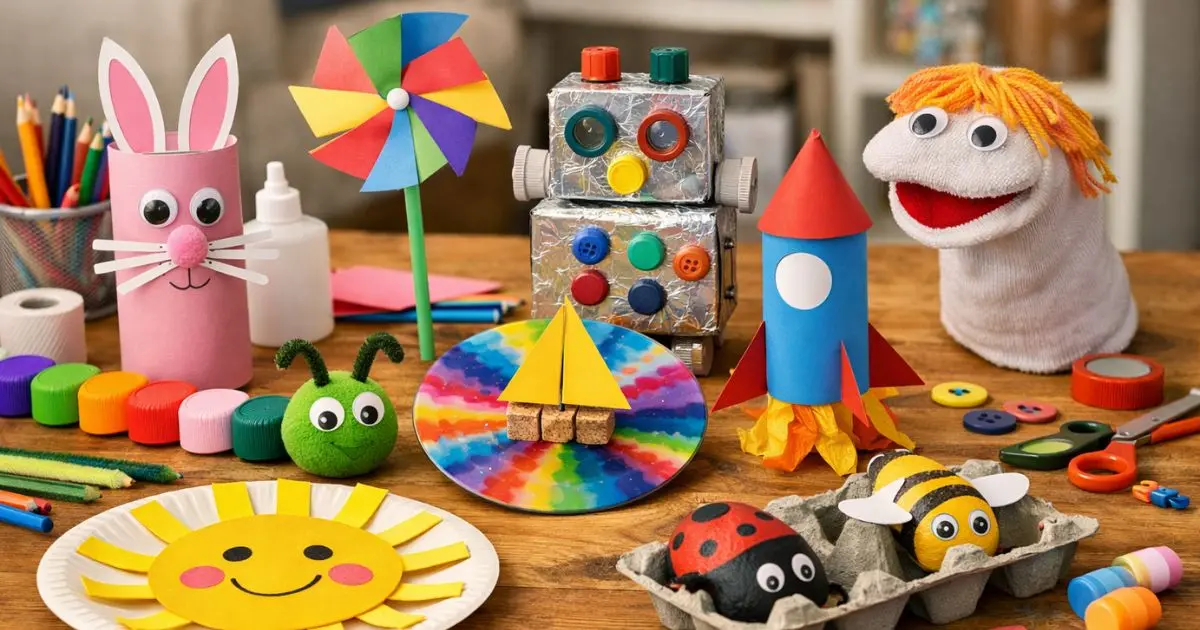
DIY crafts for kids are an excellent option! Not only are they fun and educational, but they also provide an opportunity for children to develop creativity and fine motor skills. By using simple household items, you can create an endless variety of exciting projects that spark imagination. From turning old newspapers into unique sculptures to using leftover cardboard for fun DIY crafts, these activities are perfect for parents looking to keep their children entertained.
With just a few materials like paper, glue, and string, you can create countless easy crafts for kids, ensuring hours of entertainment and learning. These DIY crafts are great for any occasion and provide a wonderful way to bond with your little ones.
Why DIY Crafts Are Great for Kids
DIY crafts offer much more than just a fun time. Here’s why DIY crafts should be part of your kid’s routine:
- Boosts Creativity: Crafting allows kids to explore their imagination. Whether it’s making art, toys, or decorations, children are given the freedom to express themselves creatively.
- Develops Fine Motor Skills: Cutting, gluing, and drawing help improve hand-eye coordination and fine motor skills, which are vital for writing and other daily tasks.
- Improves Problem-Solving: Many craft projects come with challenges that require problem-solving, helping children develop critical thinking and decision-making skills.
- Educational Opportunities: Through crafts, kids can learn about shapes, colors, textures, and even nature. It’s a fun way to combine learning with play.
- Promotes Bonding: Crafting provides a great opportunity for parents to bond with their kids. You can work together, share ideas, and create lasting memories.
Materials You Probably Already Have at Home
No need for expensive supplies! You can create DIY crafts for kids using household items that are easily accessible. Here are some materials you likely already have in your home:
- Recyclables: Old magazines, toilet paper rolls, plastic bottles, and cardboard. These items can be transformed into wonderful creations.
- Basic Crafting Tools: Scissors, glue, tape, markers, crayons, and paint. These simple tools are often enough for many craft ideas.
- Natural Materials: Leaves, flowers, pebbles, and twigs. These can add a natural touch to your crafts and provide an opportunity to teach kids about nature.
- Everyday Household Items: Buttons, bottle caps, old socks, fabric scraps, and paper bags. These items are perfect for creating fun and functional crafts.
Fun and Easy DIY Crafts
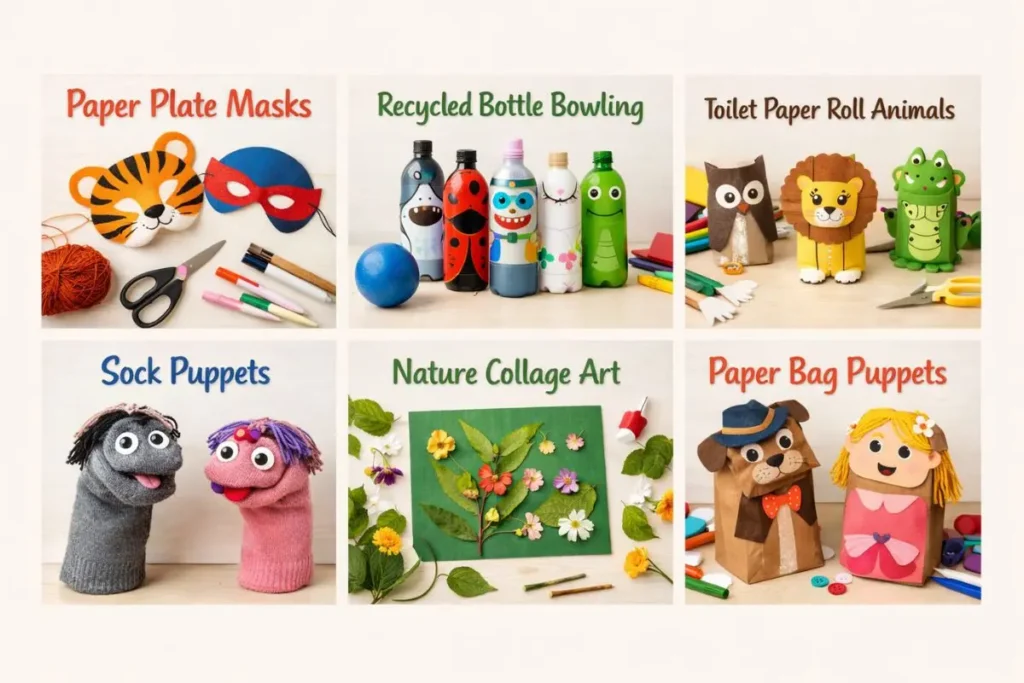
Let’s get into the fun stuff! Here are some simple and enjoyable craft ideas that will keep kids entertained for hours. Each project is designed to be easy and use everyday materials you already have at home.
Paper Plate Masks
Materials: Paper plates, markers, scissors, yarn, glue.
How to Make It:
- Start with a paper plate. Cut out holes for the eyes.
- Use markers to decorate the mask – let your child create animals, superheroes, or even imaginary characters.
- Attach a piece of yarn to each side of the plate to make a headband.
- Once done, they can wear the mask and pretend to be their favorite character!
Tip: Encourage creativity by allowing kids to add embellishments like feathers or glitter for a personalized touch.
Recycled Bottle Bowling
Materials: Empty plastic bottles, a ball, markers, and paint.
How to Make It:
- Clean the plastic bottles and set them up like bowling pins.
- Paint each bottle with fun colors and characters.
- Use a small ball as the bowling ball and roll it to knock down the pins.
Fun Twist: You can turn this game into a competition by timing how fast each child can knock down the pins!
Toilet Paper Roll Animals
Materials: Toilet paper rolls, construction paper, glue, scissors.
How to Make It:
- Use toilet paper rolls to create the body of animals like owls, lions, or even dinosaurs.
- Cut out ears, eyes, and other features from construction paper and glue them onto the roll.
- Let the children’s imaginations take over – they can make any animal they want!
Variation: Mix different colors and textures of paper for even more creative possibilities.
Sock Puppets
Materials: Old socks, buttons, yarn, fabric scraps, glue.
How to Make It:
- Find an old sock and turn it into a puppet by gluing buttons for eyes.
- Use yarn for the puppet’s hair and fabric for clothing or accessories.
- Let your kids perform puppet shows for the family!
Learning Opportunity: This is a great way for children to practice storytelling and communication skills.
Nature Collage Art
Materials: Leaves, flowers, sticks, glue, construction paper.
How to Make It:
- Go outside and gather natural materials such as leaves, flowers, and small sticks.
- Arrange them on a piece of construction paper to make a collage or a picture.
- Glue the materials to the paper, creating beautiful designs and learning about nature at the same time.
Educational Benefit: This is a perfect activity for teaching kids about different plants, flowers, and how nature works.
Paper Bag Puppets
Materials: Brown paper bags, markers, buttons, glue, fabric.
How to Make It:
- Use a brown paper bag as the base of the puppet.
- Draw a face on the bottom flap of the bag and use fabric for clothes and accessories.
- Let your child’s creativity flow by adding any fun features like hats, noses, or ears.
Creative Twist: Kids can make their puppets unique with wild and wacky accessories!
Sensory Play & Learning Craft Ideas
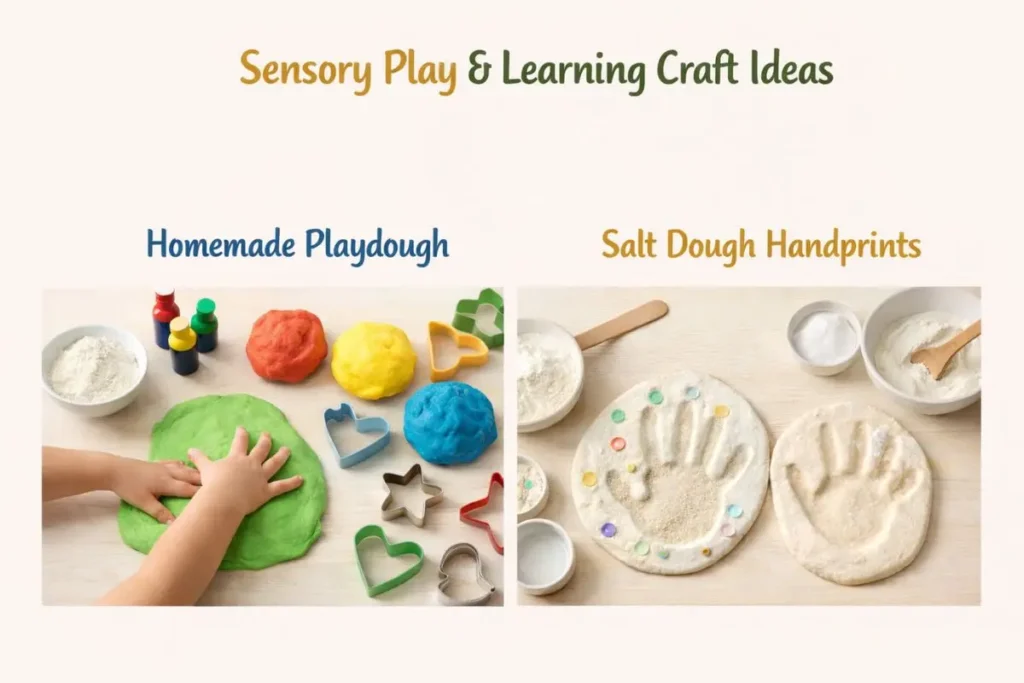
Crafting isn’t just about creativity; it’s also an excellent way to help children develop their sensory skills and learn new things. Here are some fun crafts that focus on sensory play.
Homemade Playdough
Materials: Flour, salt, water, vegetable oil, food coloring.
How to Make It:
- Combine flour, salt, and water to form dough.
- Add a few drops of food coloring to make the dough colorful.
- Let your child roll, squish, and mold the dough into different shapes and figures.
Learning Twist: This craft is a great way to teach kids about colors, shapes, and textures, all while keeping them engaged.
Salt Dough Handprints
Materials: Flour, salt, water.
How to Make It:
- Mix the flour, salt, and water to make a dough.
- Roll out the dough and press your child’s handprint into it.
- Once baked, the handprint becomes a lasting keepsake.
Sensory Experience: Kids will love feeling the dough as they press their handprints into it.
Crafting with Recycled Materials
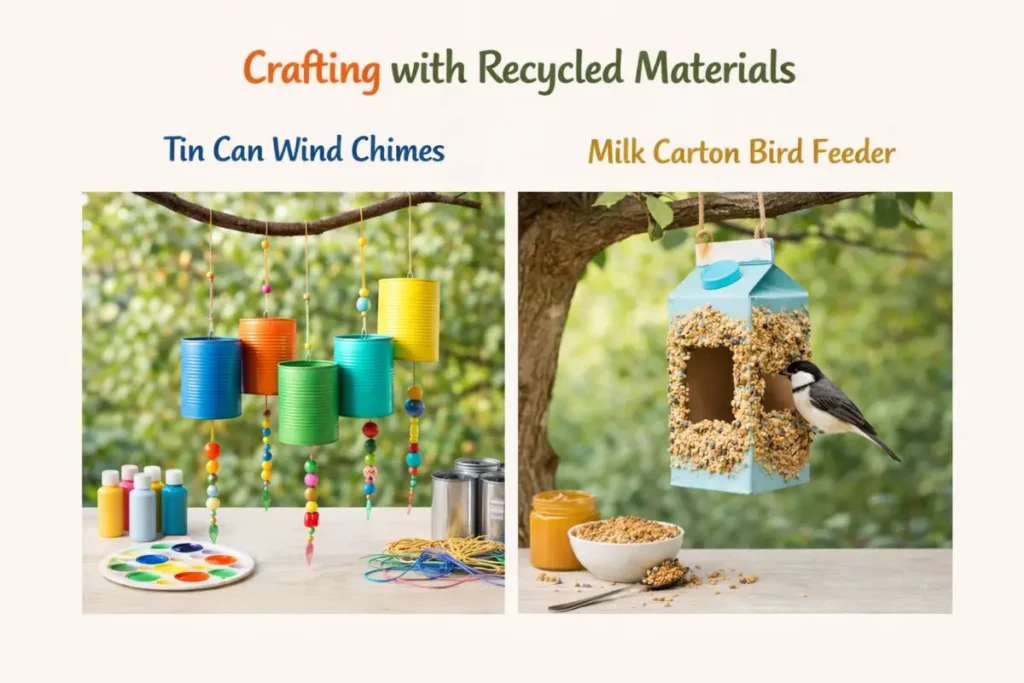
Using recycled materials is not only environmentally friendly but also a great way to reduce waste while crafting. These ideas turn everyday items into creative works of art.
Tin Can Wind Chimes
Materials: Empty tin cans, string, beads, paint.
How to Make It:
- Clean the tin cans and paint them with fun colors.
- Attach string through the holes in the cans, adding beads for decoration.
- Hang them outside and listen to the soothing sounds as they chime in the wind.
Fun Tip: Experiment with different materials to create different sounds and textures in your wind chimes.
Milk Carton Bird Feeder
Materials: Milk carton, string, peanut butter, birdseed.
How to Make It:
- Cut small holes in the milk carton and thread string through for hanging.
- Spread peanut butter on the carton and roll it in birdseed.
- Hang the bird feeder outside and watch as the birds enjoy their snack!
Learning Opportunity: Teach kids about the importance of taking care of wildlife by feeding the birds.
Crafts That Encourage Learning
Crafting can also be educational. These easy DIY projects will help children develop important academic skills while having fun.
Materials: Smooth stones, paint, paintbrushes.
How to Make It:
- Collect smooth rocks and paint each one with a letter of the alphabet.
- Use the painted rocks to help kids practice their ABCs.
Educational Benefit: This is a fun way for children to learn letter recognition and practice spelling.
Number Counting with Bottle Caps
Materials: Bottle caps, paint, and markers.
How to Make It:
- Paint the bottle caps with numbers.
- Use the caps to help kids practice counting and matching numbers.
Fun Twist: Turn this into a game where kids match the numbers to a corresponding number of objects!
Safety Tips
While crafting is fun, safety should always come first. Here are some tips to keep in mind:
- Supervise at all times: Always watch over younger children when using scissors, glue, or paint.
- Use child-safe materials: Choose non-toxic paint, glue, and other craft supplies to ensure safety.
- Keep small parts away from toddlers: For younger children, avoid using small items like buttons that could be a choking hazard.
- Encourage clean-up: Help kids clean up after crafting to avoid accidents with sharp tools or paint stains.
How to Make Crafting Time More Fun
Here are some ideas to make crafting more enjoyable:
- Themed Craft Days: Pick a theme (like animals or outer space) and create crafts based on that theme.
- Play Music: Set the mood with fun, upbeat music to get your child in the crafting spirit.
- Turn It into a Challenge: Have a family crafting competition with different categories like “Most Creative” or “Funniest Craft.”
Organizing Crafting Supplies for Easy Access
Keep your crafting space organized with these tips:
- Use clear containers: Store craft supplies in clear bins so you can easily see what you have.
- Label everything: Label your bins for easy access (e.g., “Markers,” “Paper,” “Stickers”).
- Create a dedicated space: Set up a crafting station or table where kids can spread out and work without worrying about the mess.
Best Age-Appropriate
Not all crafts are suitable for every age group. Here’s a quick guide to age-appropriate crafting:
- Toddlers (1-3 years): Simple crafts like finger painting, stamping, and playdough.
- Preschoolers (3-5 years): Paper plate masks, sock puppets, and nature collages.
- School-age kids (6+ years): More complex crafts like salt dough handprints, bird feeders, and wind chimes.