
Toddlers and tantrums are common challenges every parent faces. These emotional outbursts are part of your child’s development, but managing tantrums effectively can make a huge difference in creating a calm and supportive environment. Calm responses to tantrums not only help soothe your child but also teach them how to handle their emotions in a healthier way. In this article, we explore 12 calming strategies that work for toddlers dealing with frustration, fear, or exhaustion. By learning to respond with patience, empathy, and consistency, you can help your child navigate tantrums in a way that fosters emotional growth and strengthens your bond.
Understanding Toddler Tantrums
Tantrums are a natural part of a toddler’s emotional development, but they can be a source of stress for parents. At this stage, your toddler is in the process of mastering emotional self-regulation but lacks the verbal skills to express complex emotions. Tantrums are their way of communicating frustration, fear, or even excitement, but without the ability to articulate what they’re feeling.
Why Do Toddlers Have Tantrums?
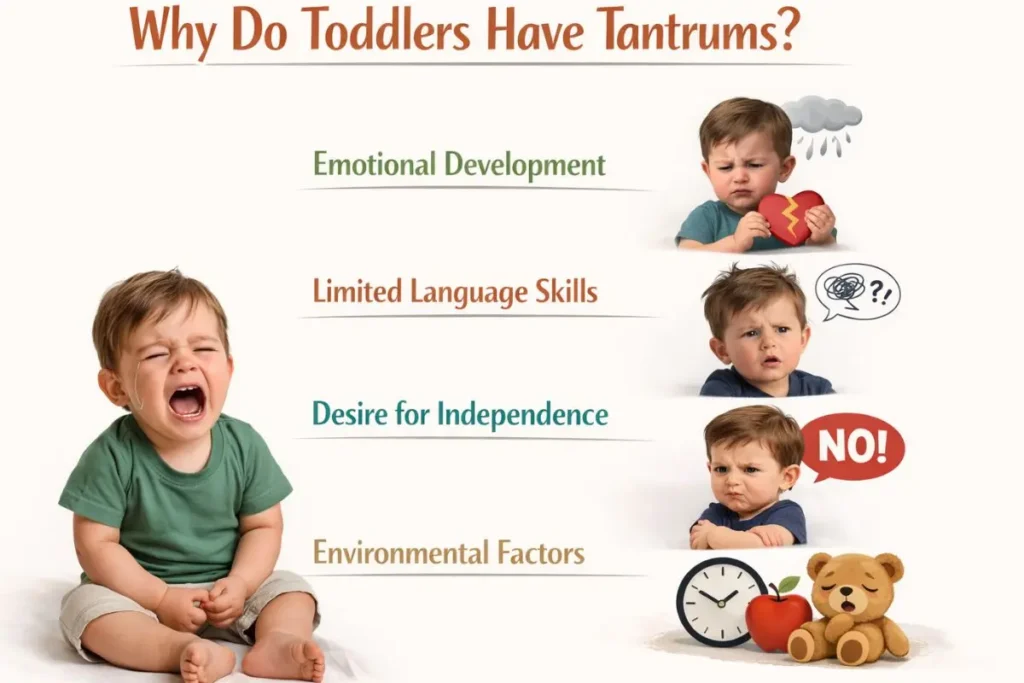
Understanding the causes of toddler tantrums can help you address them more effectively:
- Emotional Development: At this stage, toddlers are still learning how to manage their emotions. A tantrum is often their response to feelings of frustration or overstimulation.
- Limited Language Skills: Your toddler may be unable to express what they need or want, which results in overwhelming frustration.
- Desire for Independence: As toddlers start to gain more independence, they often feel empowered to make their own choices. When they are told “no,” their frustration can boil over into a tantrum.
- Environmental Factors: Changes in routine, hunger, tiredness, or even overstimulation can be triggers.
Tantrums are part of a child’s development and should be seen as an opportunity for both you and your child to practice emotional regulation.
Calm Responses That Work
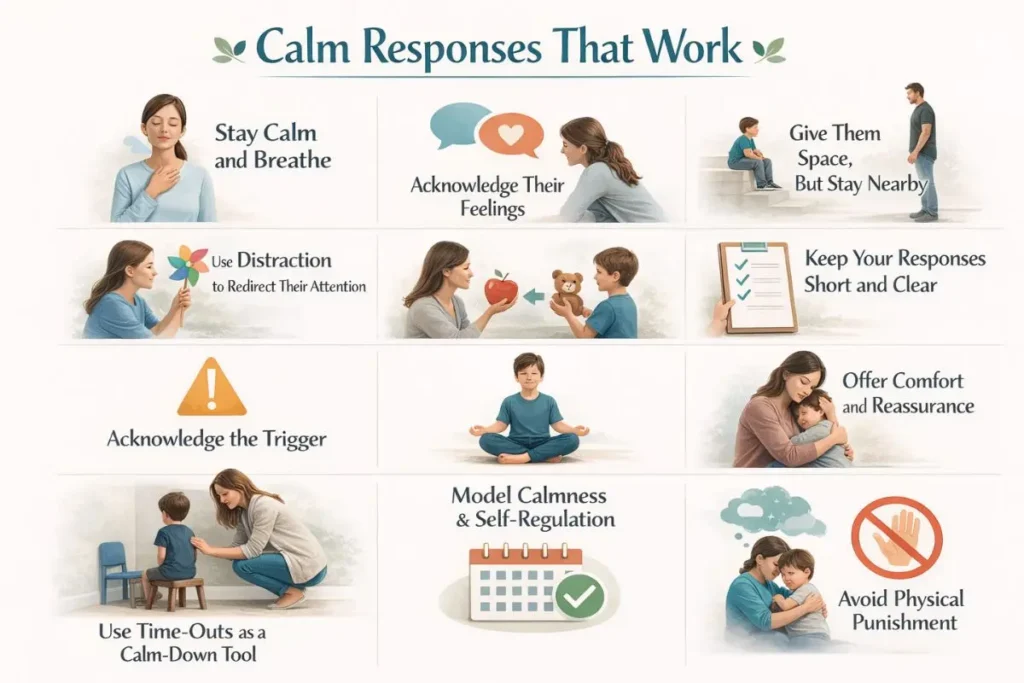
Dealing with tantrums requires a blend of patience, understanding, and consistency. Here are 12 expert strategies to manage your toddler’s tantrums and guide them toward healthier emotional expression.
Stay Calm and Breathe
Why It Works:
When toddlers see you staying calm during their tantrums, it sends the message that emotional regulation is possible. Children are emotional sponges—they mirror the emotions of the people around them, so by staying calm, you are demonstrating how to handle emotions.
How to Do It:
- Practice deep breathing: Inhale deeply for four seconds, hold for four, and exhale for four.
- If possible, take a step back to compose yourself, both physically and mentally, before responding.
Real-Life Example:
Sarah was in the middle of a tantrum when her son, Leo, started to cry. Instead of raising her voice, Sarah took a moment, took a few deep breaths, and said calmly, “I understand you’re upset. Let’s figure this out together.”
Acknowledge Their Feelings
Why It Works:
Toddlers need to feel understood. Validating their emotions can help defuse the situation by allowing them to feel heard.
How to Do It:
- Use phrases like:
- “I see you’re upset.”
- “You’re angry because you can’t have that toy right now.”
- Stay empathetic, recognizing that their feelings are real, even if they seem trivial to you.
Real-Life Example:
When Jamie was upset about not getting his snack right away, his mom, Laura, said, “I know you’re hungry, and it’s hard to wait for your snack. We’ll get it in just a minute.”
Give Them Space, But Stay Nearby
Why It Works:
Sometimes, toddlers need time to process their emotions. Giving them space to calm down while still staying in sight can help them feel more secure.
How to Do It:
- Let your child retreat to a quiet area, like their room or a corner, while keeping an eye on them.
- Reassure them that you’re there for them, but they have the space to express their feelings.
Real-Life Example:
Sophia’s son, Jack, needed time to calm down after a meltdown at the store. She sat nearby, allowing him to collect himself while reassuring him with a gentle, “I’m right here when you’re ready.”
Use Distraction to Redirect Their Attention
Why It Works:
Toddler tantrums often result from an overwhelming desire for something they can’t have. Distraction is a quick and effective way to shift their focus and prevent escalation.
How to Do It:
- Offer a toy, a game, or a new activity that will engage their attention.
- Change the topic or environment: “Let’s look outside the window and see the birds!”
Real-Life Example:
When Alex’s daughter, Emma, started crying because they were leaving the park, Alex distracted her by pointing to a passing truck, saying, “Look at that big truck! Can you see it?”
Offer Choices
Why It Works:
Giving toddlers control over some aspects of their environment can reduce feelings of helplessness and frustration, which are common tantrum triggers.
How to Do It:
- Offer two options:
- “Do you want to play with your truck or your blocks?”
- “Would you like to put on your red shoes or your blue ones?”
- Ensure both options are acceptable to you.
Real-Life Example:
Maya’s son, Ethan, didn’t want to leave the park. Instead of just saying, “It’s time to go,” Maya said, “You can choose. Do you want to go to the car now, or take one more swing?”
Keep Your Responses Short and Clear
Why It Works:
Toddlers have limited attention spans, especially when they’re upset. Keeping your response simple helps them understand what’s expected of them.
How to Do It:
- Instead of lengthy explanations, say things like:
- “We don’t throw toys.”
- “Hitting is not okay.”
- Be firm yet gentle in your tone, and avoid adding extra words that could confuse them.
Real-Life Example:
When Lily’s son, Max, hit his sister, Lily simply said, “We don’t hit,” and guided him to a quiet space where they could talk.
Acknowledge the Trigger
Why It Works:
Acknowledging what caused the tantrum helps the child process the situation. It also teaches them that their feelings have a valid reason.
How to Do It:
- “I know you’re upset because you wanted more juice, but we need to finish our dinner first.”
- Keep the tone empathetic but firm.
Real-Life Example:
Tom’s daughter, Zoe, was upset when she couldn’t have dessert before dinner. Tom said, “I know you want dessert now, but first, we eat dinner.”
Model Calmness and Self-Regulation
Why It Works:
Children learn by watching adults. By demonstrating how to stay calm during stressful situations, you teach them to regulate their own emotions.
How to Do It:
- Use deep breathing or self-talk to calm yourself down.
- Say, “I feel frustrated too, but I know I can calm down by breathing slowly.”
Real-Life Example:
Emily was getting frustrated while waiting at the doctor’s office with her son, Luke. She took a deep breath and said, “I feel frustrated, but I know I can calm down.” Luke mimicked her breathing and calmed himself down.
Offer Comfort and Reassurance
Why It Works:
Sometimes, toddlers just need a little extra comfort and reassurance to feel safe and secure.
How to Do It:
- Hold your child or give them a gentle hug.
- Reassure them with words like, “I’m here for you. Everything will be okay.”
Real-Life Example:
Megan’s daughter, Sophie, was upset after losing her favorite stuffed animal. Megan hugged her and said, “I know you miss your bear, but we’ll find it together. I’m here with you.”
Use Time-Outs as a Calm-Down Tool
Why It Works:
Time-outs can help a toddler regain composure when their emotions are overwhelming. It’s important that time-outs are used not as a punishment but as a way for the child to calm down.
How to Do It:
- Place your child in a quiet space for a brief period (1-2 minutes per year of age).
- Use this time to help them calm down and reflect, not as a punishment.
Real-Life Example:
When Zachary’s tantrum became uncontrollable, his mother, Rachel, calmly said, “Let’s take a break in your room and rest for a minute.”
Be Consistent with Your Responses
Why It Works:
Consistency builds trust and helps your toddler understand what’s expected of them. When parents are inconsistent, it can confuse children and escalate tantrums.
How to Do It:
- Set clear rules and stick to them consistently.
- Make sure all caregivers are on the same page when it comes to handling tantrums.
Real-Life Example:
Sandy always responds the same way when her daughter, Grace, has a tantrum. She knows that Grace will eventually calm down when given consistent responses.
Avoid Physical Punishment
Why It Works:
Physical punishment, such as spanking, can make the tantrum worse and lead to fear, aggression, and confusion.
How to Do It:
- Stick to positive discipline methods.
- Use calm redirection and praise appropriate behavior to reinforce positive actions.
Real-Life Example:
Instead of using physical punishment, David and his wife, Anna, used positive reinforcement by praising their daughter, Ava, when she calmly explained why she was upset.