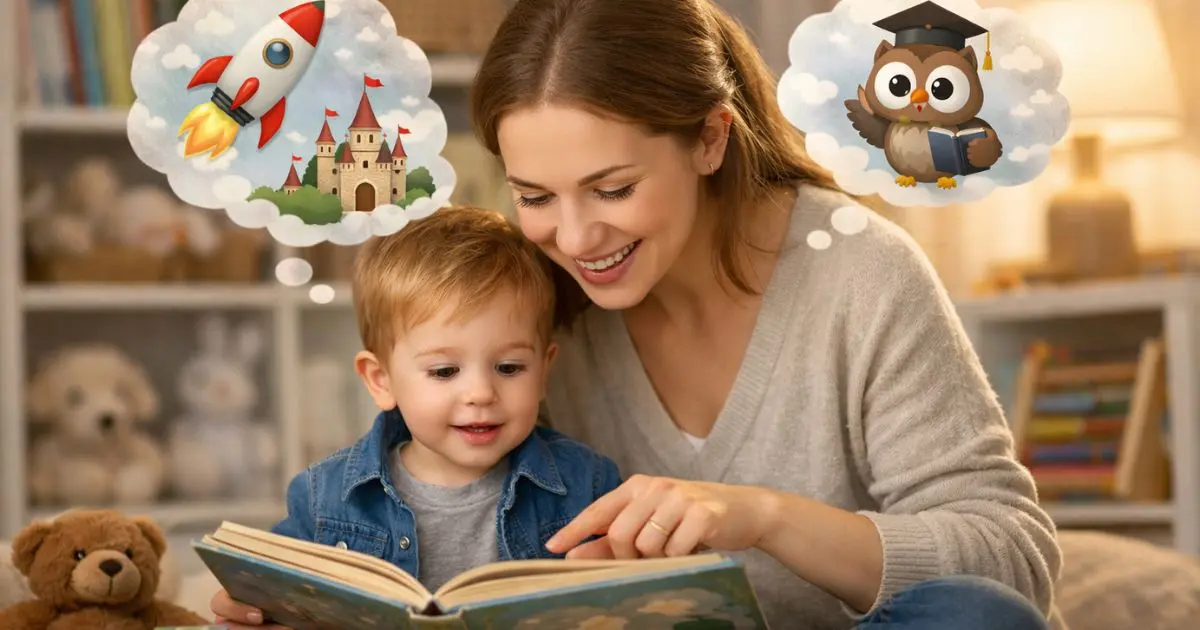
Storytelling is a powerful tool for boosting toddler cognitive skills. Through engaging stories, toddlers improve their language development, problem-solving abilities, and creativity. It encourages imagination and enhances critical thinking skills. By listening to stories, toddlers can also expand their vocabulary and grasp new concepts. Moreover, storytelling fosters emotional development, helping toddlers understand emotions and relationships.
The interactive nature of storytelling supports social skills, as children engage with the story and ask questions. Incorporating storytelling into daily routines helps in strengthening memory, attention span, and comprehension. This simple activity plays a vital role in a toddler’s early cognitive growth.
Power of Storytelling in Toddler Development
What is Cognitive Development in Toddlers?
Cognitive development refers to the way toddlers understand the world around them, including how they think, learn, and remember information. At this age, toddlers are rapidly developing important abilities like problem-solving, recognizing shapes and numbers, and improving their language skills. These early years are critical for setting the foundation for future learning.
Why Storytelling is Vital for Cognitive Skills
Storytelling is more than just an entertaining activity. It helps develop cognitive skills by:
- Building vocabulary: New words and phrases are introduced in context, aiding language development.
- Improving memory: Toddlers recall plot details and characters, reinforcing memory skills.
- Encouraging critical thinking: Stories with problems and solutions help toddlers learn to think logically and make decisions.
Research shows that children who are frequently read to have better cognitive and language development compared to those who aren’t exposed to stories regularly.
How Storytelling Boosts Toddler Cognitive Skills
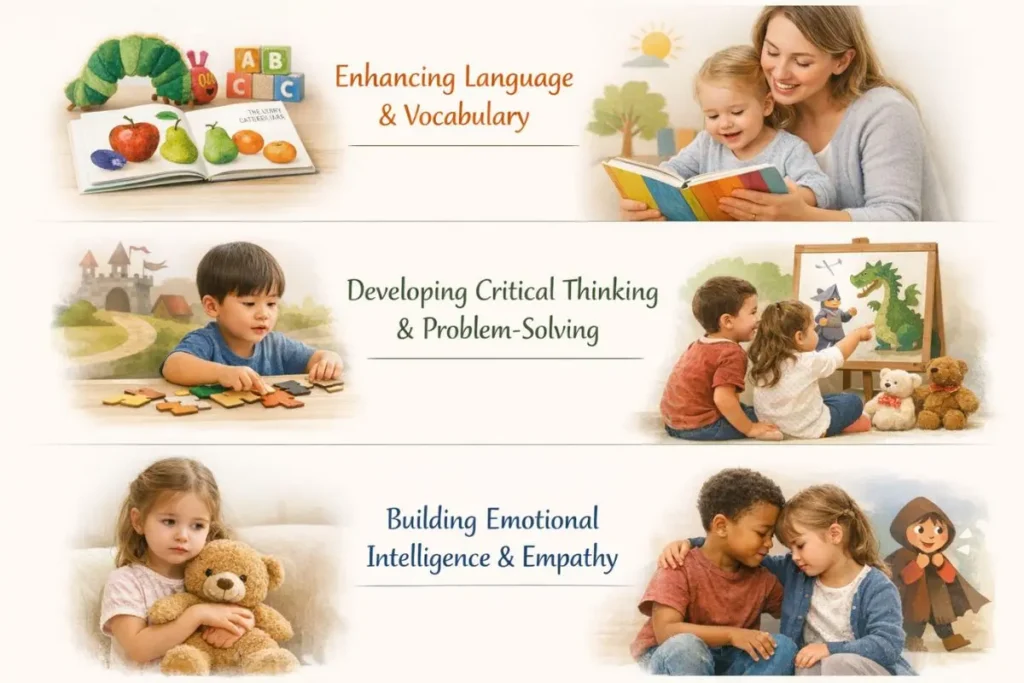
Enhancing Language and Vocabulary
One of the most significant benefits of storytelling is the expansion of vocabulary. As toddlers listen to stories, they hear new words, phrases, and expressions that they might not encounter in everyday conversation. This helps them:
- Learn new words: Hearing words in context makes them easier to understand and remember.
- Improve pronunciation: Repetition of words in stories helps toddlers pronounce words correctly.
- Understand sentence structure: Listening to sentences helps them grasp grammar and how words fit together.
For example, while reading a story like The Very Hungry Caterpillar, toddlers will learn the names of various fruits, days of the week, and even concepts like growth and change. These experiences provide them with the language tools they need for their daily communication.
Developing Critical Thinking and Problem-Solving
Storytelling also enhances a toddler’s ability to think critically and solve problems. Many stories involve characters facing challenges, which helps toddlers understand cause and effect. Through these stories, toddlers:
- Understand consequences: Seeing what happens when characters make certain choices helps toddlers grasp the concept of cause and effect.
- Develop problem-solving skills: Toddlers are encouraged to think about how the characters might resolve issues.
- Learn empathy: Stories help toddlers understand different emotions, helping them relate to others.
For example, in a story where a character faces an obstacle, toddlers begin to think about possible solutions. This helps develop their ability to solve problems in real life.
Building Emotional Intelligence and Empathy
Through storytelling, toddlers also learn about emotions. When a story involves characters experiencing happiness, sadness, fear, or excitement, toddlers begin to identify and understand their own emotions. This emotional awareness is key for empathy—the ability to understand and share the feelings of others.
Storytelling helps toddlers:
- Recognize emotions: By identifying emotions in characters, toddlers can relate these feelings to their own lives.
- Understand how to handle emotions: Stories often show how characters manage their feelings, teaching toddlers how to do the same.
For example, a story about a character feeling afraid but overcoming fear can help toddlers understand how to cope with their own emotions in similar situations.
Storytelling Techniques to Boost Toddler Cognitive Skills
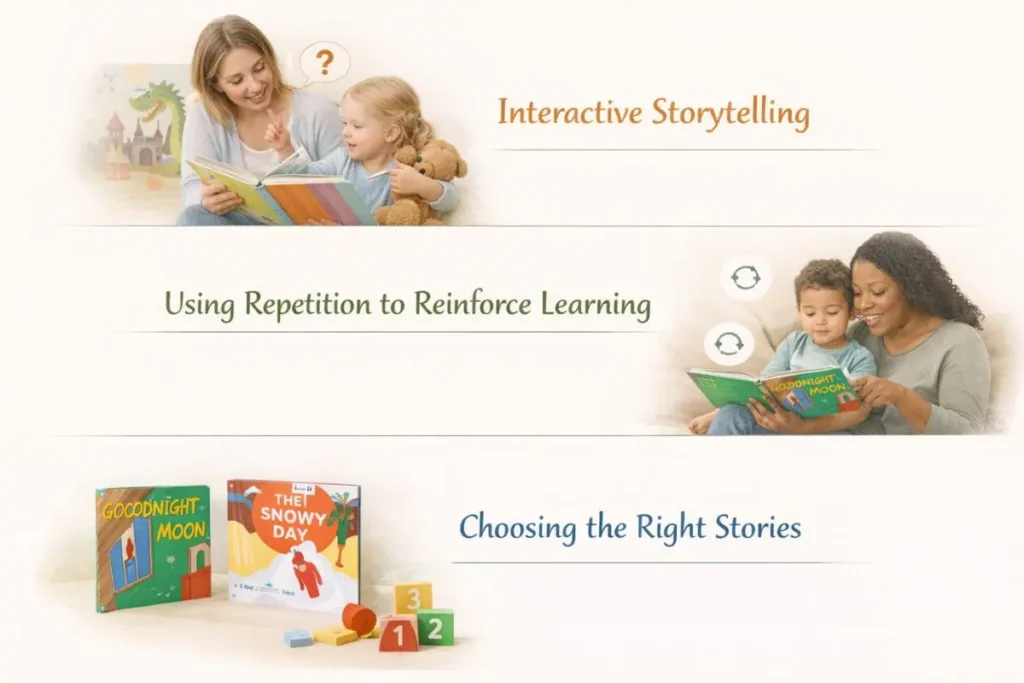
Interactive Storytelling
Interactive storytelling is one of the most effective ways to boost toddler cognitive skills. Instead of just reading the story to them, engage your toddler by:
- Asking questions: Encourage your toddler to think about what’s happening in the story. For example, ask, “What do you think will happen next?” or “How do you think the character feels?”
- Encouraging participation: Have your toddler act out parts of the story or make up their own endings.
Interactive storytelling helps toddlers focus, understand the story better, and practice their language skills in a fun, engaging way. It also encourages active learning, which is crucial for cognitive development.
Using Repetition to Reinforce Learning
Repetition is a simple yet powerful storytelling tool. By repeating the same stories, words, and phrases, toddlers are able to retain and understand new information. Here’s how repetition helps with cognitive development:
- Reinforces memory: Toddlers remember familiar parts of a story, improving their memory skills.
- Boosts confidence: Repetition helps toddlers feel more confident in understanding and participating in the story.
For example, after hearing a story several times, a toddler will start to recall parts of the story on their own, improving both memory and verbal skills.
Choosing the Right Stories
Not all stories are equally beneficial for cognitive development. Some are more suited to encouraging critical thinking and creativity. Here’s how to choose stories that will help:
- Select stories with simple plots and clear messages: This helps toddlers focus on the core lesson or theme.
- Look for stories with characters who solve problems: This encourages critical thinking and decision-making.
- Pick books that introduce new ideas: Stories that introduce concepts like numbers, letters, or shapes can help toddlers learn basic concepts.
Books like Goodnight Moon and The Snowy Day are examples of stories that engage toddlers while introducing essential concepts such as routine, seasons, and emotions.
Tips for Parents
Create a Storytelling Routine
Incorporating storytelling into your toddler’s daily routine can have lasting cognitive benefits. Set aside a special time each day for reading, whether it’s before bed or during the afternoon. Regular story sessions help toddlers:
- Look forward to learning: A consistent routine makes reading a habit, and toddlers begin to enjoy it.
- Strengthen learning: Regular reading reinforces the skills they’re learning through storytelling.
Encourage Toddlers to Retell Stories
Let your toddler retell stories in their own words. This process helps improve their understanding and retention of the story’s details. It also allows them to:
- Develop narrative skills: Retelling stories helps toddlers organize their thoughts and use language to express ideas.
- Boost creativity: Encourage your toddler to change the ending or add new elements to the story, which sparks imagination.
Incorporate Visual and Physical Activities
Using visuals and physical activities in storytelling makes it even more engaging. This multi-sensory experience helps toddlers learn in different ways. Here are some ideas:
- Use props: Bring characters to life with toys, puppets, or pictures.
- Act out scenes: Encourage your toddler to play the roles of different characters, which makes the experience interactive and physical.
This approach makes storytelling more exciting and helps toddlers remember better by engaging multiple senses.
Impact on Social and Emotional Development
Understanding Social Interactions through Stories
Through stories, toddlers learn about social interactions. They observe how characters communicate, share, and cooperate. Stories introduce social scenarios that help toddlers understand relationships. For example:
- A story where characters share toys teaches toddlers about generosity and sharing.
- A tale about friendship helps toddlers understand how to form bonds with others.
Building Self-Regulation and Emotional Control
Storytelling also helps toddlers understand how to manage their emotions. Characters often face challenges that require patience and emotional control. Seeing these struggles teaches toddlers how to regulate their own emotions in similar situations.