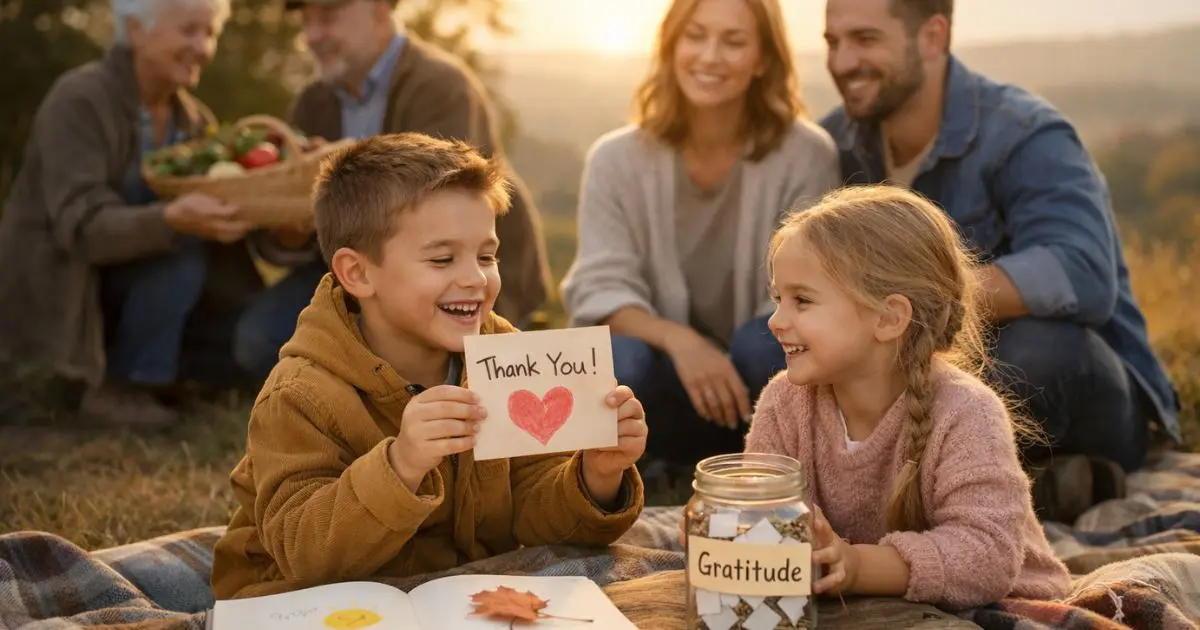
Raising kids with gratitude is a powerful tool in shaping their emotional well-being and social behavior. Fostering appreciation in children not only enhances their ability to recognize the positive aspects of their lives but also nurtures empathy, kindness, and resilience. As parents, cultivating gratitude in kids helps them grow into compassionate individuals who value relationships and contribute positively to their communities. By teaching children how to express thankfulness, whether for small acts of kindness or life’s larger blessings, we set them on a path of emotional maturity and strong character.
Fostering appreciation is more than just saying “thank you”—it’s about modeling grateful behaviors, making gratitude a part of everyday life, and creating a family culture that prioritizes thankfulness. This article will explore actionable strategies to incorporate gratitude into your parenting style, focusing on how both parents and caregivers can create a nurturing environment where appreciation flourishes and becomes a core value in children’s lives.
Why Raising Kids with Gratitude is Essential
Gratitude is much more than saying “thank you”—it’s a mindset that affects everything from emotional health to social relationships. Research has shown that children who regularly practice gratitude enjoy improved mental health, stronger connections with others, and higher levels of happiness.
The Impact of Gratitude on Children’s Emotional Development
One of the most important benefits of gratitude is its impact on emotional development. Grateful children tend to have a more positive outlook on life. They can better manage negative emotions like anger and disappointment, making it easier to cope with life’s ups and downs.
- Increased happiness: Children who practice gratitude are often more satisfied with their lives, as they focus on the positive rather than dwelling on what they don’t have.
- Reduced stress and anxiety: Gratitude helps reduce stress levels and feelings of anxiety. Kids who are taught to appreciate what they have are less likely to feel overwhelmed by challenges.
- Greater emotional resilience: Grateful kids tend to bounce back from adversity more easily, as they learn to find something to appreciate even in difficult times.
The Connection Between Gratitude and Well-Being
In addition to emotional growth, gratitude has a direct impact on children’s overall well-being. Kids who regularly express thanks and appreciation are often healthier both mentally and physically.
- Better mental health: Studies show that children who practice gratitude experience lower levels of depression and anxiety. Grateful children are more likely to focus on the good in their lives, which boosts their emotional stability.
- Stronger immune system: Research indicates that gratitude can even enhance physical health, as children with positive emotions tend to have stronger immune systems and better sleep patterns.
How Improves Kids’ Social Skills and Relationships
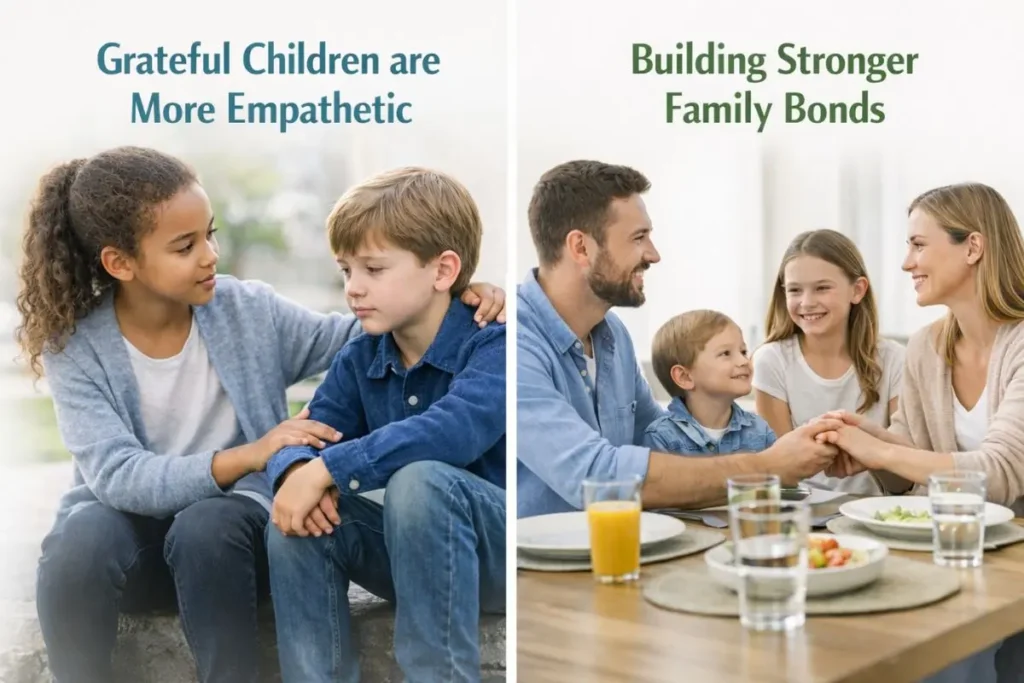
Gratitude is not just important for emotional well-being; it also enhances kids’ ability to form healthy relationships. When children learn to appreciate others, they develop stronger social skills and become better friends, siblings, and family members.
Grateful Children are More Empathetic
Empathy, the ability to understand and share the feelings of others, is deeply connected to gratitude. When children practice gratitude, they are more likely to notice and appreciate the feelings of those around them.
- Understanding others: Grateful children tend to be more compassionate, as they can empathize with people who may be struggling or going through tough times.
- More generous: Gratitude encourages generosity. Grateful kids are more likely to share, help others, and make thoughtful gestures of kindness, creating positive social interactions.
- Better conflict resolution: Because they are more aware of the needs of others, grateful kids tend to handle conflicts in a way that’s thoughtful and respectful.
Building Stronger Family Bonds
Gratitude helps strengthen the family unit by fostering an atmosphere of appreciation and support. Families that practice gratitude together experience closer, more connected relationships.
- Stronger emotional ties: When parents and children express gratitude regularly, it promotes feelings of love and trust. This helps family members feel valued and understood.
- Positive family environment: Gratitude rituals, such as sharing things you’re thankful for at dinner, can create a positive family culture that fosters mutual respect and appreciation.
Practical Tips
Raising kids with gratitude is not as hard as it seems. With a little effort, parents can help children develop this important skill through everyday actions and thoughtful activities.
Model Gratitude Yourself
Children are great imitators. They learn a lot by watching their parents. If you want your child to be grateful, show gratitude in your own life.
- Express appreciation: Regularly say thank you, not just when it’s expected but for little things, like someone opening a door or helping with a small task.
- Appreciate the simple things: Show your children that you appreciate the small blessings in life—like a sunny day, a good meal, or a kind gesture from a friend.
Create Daily Gratitude Rituals
The more children practice gratitude, the more it becomes ingrained in their daily lives. Creating regular gratitude rituals helps make it a natural part of their routine.
- Gratitude journals: Encourage your child to write or draw one thing they are grateful for each day. This habit reinforces the practice of gratitude and helps them reflect on the positive aspects of their life.
- Family gratitude moments: Set aside time each day or week for the family to share things they are thankful for. This helps reinforce the habit and strengthens family bonds.
- “Thankful Thursday” tradition: Have a weekly tradition where everyone expresses gratitude for something specific that week—this could be a fun way to look back at the positive moments of the week.
Encourage Kids to Express Thanks
Teach your children that gratitude is more than just a feeling—it’s something that should be expressed. Encourage them to say “thank you” whenever they receive something or someone helps them.
- Thank-you notes: Encourage your child to write thank-you cards or letters for gifts, kind deeds, or anything they feel grateful for.
- Verbal thanks: Make it a habit for your child to verbally thank family members, teachers, and friends when appropriate.
Reward Grateful Behavior
Rewarding gratitude reinforces the behavior. Praising your child when they show appreciation helps them understand the importance of being thankful.
- Positive reinforcement: Compliment your child when they express gratitude, whether verbally or through actions like sharing or helping others.
- Gratitude rewards: Create a rewards system that celebrates moments when your child shows appreciation—this could be as simple as extra playtime or a small treat.
Fun and Creative Ways to Teach
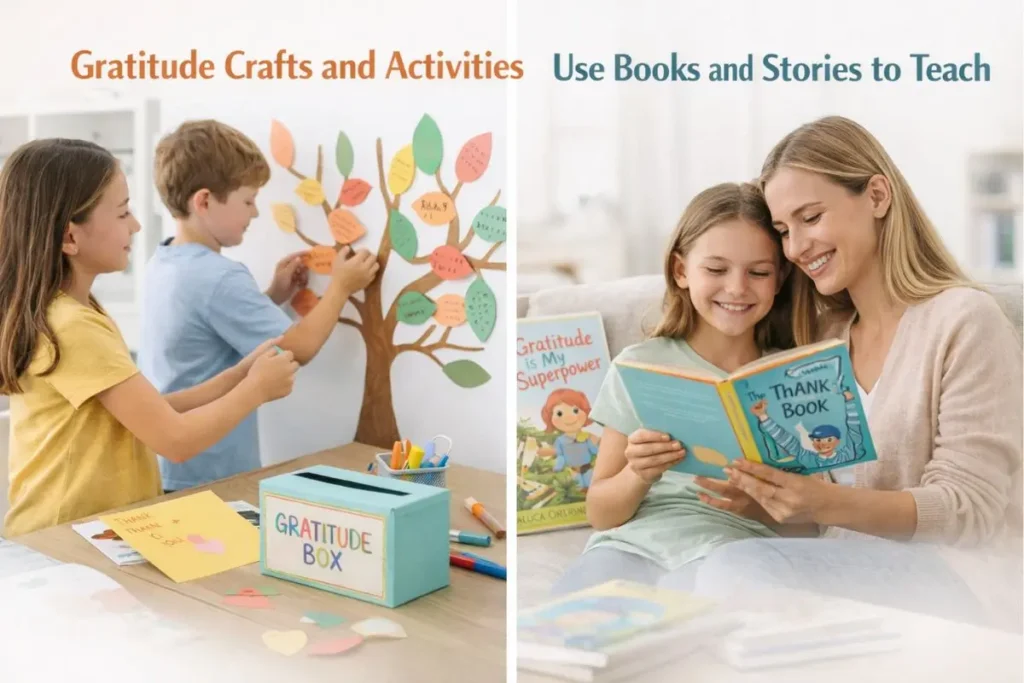
Teaching gratitude doesn’t have to be dull. You can make learning gratitude fun with creative activities and projects that engage your child.
Gratitude Crafts and Activities
Get hands-on and creative while teaching gratitude. These fun activities will make gratitude exciting for kids.
- Gratitude tree: Create a tree on a bulletin board or with paper, where each leaf represents something the child is thankful for.
- Thank-you crafts: Encourage your child to make personalized thank-you cards or gratitude boxes that can be given to others to express appreciation.
Use Books and Stories to Teach
Reading is a great way to introduce your child to the concept of gratitude. Many children’s books highlight the importance of being thankful and appreciative.
- Storytime gratitude: Books like The Thank You Book by Mo Willems or Gratitude is My Superpower by Alicia Ortego help teach kids about the value of gratitude.
- Discussions after reading: After reading a story about gratitude, ask your child to share what they learned and how they can apply it in their own life.
Challenges
Teaching gratitude isn’t always easy. In today’s world of instant gratification, children may struggle to develop a sense of appreciation. Let’s look at some common challenges and how to overcome them.
Balancing Gratitude and Materialism
In an era of consumerism and digital media, it can be difficult for kids to focus on gratitude instead of constantly desiring more things.
- Focus on experiences: Teach your child that the most important things in life aren’t material objects, but experiences, relationships, and personal growth.
- Limit exposure to ads: Be mindful of how often your child is exposed to advertisements and marketing that encourage materialism.
Dealing with Discontentment and Entitlement
Some children may feel entitled to things or may not express gratitude regularly. This is a normal challenge, but there are ways to address it.
- Teach value and appreciation: Encourage your child to understand the effort that goes into acquiring things—whether it’s the work parents do or the value of saving up for something special.
- Delayed gratification: Teach the importance of waiting for something they want, which can help them appreciate it more when they finally receive it.
Long-Term Benefits
The benefits of fostering gratitude in children go beyond childhood. Grateful children grow up to be well-adjusted, happy adults.
Gratitude and Academic Success
Gratitude has been shown to improve children’s academic performance. Grateful students tend to be more focused, motivated, and engaged in their learning.
- Focus and motivation: Grateful students are more likely to stay engaged and motivated in school because they appreciate the opportunities they have.
- Positive relationships with teachers: Grateful kids are more likely to respect and connect with their teachers, leading to a positive learning environment.
Gratitude as a Lifelong Skill
Gratitude is a skill that will benefit kids throughout their lives. Children who learn to appreciate the small things are better equipped to navigate adulthood.
- Healthy relationships: Grateful adults tend to have more fulfilling relationships, both personally and professionally.
- Higher life satisfaction: Studies show that people who regularly practice gratitude report greater happiness and life satisfaction.
Common Misconceptions
Some people may believe that teaching gratitude is too difficult or unnecessary for children. However, these misconceptions often overlook the long-term benefits that gratitude offers.
- Myth 1: Gratitude is an adult concept: In reality, kids as young as three can understand gratitude and practice it in age-appropriate ways.
- Myth 2: Gratitude requires material sacrifice: Gratitude doesn’t always involve giving up something material—often, it’s about recognizing the emotional or relational aspects of life.
The Role of Schools in Teaching Gratitude
Educators can also play a big part in fostering gratitude among children. By integrating gratitude practices into the classroom, schools can create a positive learning environment that supports emotional well-being.
- Gratitude lessons: Schools can incorporate gratitude into their curricula, such as teaching kids to write thank-you notes or introducing discussions on appreciation.
- Mindfulness practices: Incorporating mindfulness and reflection activities into daily routines can help kids develop a grateful mindset.
Gratitude and Positive Psychology
Gratitude is a key component of positive psychology, which focuses on strengths and positive emotions. By fostering gratitude, you help children build resilience, hope, and happiness.
- Strength-based approach: Teaching kids to focus on the positives in their lives helps them develop a strength-based mindset.
- Building a growth mindset: Grateful kids are more likely to view challenges as opportunities to learn, which supports their personal growth.
Raising Kids: Fostering Appreciation Starts at Home
As a parent, you are the first teacher of gratitude in your child’s life. By modeling grateful behavior and creating an environment that encourages appreciation, you can help your child develop this essential skill.
The Role of Parents in Building a Grateful Mindset
Parents play a crucial role in shaping their child’s understanding of gratitude. Be patient, consistent, and intentional, and your child will begin to develop a deep sense of appreciation.
Create a Culture of Gratitude at Home
Fostering gratitude begins at home. Set the tone for your child by making gratitude a regular part of your family’s routine and conversations.