
Every parent has experienced the anxiety of watching their child feel nervous or shy in a new social setting. Whether it’s a birthday party, school event, or just a family gathering, kids and teens often feel overwhelmed in unfamiliar situations, making it difficult to connect with others. As a parent, you may feel unsure about how to help them break the ice and form friendships. Icebreaker games for kids and teens are an excellent solution to ease that tension.
These fun and engaging icebreaker activities are specifically designed to help children and teenagers feel more comfortable, engaged, and confident in social settings. By encouraging interaction and conversation, icebreaker games provide an opportunity for kids to develop important social skills, build friendships, and overcome shyness. These games can be the perfect way to help kids and teens bond with others, creating lasting connections in a relaxed and enjoyable environment.
Why Icebreaker Games Are Important
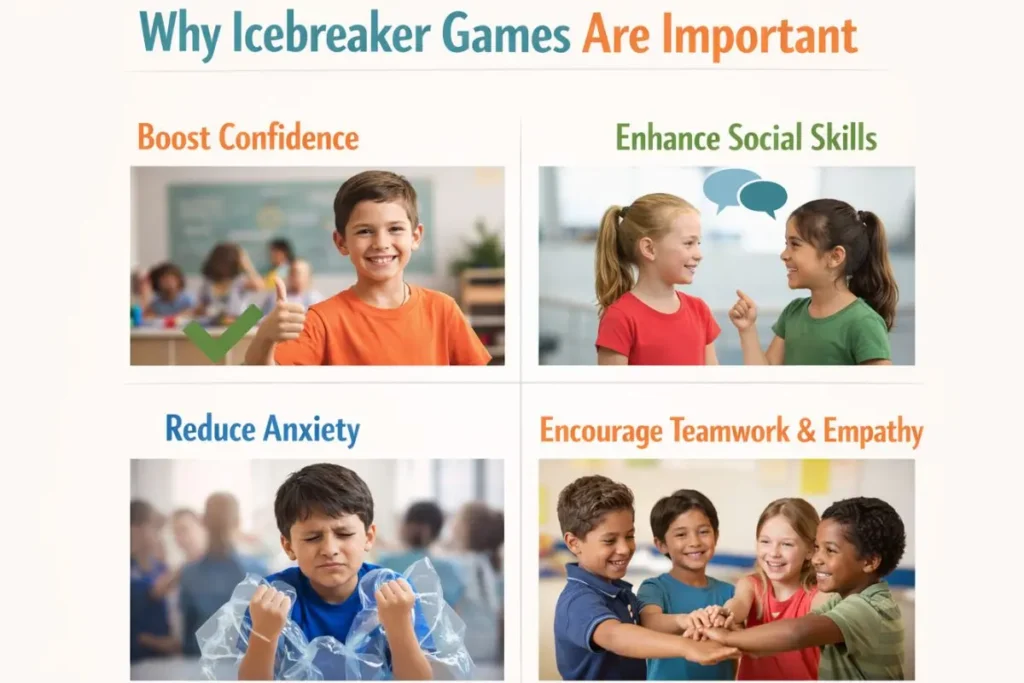
Icebreaker games are more than just fun activities—they offer real developmental benefits for children and teens. These games can:
- Boost Confidence: They create a safe environment for kids to interact and express themselves without the pressure of performing.
- Enhance Social Skills: Icebreakers teach kids to communicate, cooperate, and understand social cues—skills that are important for building friendships.
- Reduce Anxiety: New social situations can be intimidating, but icebreakers provide an easy way to break down barriers and help kids feel more at ease.
- Encourage Teamwork and Empathy: Many icebreaker games require collaboration, which helps kids develop a sense of teamwork and learn to empathize with others.
Icebreaker Games for Kids & Teens
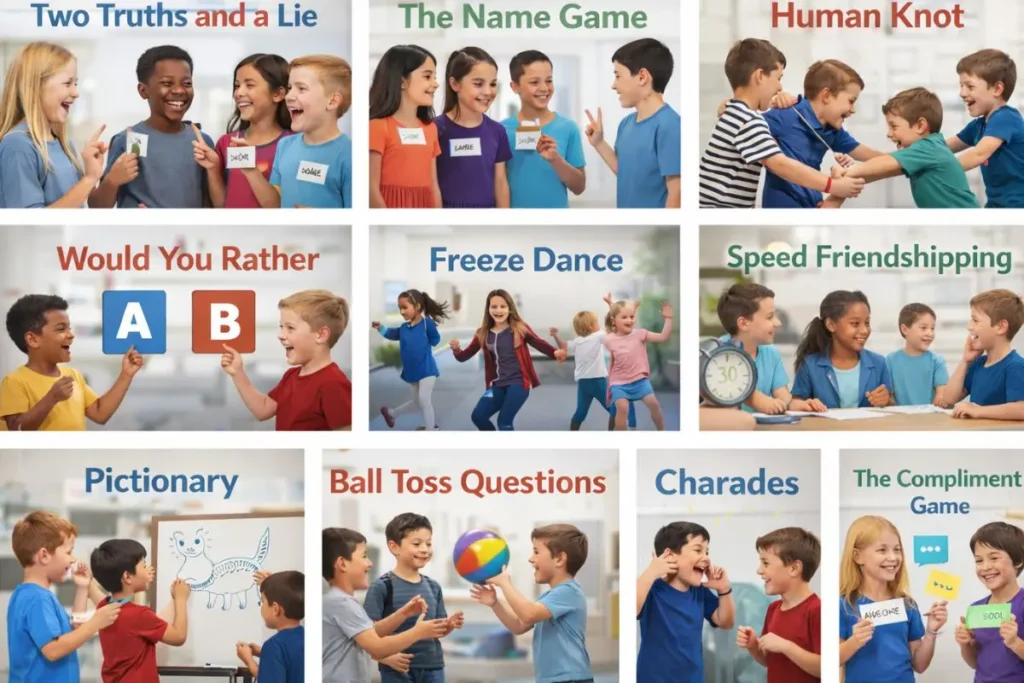
Two Truths and a Lie
How to Play:
This popular game encourages kids to share fun, interesting, and sometimes quirky facts about themselves. Each participant says three statements: two truths and one lie. The others then guess which statement is the lie.
Why It Works:
- Confidence Boosting: Helps children express themselves in a fun, non-threatening way.
- Easy to Play Anywhere: No special materials are required, making it easy for parents to organize at home, in classrooms, or at social events.
- Enhances Listening Skills: Encourages kids to listen carefully to others and think critically about what they say.
Tips:
- For Younger Kids: Use simpler statements. For example, “I have a pet cat” or “I love pizza.”
- For Teens: Consider adding a theme like “school-related” facts or “summer vacation memories” to make it more relatable.
The Name Game
How to Play:
Participants take turns saying their name along with an adjective that starts with the same letter (e.g., “Silly Sally” or “Joyful Jake”). The next player repeats the names before adding their own.
Why It Works:
- Helps Kids Remember Names: Especially useful in large groups where it’s easy to forget names.
- Encourages Creativity: The silly adjectives get everyone laughing and loosen up the group.
- Involves Everyone: Works well for small or large groups, and kids of all ages can enjoy it.
Tips:
- Start with Your Own Name: Demonstrate the game by giving your own example to set the tone.
- Go Beyond Adjectives: As kids get older, you can introduce fun actions, like “Wacky Wendy” and “Dancing Daisy.”
Human Knot
How to Play:
This game involves physical movement. The group stands in a circle, and each person grabs the hand of someone across from them. The challenge is to untangle the knot without letting go of anyone’s hand.
Why It Works:
- Encourages Teamwork: Kids must work together to figure out how to untangle themselves.
- Breaks Physical Barriers: Gets kids up and moving, which can be helpful for children with excess energy.
- Stimulates Problem-Solving: It requires critical thinking and cooperation to solve the “knot.”
Tips:
- For Younger Kids: Keep the game short to prevent frustration.
- Safety First: Make sure everyone is comfortable with the physical contact involved.
Would You Rather?
How to Play:
In this game, players take turns asking “Would you rather” questions. For example, “Would you rather be able to fly or be invisible?” Each player answers and explains their choice.
Why It Works:
- Sparks Conversations: Helps children learn more about each other’s preferences and opinions.
- Fun and Easy to Adapt: It can be customized for any group by adjusting the complexity of the questions.
- Great for All Ages: Works for both younger kids and teens by adapting the questions appropriately.
Tips:
- For Younger Kids: Stick to simple questions like “Would you rather have a pet dinosaur or a pet dragon?”
- For Teens: Introduce more complex or humorous questions, such as “Would you rather live in space or under the sea?”
Freeze Dance
How to Play:
Turn on some lively music, and when the music stops, everyone must freeze. The last person to freeze is out. Continue until only one person is left.
Why It Works:
- Physical Activity: Perfect for kids who need to burn off energy while playing.
- Encourages Spontaneity: Kids get to show off their dance moves and creativity.
- Group Play: It’s fun in a group and doesn’t require any additional materials.
Tips:
- Age-Appropriate Music: Choose songs that everyone can dance to. For younger kids, use upbeat, fun songs from popular children’s movies.
- Keep it Short: For younger kids, keep rounds brief to maintain attention.
Speed Friendshipping
How to Play:
Similar to speed dating, participants rotate through a series of short conversations with different people. Each interaction lasts for about 2-3 minutes. After the buzzer sounds, they switch partners and repeat.
Why It Works:
- Efficient and Fast: Perfect for larger groups where it may be hard to make everyone talk to each other.
- Encourages New Connections: Kids get to meet several people in a short time.
- Helps Break Awkwardness: Short, structured conversations are less intimidating for shy kids.
Tips:
- Have Fun Prompts Ready: Prepare a list of light, fun questions to guide the conversation and keep it flowing.
- Keep the Pace Up: Ensure the game moves quickly to keep everyone engaged.
Pictionary
How to Play:
One person draws a picture of a word or phrase, and the others try to guess what it is. You can use a whiteboard or paper, or even a tablet with a drawing app.
Why It Works:
- Fosters Creativity: Kids love drawing, and it allows them to use their imagination.
- Easy to Organize: No fancy materials are needed—just something to write with and something to write on.
- Collaborative: Encourages teamwork as kids work together to guess the picture.
Tips:
- Keep It Simple: For younger kids, use easy-to-draw items like animals or food.
- Set Time Limits: Use a timer for added excitement and to keep the game moving.
Ball Toss Questions
How to Play:
Players stand in a circle and toss a ball to each other. The person catching the ball must answer a question before tossing it to someone else. The questions can range from personal interests to fun facts about their day.
Why It Works:
- Interactive: Keeps kids moving while still having meaningful conversations.
- Encourages Group Interaction: Everyone gets a chance to speak and listen to others.
- Simple and Fun: Requires minimal setup and is perfect for any setting.
Tips:
- Ask Engaging Questions: Make the questions fun and age-appropriate, like “What’s your favorite book?” or “What’s your dream vacation destination?”
- Keep the Ball Soft: Use a soft, lightweight ball to avoid any accidents.
Charades
How to Play:
One person acts out a word or phrase without speaking, and the others try to guess what it is. You can use anything from movie titles to actions like “jumping” or “eating.”
Why It Works:
- Engaging and Hilarious: The acting part always gets everyone laughing.
- No Special Equipment Needed: It’s easy to set up and doesn’t require materials.
- Improves Non-Verbal Communication: Encourages kids to express themselves without speaking.
Tips:
- For Younger Kids: Use simple actions or well-known characters (e.g., “Superman” or “cat”).
- For Older Kids or Teens: Use more challenging phrases or movie titles for a greater challenge.
The Compliment Game
How to Play:
Participants give each other compliments. Each person must say something positive about the person next to them. Compliments can be about personality, appearance, or actions.
Why It Works:
- Boosts Self-Esteem: Everyone feels good when they are appreciated.
- Encourages Kindness: Helps foster a positive, supportive group dynamic.
- Promotes Positive Social Interaction: Encourages children to focus on the good qualities of others.
Tips:
- Be Specific: Encourage kids to give specific compliments, like “I love how creative you are with your drawings.”
- Keep it Positive: Make sure the compliments are always kind and supportive.
How to Choose the Right Icebreaker Game for Different Ages
When choosing an icebreaker game, it’s important to consider the age and developmental stage of the participants. For younger kids, games like “Freeze Dance” or “The Name Game” are perfect because they allow for physical activity and simple interactions. For older kids and teens, more complex games like “Speed Friendshipping” or “Would You Rather?” help stimulate conversation and encourage deeper social connections.
Table: Age-Appropriate Game Choices
| Age Group | Recommended Games | Reason |
|---|---|---|
| 4-6 years | Freeze Dance, Name Game, Charades | Active, simple, and easy to understand |
| 7-10 years | Pictionary, Would You Rather, Ball Toss | Fun, engaging, and encourages creativity |
| 11-14 years | Two Truths and a Lie, Speed Friendshipping | Encourages social interaction and reflection |
| 15+ years (Teens) | Human Knot, Pictionary, Compliment Game | Builds confidence, teamwork, and empathy |
Common Mistakes
While icebreaker games can be a great tool for socializing, there are a few common mistakes parents should avoid:
- Not Adapting the Game to the Group: Not all kids enjoy the same activities. Be mindful of the group’s dynamics and preferences.
- Overcomplicating the Game: Keep things simple, especially for younger kids. Avoid games with too many rules or complicated instructions.
- Ignoring Shy Kids: For children who are shy or introverted, ensure the game doesn’t put them on the spot too much. Allow them to participate at their own comfort level.
How to Facilitate Icebreaker Games Successfully
To ensure icebreaker games go smoothly, consider the following:
- Create a Safe, Inclusive Environment: Make sure every child feels comfortable and included. Encourage everyone to participate but never force anyone.
- Keep It Light: The goal is fun! Keep the atmosphere lighthearted and full of laughter to encourage open interactions.
- Stay Flexible: If a game isn’t working, be prepared to switch things up. The key is to make sure the kids are engaged and having fun.