
In today’s digital world, raising a confident child is more challenging than ever. With the rise of social media, online bullying, and the constant pressure of the digital landscape, children face an overwhelming amount of stimuli that can influence their self-esteem and confidence. As a parent, it’s essential to guide your child through this environment and equip them with the tools to navigate it with resilience.
In this blog post, we’ll provide actionable steps that you can take as a parent to raise a confident child in a digital world. Whether you’re a first-time parent or have already been guiding your child through their formative years, these expert-level strategies will help you support your child’s mental and emotional growth in the digital age.
Understanding the Digital Age’s Impact
Children today are exposed to digital content at an earlier age than ever before. While the internet and social media have their benefits, they also present unique challenges for kids’ self-esteem and confidence.
Challenges for Kids
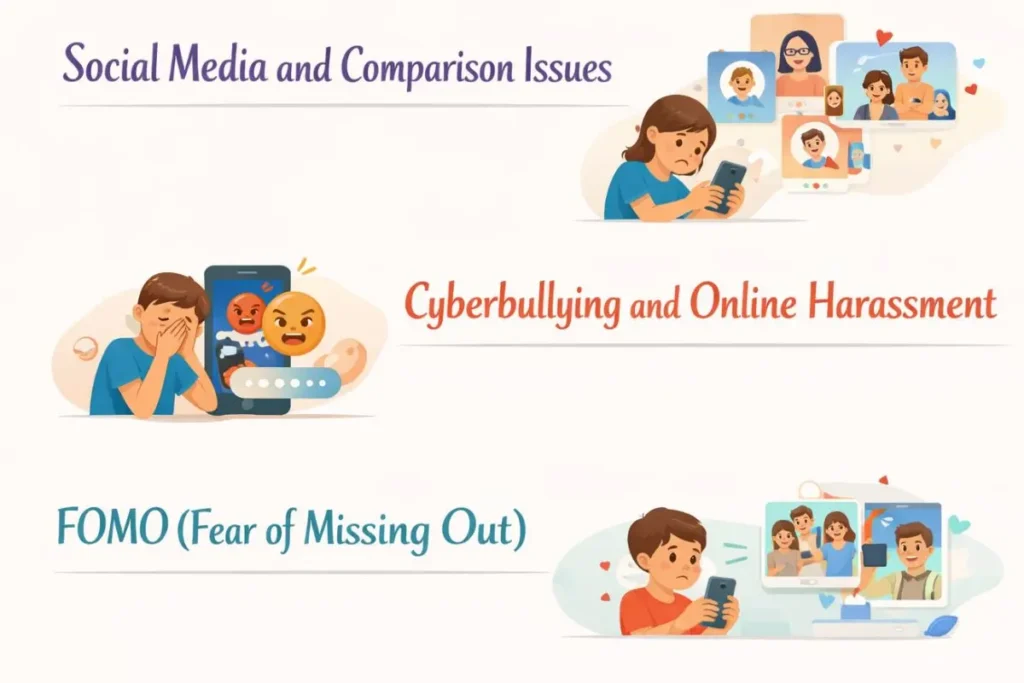
Social Media and Comparison Issues
One of the biggest challenges children face is the constant comparison to others on social media. This can lead to feelings of inadequacy, especially when kids see idealized, edited versions of other people’s lives.
Solution:
Encourage your child to follow accounts that celebrate body positivity, diversity, and creativity. Help them understand that social media often shows only the highlights of people’s lives, not their full, imperfect realities.
Cyberbullying and Online Harassment
Online bullying is another significant issue affecting children’s confidence. The anonymity of the internet makes it easier for kids to be cruel to each other, sometimes leaving lasting emotional scars.
Solution:
Teach your child how to recognize and report bullying, and make sure they know they can always turn to you for support. Encourage them to take breaks from digital spaces if they’re feeling hurt by online interactions.
FOMO (Fear of Missing Out)
With constant updates from friends and celebrities on social media, kids can experience FOMO, or the fear that they are missing out on exciting experiences.
Solution:
Help your child focus on the experiences they enjoy and guide them to appreciate the unique moments in their own lives. Encourage them to limit their social media usage and take breaks to focus on their interests.
The Role of Parents in Fostering Digital Confidence
As a parent, you play a crucial role in fostering your child’s confidence, especially in a digital environment. Your active involvement can significantly impact how your child handles online pressures, interacts with peers, and builds their self-esteem.
Key Strategies for Parents:
- Stay Informed: Understand the platforms your child is using and be involved in their digital life without being intrusive.
- Be Supportive: Show empathy when your child shares struggles about social media, gaming, or online interactions.
- Model Positive Behavior: Set an example by practicing healthy online habits yourself, such as limiting screen time, promoting digital detoxes, and using social media responsibly.
How to Encourage Self-Expression
- Foster Creative Outlets: Encourage your child to use digital platforms for creative expression, like sharing their artwork or writing.
- Maintain Balance: Help your child understand the importance of keeping their offline life rich with hobbies, family activities, and outdoor play.
Setting Healthy Boundaries
- Create Tech-Free Zones: Establish areas in the home where devices are not allowed, such as during family meals or in the bedroom.
- Time Limits: Set clear guidelines on how much time your child can spend on devices each day.
Common Mistakes
While parents intend to protect their children from the negative impacts of the digital world, some common mistakes can undermine confidence-building efforts:
- Over-restricting Screen Time:
- Problem:
While setting boundaries is important, over-restricting or banning digital devices entirely can cause resentment and social alienation, especially if all their peers are active online. - Solution:
- Instead of banning, encourage healthy, balanced screen time. Help your child develop a responsible relationship with technology.
- Problem:
- Ignoring the Emotional Impact of Social Media:
- Problem:
- Many parents fail to address the emotional toll that social media can take on a child. Constant comparisons and exposure to “perfect” lives can harm self-esteem.
- Solution:
- Regularly check in with your child about their feelings regarding their social media experiences. Foster discussions around body image, self-worth, and digital content.
- Focusing Too Much on External Achievements:
- Problem:
- Parents sometimes place too much emphasis on academic or athletic success, inadvertently ignoring the development of emotional resilience, creativity, and social skills.
- Solution:
- Encourage your child to pursue activities that build confidence from within, like art, music, or volunteering, instead of solely focusing on grades or trophies.
Raise Confident Kids
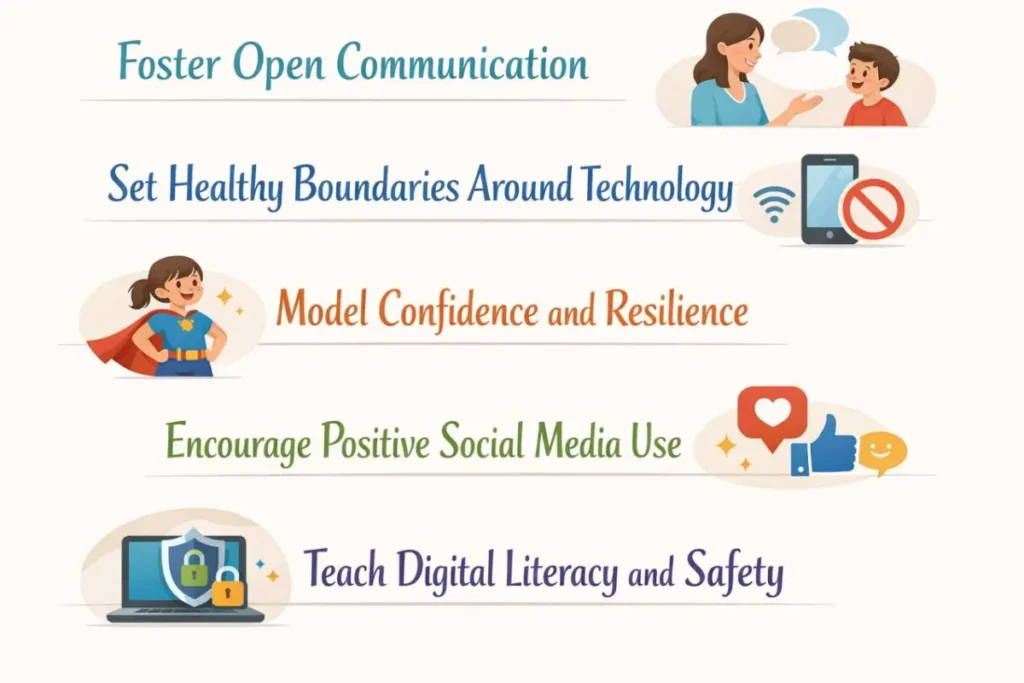
Foster Open Communication
Open communication is the foundation for building confidence. Create a safe space where your child feels comfortable discussing their online experiences. Ask questions like:
- “What was the best part of your day online?”
- “Have you ever seen something online that made you feel upset or uncomfortable?”
- “What’s your favorite account to follow, and why?”
Why It Matters:
These questions encourage your child to express their emotions and concerns. By validating their feelings, you’ll help them feel heard and supported.
Set Healthy Boundaries Around Technology
Technology is not inherently harmful, but its use must be managed wisely. Work with your child to set limits that encourage balanced use of screen time, like:
- Limiting screen time to a set number of hours each day.
- Having “tech-free” zones or times (e.g., during family meals or before bed).
- Discussing the importance of digital privacy and being careful about what they share online.
Why It Matters:
Setting boundaries ensures that technology doesn’t overtake your child’s life. It encourages them to find a balance between digital and offline activities, helping to reduce stress and digital fatigue.
Focus on Building Real-Life Skills and Interests
Encourage your child to explore hobbies and skills that contribute to their overall confidence, outside of the digital world. These could include:
- Sports: Physical activities build strength, resilience, and teamwork.
- Art or Music: Creative expression promotes emotional well-being and self-confidence.
- Public Speaking or Leadership Roles: Encourage participation in school clubs, volunteer work, or community activities to build confidence in social situations.
Why It Matters:
Developing real-world skills helps your child build inner confidence that doesn’t rely on online validation.
Model Confidence and Resilience
Your child learns a lot by watching you. Model healthy behaviors when it comes to managing stress, responding to criticism, and maintaining confidence. For example:
- Handle setbacks or mistakes with a positive mindset, showing your child that it’s okay to fail as long as you learn and grow from the experience.
- Practice self-love and body acceptance to teach your child that confidence is about being comfortable with themselves.
Why It Matters:
Children mimic the behavior of their parents. By modeling confidence and resilience, you give your child the tools to handle challenges with a strong sense of self.
Encourage Positive Social Media Use
Rather than banning social media altogether, teach your child how to use it in a healthy, positive way. This includes:
- Curating Their Feed: Encourage them to follow accounts that promote body positivity, kindness, and inclusivity.
- Engaging in Positive Online Communities: Help them find supportive online spaces where they can interact with like-minded individuals.
- Taking Breaks: Teach your child the value of stepping away from their devices to recharge.
Why It Matters:
Social media doesn’t have to be negative. If used mindfully, it can be a source of inspiration, support, and connection.
Teach Digital Literacy and Safety
Confidence also comes from knowing how to navigate the digital world safely. Help your child understand:
- How to Recognize and Report Bullying: Teach your child how to report cyberbullying and stand up for others in a respectful way.
- Privacy and Security: Ensure they understand the importance of keeping personal information private and how to adjust privacy settings on social media.
- The Impact of Digital Footprints: Explain that what they post online can be permanent, so they should think before sharing sensitive content.
Why It Matters:
Empowering your child with digital literacy gives them the tools to make safe and confident decisions online.
The Connection Between Offline Skills and Digital Confidence
Confidence doesn’t just stem from how kids perform online—it’s also about the skills and experiences they build offline. Help your child develop activities and interests that promote their self-esteem in the physical world, such as:
- Sports and physical activities: Encouraging teamwork and physical resilience.
- Creative hobbies: Art, music, writing, and other forms of self-expression.
- Volunteering or leadership roles: Developing empathy and a sense of community.
When children feel confident in their abilities outside of digital validation, they are more resilient in navigating the pressures of the online world.
Real-Life Case
Sarah’s Journey: Overcoming Body Image Struggles
Sarah, a 14-year-old, struggled with body image issues due to the constant comparison she felt when scrolling through Instagram. She would see influencers promoting an unrealistic standard of beauty, which affected her self-esteem.
Sarah’s parents didn’t restrict her access to social media, but they took a proactive approach by talking to her about body positivity. They encouraged her to follow accounts that showcased a variety of body types, personalities, and talents. They also got her involved in painting, a hobby she loved, to shift her focus from appearance to creativity.
Over time, Sarah’s self-esteem improved as she realized that beauty is subjective and that her worth wasn’t tied to social media likes or comparisons.
Takeaway:
Building confidence in today’s digital world involves guiding your child through understanding both the positive and negative aspects of technology. Equip them with the knowledge and tools to thrive in both realms, and encourage them to explore their passions and develop a healthy relationship with digital platforms.