
Setting healthy boundaries with your children is one of the most important aspects of parenting, as it plays a significant role in shaping their emotional, behavioral, and social development. Healthy boundaries provide structure, guidance, and stability, which help children understand their limits, build self-control, and respect others. As a parent, learning how to set healthy boundaries with your children is essential for nurturing a positive environment where they feel secure and respected.
Boundaries teach children important life skills such as self-regulation, accountability, and empathy. Establishing clear limits also helps reduce behavioral challenges and fosters a sense of responsibility and independence in your child. In this comprehensive guide, we will explore effective strategies, expert advice, and practical steps that you can take to set healthy boundaries with your children, ensuring they grow up with the tools to navigate life’s challenges confidently while maintaining strong and healthy relationships.
Why Setting is Essential for Your Child’s Development
Children, especially in their early years, are still learning about the world and their place in it. Boundaries create a structured environment where children feel safe and secure. These boundaries provide the foundation for teaching right from wrong and help children build self-control.
Benefits of Healthy Boundaries
- Promotes Security: Children feel safe knowing their limits.
- Encourages Emotional Growth: Boundaries teach self-regulation and emotional control.
- Improves Relationships: Children learn to respect boundaries, which strengthens relationships with peers and adults.
Set Healthy Boundaries with Your Children

Be Clear About Expectations and Consequences
Define clear rules and explain the reasons behind them. Children need to understand why each boundary exists, which helps them internalize the lesson.
Example: Instead of saying, “Be good,” say, “We don’t yell at others. If you need something, you can ask calmly.”
Be Consistent with Enforcement
Consistency is key. If you enforce a rule one day but ignore it the next, children will become confused and test boundaries. Consistent enforcement helps children understand the consequences of their actions.
Tip: Set clear rules and follow through with consequences every time.
Offer Choices and Empowerment
Giving children choices within boundaries helps them feel in control. This also promotes respect for rules and teaches them how to make decisions.
Example: “Would you like to eat your broccoli before or after your chicken?”
Use Positive Reinforcement to Encourage Desired Behaviors
Reward good behavior instead of just punishing misbehavior. Positive reinforcement motivates children and helps them feel appreciated when they follow the rules.
Example: “I love how you shared your toys today! Let’s have a special outing as a reward.”
Be Firm but Compassionate
Enforce boundaries with empathy. Children will respect the boundaries more if they understand that they come from a place of care.
Example: “I know you want to stay up, but sleep is important. We’ll have a fun day tomorrow, but you need to rest to be ready for it.”
Adapt Boundaries as Your Child Grows
As children grow, their understanding of boundaries should evolve. Adjust rules based on their age and developmental stage.
Tip: Involve your child in discussions about boundaries as they mature.
Insights for Effective Boundary-Setting
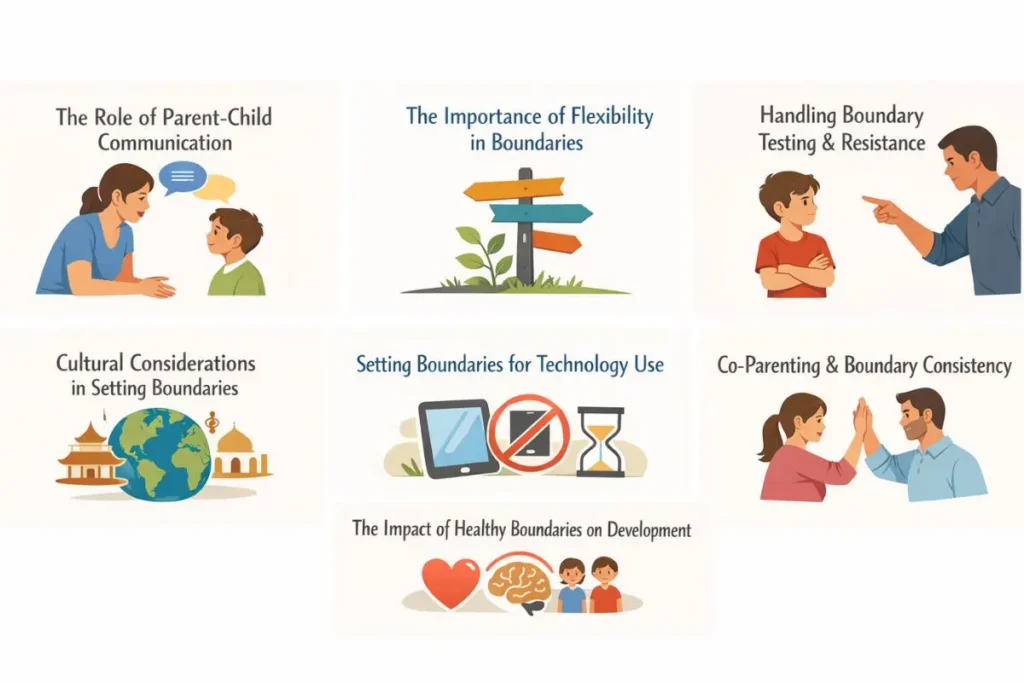
The Role of Parent-Child Communication
Open communication helps children understand why certain behaviors are unacceptable. It’s important to explain rules clearly and listen to your child’s perspective.
Tip: Use age-appropriate language to explain the “why” behind each boundary.
The Importance of Flexibility in Boundaries
While consistency is important, flexibility allows boundaries to evolve as your child grows. Be open to adjusting rules as needed.
Tip: Adapt boundaries based on your child’s changing needs and maturity level.
How to Handle Boundary Testing and Resistance
Children often test boundaries as they grow. Handle resistance with calm firmness and remind your child of the rules consistently.
Tip: When your child resists, calmly reinforce the rule and remind them of the consequence.
Cultural Considerations in Setting Boundaries
Cultural norms influence how boundaries are set. Balance cultural expectations with healthy boundary-setting practices to find what works best for your family.
Tip: Respect cultural values while maintaining clear and reasonable boundaries.
Setting Boundaries for Technology Use
In the digital age, boundaries around screen time and technology use are crucial. Set limits on how much time children spend on devices and ensure they engage in other activities.
Tip: Set specific screen time rules, such as “No devices during meals” or “You can use your tablet for 30 minutes after homework.”
How to Co-Parent Effectively When Setting Boundaries
When both parents are involved, consistency is even more important. Discuss and agree on boundaries together before implementing them.
Tip: Communicate openly with your co-parent to ensure consistency in boundary enforcement.
The Impact of Healthy Boundaries on Long-Term Development
Children who grow up with clear, healthy boundaries tend to have higher emotional intelligence, better self-regulation, and stronger social skills.
Tip: Reinforce the importance of respect for others’ boundaries by modeling this behavior yourself.
A Quick Guide to Boundaries Based on Age
| Age Group | Boundaries Example | Common Mistakes | Solutions |
|---|---|---|---|
| 1-3 Years | “No hitting,” “We use our inside voices.” | Inconsistency, not setting simple rules | Be clear and direct, use simple language and visual cues. |
| 4-7 Years | “You can watch TV after homework,” “You need to clean your room.” | Too many rules, failure to follow through | Offer choices and use positive reinforcement. |
| 8-12 Years | “No screen time after 8 PM,” “You need to take turns with your sibling.” | Not adapting boundaries as they grow | Involve your child in discussions about boundaries. |