The toddler milestones years are a thrilling yet challenging time, marked by significant growth in physical abilities, cognitive skills, emotional regulation, and social development. As a parent, it’s both exciting and overwhelming to watch your child reach key milestones—from taking their first steps and forming their first words to mastering motor skills and navigating social interactions.
Understanding these toddler milestones month by month is essential for parents, as it provides insight into the developmental changes that occur at each stage. Whether it’s the joy of seeing your toddler’s newfound independence or the struggle with behaviors like tantrums or picky eating, it’s crucial to understand what to expect. By breaking down the journey month by month, you’ll be better equipped to handle the challenges and celebrate the triumphs of toddlerhood.
Toddler Struggles
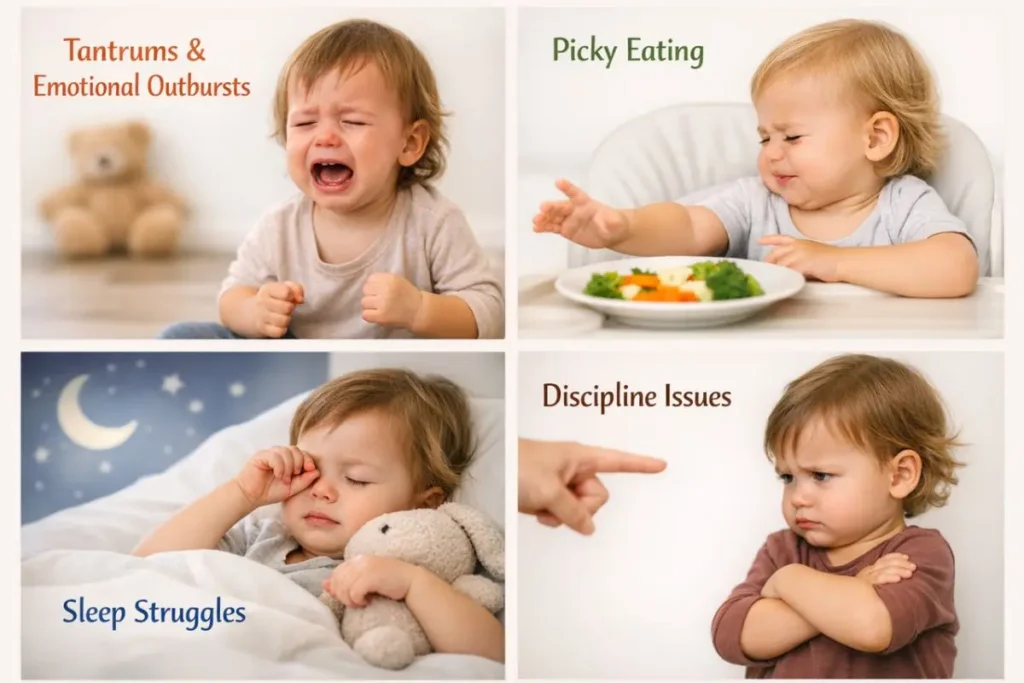
The toddler years are filled with developmental milestones, but they also bring their own set of challenges that can leave parents feeling overwhelmed. Some of the most common challenges parents face during this time include:
- Tantrums and Emotional Outbursts: Emotional regulation is a key developmental skill, and toddlers often struggle with expressing their emotions in healthy ways, resulting in tantrums.
- Picky Eating: As toddlers start asserting their independence, they often become more selective about what they eat. This can be frustrating for parents.
- Sleep Struggles: Toddlers may resist bedtime, wake up frequently during the night, or experience nightmares and night terrors.
- Discipline Issues: Setting boundaries and managing toddler behavior can be challenging as they begin testing limits and asserting their will.
Each of these struggles is part of the natural developmental process. By understanding the milestones your toddler is reaching, you’ll be better equipped to address these challenges in a supportive and effective way.
Month-by-Month Toddler Milestones
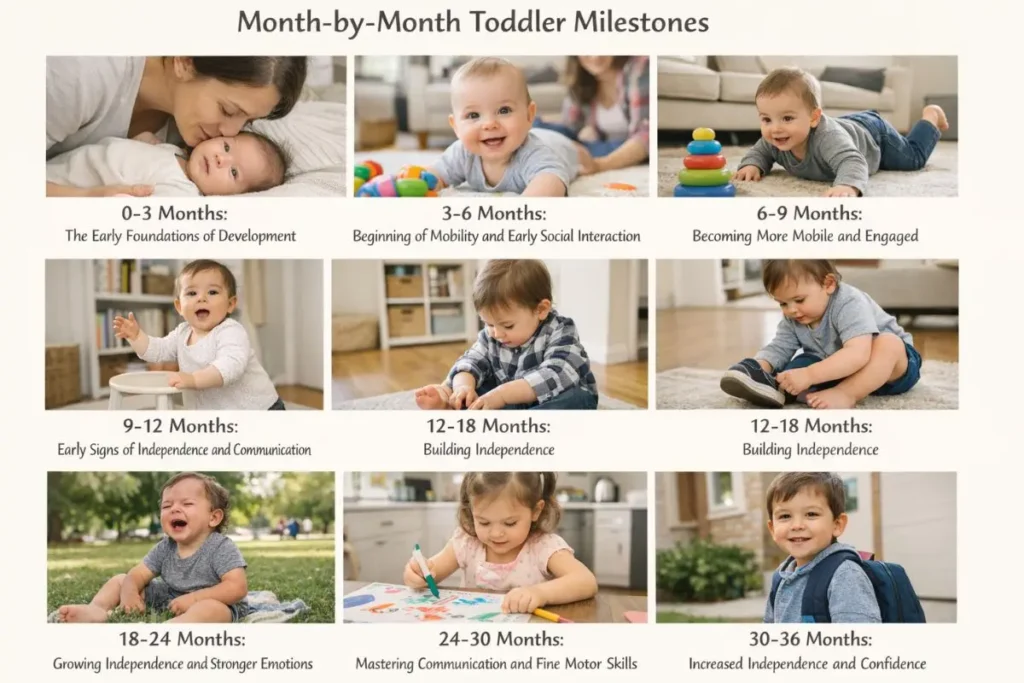
0-3 Months
Physical Development: Reflexes and Early Growth
In the first three months, your baby’s physical development is mainly focused on early reflexes and growth. At birth, babies have automatic reflexes like rooting, grasping, and sucking, which will help them survive and begin interacting with the world.
What to Expect:
- Head control: By 2-3 months, your baby will begin to lift their head while lying on their stomach.
- Grasping objects: Your baby will start to grasp objects placed in their hand, showing early signs of physical coordination.
What You Can Do:
- Tummy time: Start tummy time sessions to help your baby develop neck muscles.
- Encourage reflexes: Place toys or objects in their line of sight to encourage reaching and grasping.
3-6 Months
Physical Development: Lifting the Head, Rolling Over
At 3-4 months, your baby will start developing better neck control. By 5-6 months, they’ll likely begin rolling over from their tummy to their back and vice versa.
What to Expect:
- Rolling over: By 6 months, most babies will be able to roll from front to back and back to front.
- Sitting up with support: Your baby may begin to sit up with support, although they might not yet be able to sit unassisted.
What You Can Do:
- Encourage physical exploration: Provide toys that encourage reaching and grasping, and set up a safe environment for them to practice their mobility.
- Support sitting: Use pillows or cushions to help them sit with support, which will build their back muscles.
Speech and Language Development: Cooing and Babbling
Around this time, your baby will begin making cooing sounds and will start to experiment with different vocalizations.
What to Expect:
- Cooing sounds: Your baby will make cooing and gurgling sounds as they experiment with their vocal cords.
- Babbling: Some babies will begin to babble by 5-6 months, producing simple sounds like “ba-ba” or “da-da.”
What You Can Do:
- Talk to them often: Narrate your daily activities, such as “Now we’re going to change your diaper,” to help develop their listening skills.
- Respond to their sounds: Mimic their sounds or respond with your own, which fosters back-and-forth communication.
6-9 Months
Physical Development: Crawling and Sitting Up
By 6 months, your baby will likely be able to sit up with minimal support. Around 7-9 months, many babies will start crawling or scooting, although some might skip crawling altogether and go straight to walking.
What to Expect:
- Sitting unassisted: By 8 months, most babies can sit without support.
- Crawling or scooting: By 9 months, many babies begin crawling, although some may choose to scoot or roll to get around.
What You Can Do:
- Create a safe play space: Baby-proof your home by removing sharp objects and potential hazards.
- Encourage crawling: Place toys just out of reach to motivate your baby to crawl.
Social and Emotional Development: Stranger Anxiety
Around 6-9 months, many babies develop stranger anxiety. They might cry or become upset when meeting unfamiliar faces.
What to Expect:
- Stranger anxiety: Your baby may begin to cling to you or show signs of distress around unfamiliar people.
What You Can Do:
- Provide comfort: Reassure your baby by offering familiar toys or your voice when meeting new people.
- Introduce new people gently: Gradually introduce your baby to new faces in familiar settings to help them feel more comfortable.
9-12 Months
Physical Development: First Steps
By 9-12 months, your baby is likely becoming more mobile, and some may take their first independent steps.
What to Expect:
- Standing with support: By 9 months, your baby may be able to pull themselves up to a standing position.
- Walking: Around 12 months, many toddlers take their first steps, though some may take longer to walk independently.
What You Can Do:
- Support walking: Hold their hands as they practice standing and walking.
- Safety: As they begin to walk, ensure the environment is safe to prevent falls.
Speech and Language Development: First Words
By 12 months, your baby may start saying their first words like “mama” or “dada.” Their vocabulary will increase, and they will begin understanding simple commands.
What to Expect:
- First words: Many babies begin saying their first word around 12 months.
- Responding to commands: Your baby may start to understand simple requests like “wave bye-bye” or “clap your hands.”
What You Can Do:
- Encourage talking: Repeat simple words clearly and celebrate their attempts to communicate.
- Read to them: Continue reading to your baby to expand their vocabulary and comprehension.
12-18 Months
Physical Milestones: Walking and Climbing
By 12-18 months, your toddler will likely begin walking independently and may begin exploring more vertically, attempting to climb on furniture.
What to Expect:
- Walking: Your toddler will gain confidence and start walking on their own, though they may still be unsteady.
- Climbing: Your toddler may start attempting to climb onto chairs, sofas, and other furniture.
What You Can Do:
- Encourage exploration: Create a safe, childproof environment where your toddler can freely explore.
- Keep a close eye: With their newfound mobility, ensure the space is safe from sharp edges or small items they might put in their mouths.
Emotional Development: Developing a Sense of Self
Around this time, your toddler will begin to assert their independence and may show frustration or resistance to authority.
What to Expect:
- Tantrums: As your toddler becomes more independent, you may experience the early signs of tantrums when they don’t get their way.
- Seeking control: Your toddler may want to make their own decisions, such as picking out their clothes or choosing what they want to eat.
What You Can Do:
- Stay calm during tantrums: Acknowledge their feelings and provide comfort during emotional outbursts.
- Set boundaries: Gently but firmly establish limits and encourage positive behavior.
18-24 Months
Social Development: Peer Interactions and Friendships
At this stage, your toddler will begin to engage in social interactions and develop their understanding of friendship.
What to Expect:
- Parallel play: Your toddler will begin to play alongside other children but may not yet engage in interactive play.
- Empathy: They may start to show signs of empathy, such as comforting a friend who is upset.
What You Can Do:
- Arrange playdates: Social interactions help toddlers learn sharing, turn-taking, and understanding others’ feelings.
- Model empathy: Teach your toddler how to express concern by showing them how to comfort others.
Picky Eating: A Major Challenge
As toddlers develop their autonomy, they often become picky eaters. You might notice them rejecting foods they once enjoyed and preferring a limited range of foods.
What to Expect:
- Food refusal: Many toddlers refuse foods or may go through phases where they only want to eat one or two types of food.
What You Can Do:
- Offer a variety of foods: Even if your toddler doesn’t always eat them, continue offering a variety of healthy foods. This helps expose them to new tastes and textures.
- Make food fun: Serve meals in fun shapes, and involve your toddler in food preparation, allowing them to explore different ingredients and become more interested in eating.
24-30 Months
Speech and Language: Expanding Vocabulary
Your toddler’s vocabulary will grow rapidly, and by 2.5 years, many toddlers can form simple sentences with 3-4 words.
What to Expect:
- Sentence formation: Your toddler will start stringing together words to form simple phrases like “want cookie” or “go outside.”
- Increased understanding: They will also begin understanding more complex requests, like “please put your shoes on.”
What You Can Do:
- Encourage conversation: Ask open-ended questions to promote their language development.
- Interactive play: Play pretend games with dolls or action figures to help expand their vocabulary.
Motor Skills: Mastering the Fine Details
At this stage, your toddler may be able to draw simple shapes, turn pages in a book, and feed themselves with a spoon.
What to Expect:
- Fine motor skills: They will begin showing more control over their hands and fingers.
What You Can Do:
- Offer fine motor activities: Encourage activities like drawing with crayons or stacking small blocks to improve dexterity.
- Promote independence: Allow your toddler to dress themselves and help with simple household tasks.
30-36 Months
Physical Milestones: Running, Jumping, and Balance
Your toddler’s coordination will improve, and they will likely be able to run, jump, and balance on one foot for a brief moment.
What to Expect:
- Running and jumping: Your toddler will gain more physical confidence, mastering running and jumping.
- Balance: They may start balancing on one foot briefly, showcasing their developing motor skills.
What You Can Do:
- Encourage active play: Set up activities like jumping games, running races, or playing on playground equipment.
- Build confidence: Celebrate their achievements in physical activities to boost their confidence.