
As a parent, one of the most exciting yet challenging milestones is watching your toddler develop social skills. Toddler social skills are crucial in shaping their ability to interact with others, but these skills don’t always come easily. One of the most common hurdles parents face is teaching their toddlers how to share and navigate playdates. Since toddlers are just beginning to understand concepts like ownership, sharing can often lead to tantrums and frustration.
Whether it’s their first playdate or a routine gathering with friends, learning how to handle these situations with patience and clear guidance can make a big difference. In this article, we’ll explore practical playdate strategies and sharing tips to help your toddler develop the social skills they need for success.
Social Struggles in Toddlers
It’s completely normal for toddlers to struggle with social skills. At this age, children are learning how to interact with others, but they don’t yet have the skills to fully understand concepts like sharing, taking turns, or considering others’ feelings. These early years are when your child learns foundational social skills, which include cooperation, communication, and emotional regulation.
Common Challenges
- Difficulty Sharing: Toddlers see their toys and belongings as “mine” and struggle to understand the idea of sharing.
- Tantrums and Aggression: When toddlers are upset, they might resort to hitting, pushing, or screaming, especially if they don’t have the words to express their feelings.
- Conflict Resolution: Toddlers don’t yet know how to resolve disputes, which leads to frustration.
- Egocentric Thinking: Their world revolves around them, and they don’t have the ability to understand the needs or wants of others.
These issues often surface during playdates, where toddlers are expected to share toys, take turns, and interact with peers. Let’s explore how you can help your toddler develop positive social skills.
Why Toddlers Struggle with Sharing
Toddlers are in a developmental stage where they have not yet fully grasped the concept of sharing. Their understanding of ownership is still very much “mine,” and they find it hard to understand why others can play with their toys. This is a normal part of their development, but knowing why this happens can help you be more patient and effective when addressing these behaviors.
Developmental Insights into Social Struggles:
- Self-Centeredness: At the toddler stage, children are still developing empathy. They may not yet understand that someone else may also want or need a toy.
- Limited Language Skills: Since toddlers may not have a large vocabulary, they often struggle to express their feelings. Instead, they act out through frustration or tantrums when they don’t get what they want.
- Impulse Control: Their ability to control impulses is still developing, meaning they often act immediately on their desires—whether that’s grabbing a toy or throwing a tantrum when they don’t get their way.
Understanding that these behaviors are linked to natural developmental processes helps you approach the situation with more empathy and strategies for improvement.
Practical Steps to Encourage Sharing
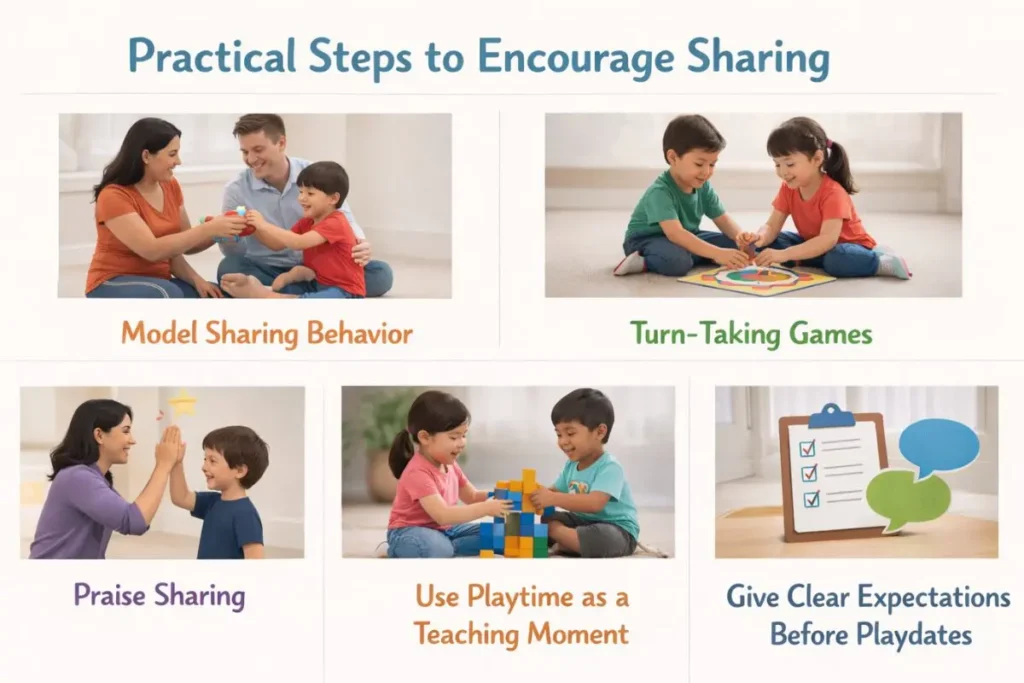
Teaching a toddler to share can be a gradual process that requires patience and consistency. Below are expert-approved strategies to encourage sharing and develop positive social behaviors.
Model Sharing Behavior
Children learn by watching their parents. Therefore, the best way to teach your toddler to share is by modeling this behavior in your own actions.
- Share your belongings with your toddler (e.g., “Let’s share this book, I’ll read one page, then you can read the next.”).
- Show empathy: “I understand you’re upset that you can’t have the toy right now. Let’s wait together until it’s your turn.”
Turn-Taking Games
Introduce games that emphasize turn-taking and patience. Even basic board games or simple activities like passing a ball back and forth can help toddlers practice taking turns.
- “Let’s play catch! I’ll throw the ball to you, then you throw it back to me.”
- Start with simple activities, gradually increasing the complexity as your child becomes more comfortable.
Praise Sharing
When your child does share or shows interest in sharing, be sure to praise them. Positive reinforcement is an essential aspect of shaping your toddler’s behavior.
- “Wow, you did such a great job sharing with your friend! You made their day!”
- Praise them for specific behaviors, such as waiting their turn or offering a toy to someone else.
Use Playtime as a Teaching Moment
Use situations in everyday play to reinforce the importance of sharing. For example, when your toddler is playing with a toy, you can say, “It looks like you’re having fun with that. Let’s share it for a little while so your friend can play too.”
- If your toddler resists, try using the timer method. “You get the toy for three minutes, then your friend can have a turn.”
Give Clear Expectations Before Playdates
Before a playdate, set clear expectations with your child. Let them know that there will be sharing involved and explain how the playdate will go.
- “You’ll play with Sarah today. Let’s practice sharing toys, and remember, it’s okay if she wants to play with your truck.”
- Provide a simple rule like, “One toy at a time,” to help them understand what’s expected during the playdate.
Surviving Playdates
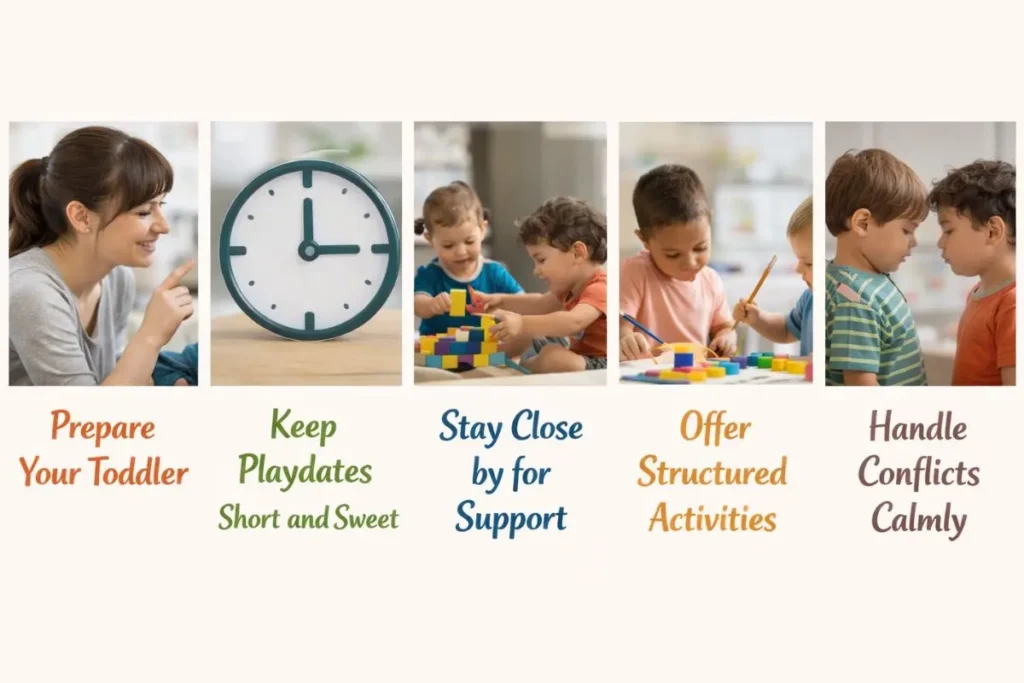
Playdates are essential for helping toddlers develop social skills, but they can also be overwhelming. Here are some tips for ensuring a successful playdate that minimizes stress for both you and your toddler.
Prepare Your Toddler
Let your toddler know that playdates are a chance to make friends, share toys, and have fun. Set expectations ahead of time.
- “Today, you’ll meet Emma. You can play with her toys, but remember to share.”
Keep Playdates Short and Sweet
Initially, keep playdates to around 30 minutes to an hour. This prevents your child from becoming overstimulated or fatigued, making the experience more positive.
- Start with a simple 30-minute playdate and gradually increase the duration as your toddler becomes more comfortable.
Stay Close by for Support
During the playdate, be nearby to monitor your toddler’s interactions. Intervene when necessary, but also give your child a chance to solve minor conflicts independently.
- If a toy is grabbed, instead of immediately stepping in, say, “It looks like you both want the same toy. What can we do to make sure both of you get a turn?”
Offer Structured Activities
Structured activities like arts and crafts, building blocks, or collaborative games help focus the children’s attention on working together, rather than competing over toys.
- Provide activities that involve teamwork, such as building a castle out of blocks together.
Handle Conflicts Calmly
It’s normal for conflicts to arise. When a dispute occurs, use it as a teaching moment. Guide your toddler on how to solve the issue calmly.
- “I see that you both want the same toy. How can we share it so that both of you get a turn?”
- Help them express their emotions: “It’s okay to be upset, but let’s talk about it.”
Common Mistakes
Even with the best intentions, parents sometimes make common mistakes when helping toddlers navigate social situations. Here’s what to avoid:
1. Forcing Sharing
While it’s important for toddlers to learn to share, forcing them to do so before they’re ready can lead to resistance. Instead, encourage sharing in a positive, gradual manner.
2. Interrupting Play Too Soon
Let your toddler get used to the idea of playing independently and with others before you intervene. Over-intervention can cause them to feel insecure or reliant on you to manage social interactions.
3. Comparing Children
Avoid comparing your toddler to other children. Every child develops social skills at their own pace, and comparing them to others can cause frustration or self-esteem issues.
- Instead of saying, “Why can’t you share like Emma?” try, “You’re doing a great job, let’s see if we can share more next time!”