As a new parent, understanding and tracking your newborn’s development is essential during their first few months. In this comprehensive 3-month guide, we will explore the major milestones that your baby will reach, from physical and sensory development to emotional and cognitive growth.
These early months are crucial for your baby’s overall development, and knowing what to expect can help you provide the right support, encouragement, and care. Whether it’s their first smile, lifting their head, or recognizing sounds, this guide will ensure that you are well-equipped to nurture your newborn’s development during these formative months.
Understanding Your Newborn’s Development
In the early stages of life, your baby will undergo rapid changes that affect their physical abilities, sensory skills, and emotional responses. The first three months are crucial because they shape the foundation for the baby’s future growth. While babies come into the world with basic instincts, much of their development in these months will depend on how they interact with their environment and caregivers.
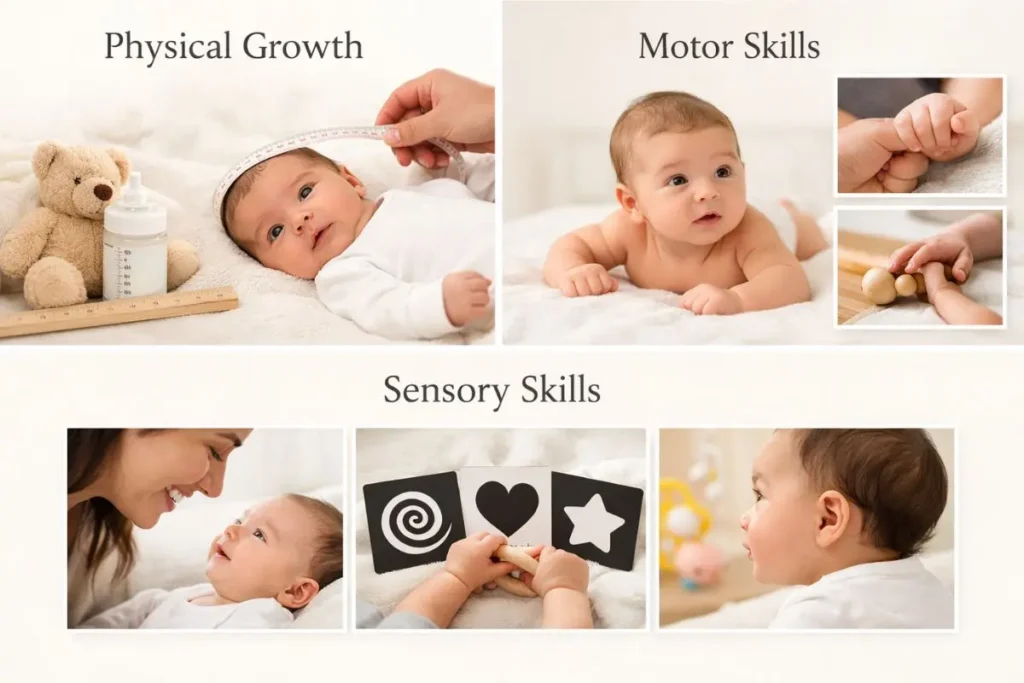
- Physical Growth: Babies grow rapidly in the first few months, gaining weight and increasing in length. Their body systems, like the circulatory system and digestion, begin functioning more efficiently.
- Motor Skills: The earliest motor skills start to appear. These are essential for future coordination, like head control, hand-eye coordination, and the ability to grasp objects.
- Sensory Skills: Babies start developing their vision, hearing, and touch. They’ll begin recognizing faces, focusing on objects, and responding to sound.
By the end of three months, your baby will be much more interactive with their environment, and you’ll see clear signs of emotional and social growth.
Newborn’s Development
1 Month
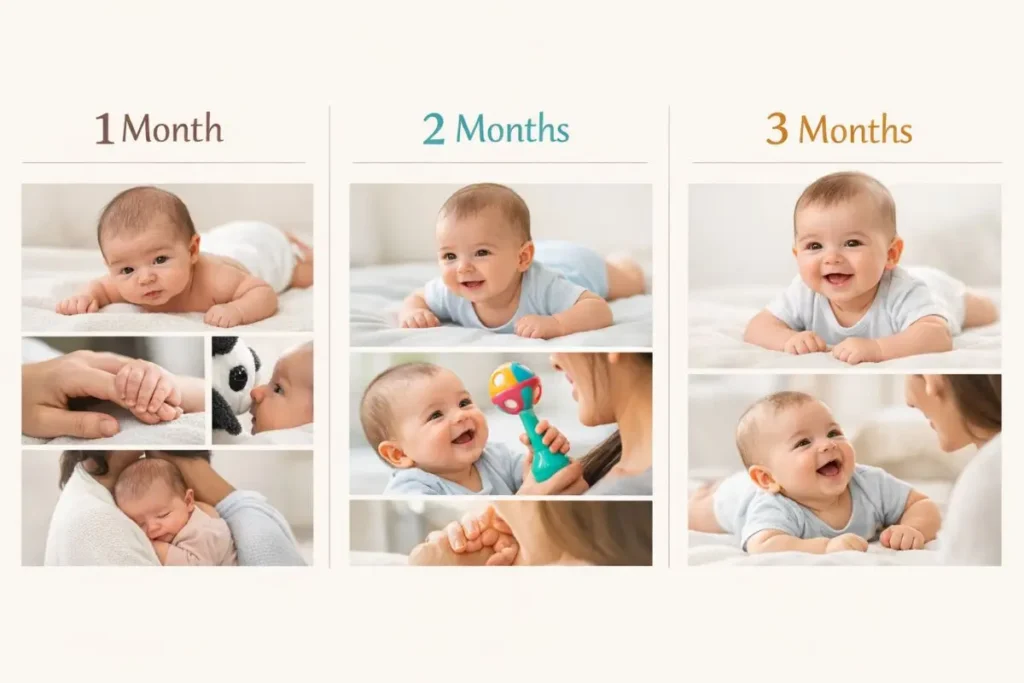
At one month, your baby is still adjusting to the outside world. They are exploring their senses and starting to build connections with their caregivers. At this stage, their movements are primarily reflexive, and their ability to focus and respond to the world around them is just beginning.
Physical
- Head Control: Although still weak, your baby will try to lift their head briefly during tummy time.
- Reflexes: Babies are born with several reflexes such as sucking, grasping, and rooting, which help with feeding and self-soothing.
- Growth: Expect your baby to gain weight and grow in length, though this will vary by individual.
Cognitive and Emotional Growth
- Vision: Newborns have blurry vision and can only see objects about 8-12 inches away. They are beginning to recognize high-contrast shapes, like faces.
- Hearing: Babies will respond to familiar sounds, particularly voices, and may turn their head toward them.
- Bonding: Your baby will begin forming emotional attachments, reacting to your voice and touch.
2 Months
By the time your baby reaches two months, they will start to become more alert and responsive to the world around them. This is when you may notice your baby becoming more interested in interactions and recognizing the faces of those who care for them.
Physical Changes
- Neck Strength: By two months, your baby will begin to gain neck control and be able to hold their head up for a short time while on their stomach.
- Movement: More intentional arm and leg movements may be noticed. Your baby will start to kick and wave their arms around as they learn to control their body.
Sensory and Cognitive
- Tracking Objects: Your baby will begin to focus their eyes on moving objects and might follow the movement with their gaze.
- Emotional Development: The social smile will emerge, and your baby will begin to recognize and respond to familiar faces with smiles and coos.
3 Months
At three months, your baby has developed quite a bit. This is when you will notice significant milestones in physical, cognitive, and emotional development. They’ll have better head control, more hand-eye coordination, and begin to show more social interaction.
Physical
- Full Head Control: Your baby will be able to keep their head steady while sitting or during tummy time, showing a large improvement in neck strength.
- Rolling Over: Some babies may start to roll over from tummy to back as their muscles get stronger.
Cognitive and Emotional
- Social Interaction: Your baby will begin to recognize faces and react to people they interact with. Expect more frequent smiles, giggles, and cooing sounds as they express themselves.
- Communication: Though still nonverbal, your baby will use sounds, facial expressions, and body language to communicate.
How to Support Your Newborn’s Development
As a parent, there are plenty of ways you can support your newborn’s growth and development. These early months are essential for bonding, and your interaction with your baby helps them develop socially, emotionally, and physically.
Bonding and Communication
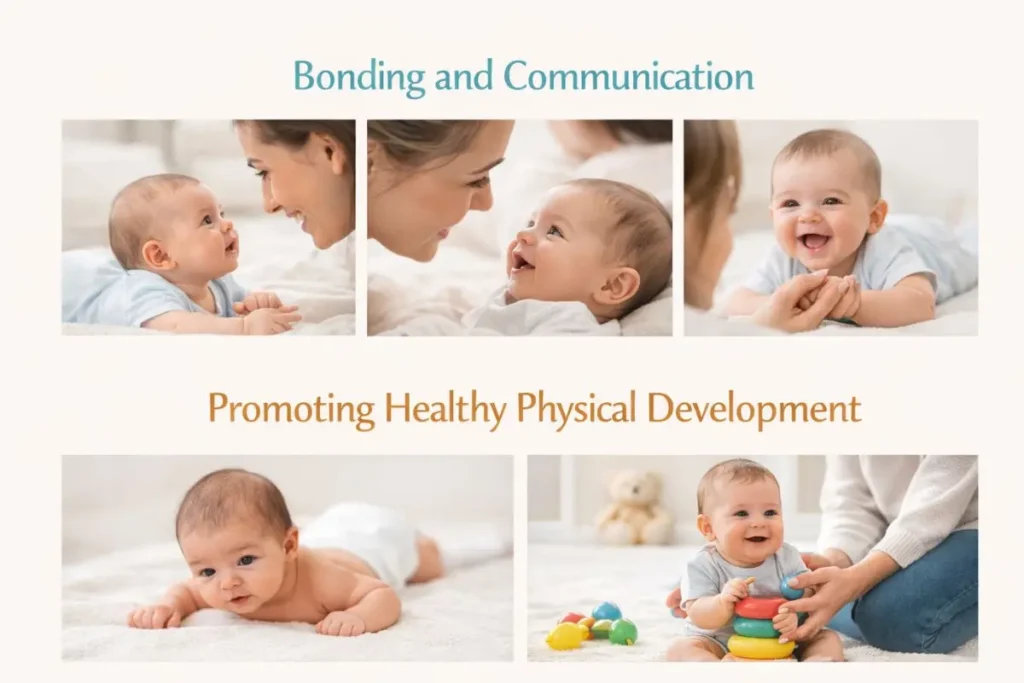
- Talk to Your Baby: Even though your baby can’t talk back, engaging in conversation helps develop language skills. Narrate your day or sing songs.
- Eye Contact: This is one of the most important ways to bond with your baby. It encourages emotional development and strengthens attachment.
- Respond to Cues: Pay attention to your baby’s cues and respond to their coos, smiles, and cries. This builds trust and helps them feel secure.
Promoting Healthy Physical Development
- Tummy Time: Start tummy time early on to build muscles in the neck and upper body. This helps your baby learn to lift their head and eventually roll over.
- Safe Play: Create an environment that allows your baby to safely move and explore. As they grow, they’ll become more curious about their surroundings, so let them safely discover new things.
What to Look Out For in Development
While most babies develop within a general timeframe, some may need extra help. If you notice that your baby is not reaching certain milestones, it might be a sign that something is wrong. Be sure to consult with your pediatrician if you have any concerns.
When to Seek Professional Help
- No Head Control: If your baby doesn’t show signs of head control by 3 months, it may indicate a motor delay.
- Lack of Responsiveness: If your baby doesn’t respond to sounds or faces by two or three months, it could be a sign of a hearing issue or social development delay.
Concerns:
- Not Smiling: If your baby doesn’t respond with a social smile by two months, it could suggest an emotional or developmental issue.
- Limited Movement: If your baby shows no movement or limited motor activity, this could signal developmental delays.
Understanding the Science Behind
Understanding how and why your baby’s body is growing so quickly can help you better support their development. During the first three months, your baby’s brain is actively forming connections, and their muscles, organs, and sensory systems are maturing.
The Role of the Brain:
- Neuroplasticity: Your baby’s brain is incredibly adaptable and forms new connections every day, learning from every sound, sight, and touch.
- Sensory Development: The brain is processing sensory information and building pathways that will later help with things like motor control and speech.
Biological Changes:
- Physical Development: Babies are born with most of the physical tools they need but require time and practice to strengthen their muscles and gain motor control.
- Reflexes: Many of your baby’s early movements are reflexive, but over time, they begin to gain voluntary control.
A Typical Day in the Life of a 3-Month-Old Baby
Understanding what your baby’s typical day looks like can help set expectations and guide your interactions. By three months, your baby will have more predictable sleep patterns and wake times, and you may notice a more consistent schedule emerging.
Activities:
- Feeding: Your baby will still be on a feeding schedule, whether breast or formula-fed, but you may notice they are starting to go longer between feedings.
- Playtime: Short periods of play, like tummy time and gentle interaction, are essential for development. You can start engaging with them using toys that encourage reaching, grasping, and focusing.
Sleep:
- Sleep Patterns: By this age, your baby may sleep for longer stretches at night and take regular naps during the day. Establishing a bedtime routine can help reinforce healthy sleep habits.
How to Stimulate Development at Home
The environment you create for your baby plays a crucial role in supporting their development. Here are some ways to stimulate your baby’s senses and promote growth:
Activities for Physical and Cognitive Development:
- Tummy Time: A few minutes of tummy time daily helps build muscles needed for future milestones like rolling over and crawling.
- Mobiles and Toys: Use toys that make noise or have bright colors to catch your baby’s attention. These tools help with visual tracking and hearing development.
Sleep Patterns and How They Affect Development
Sleep is a vital component of your baby’s growth. During deep sleep, their body regenerates, and their brain processes the information they’ve taken in. Healthy sleep patterns will support their physical and cognitive development.
Tips:
- Consistent Routine: A consistent bedtime routine can help your baby adjust to a sleep schedule.
- Comfortable Sleep Environment: Ensure your baby’s sleeping area is safe and comfortable. Soft music or white noise can also be soothing.
Role of Nutrition in Early Development
Nutrition plays a key role in your newborn’s development. Whether you’re breastfeeding or formula feeding, providing the right nutrients supports your baby’s rapid growth and helps them hit those important milestones.
Benefits of Breastfeeding:
- Complete Nutrition: Breast milk provides essential nutrients that boost immune function and brain development.
- Bonding: The physical closeness of breastfeeding helps strengthen the emotional bond between you and your baby.
Formula Feeding:
- Convenient: Formula feeding provides flexibility and can offer your baby similar nutrition to breast milk.
- Consistency: You can control the exact amount of milk your baby is getting, which is important for ensuring proper growth.