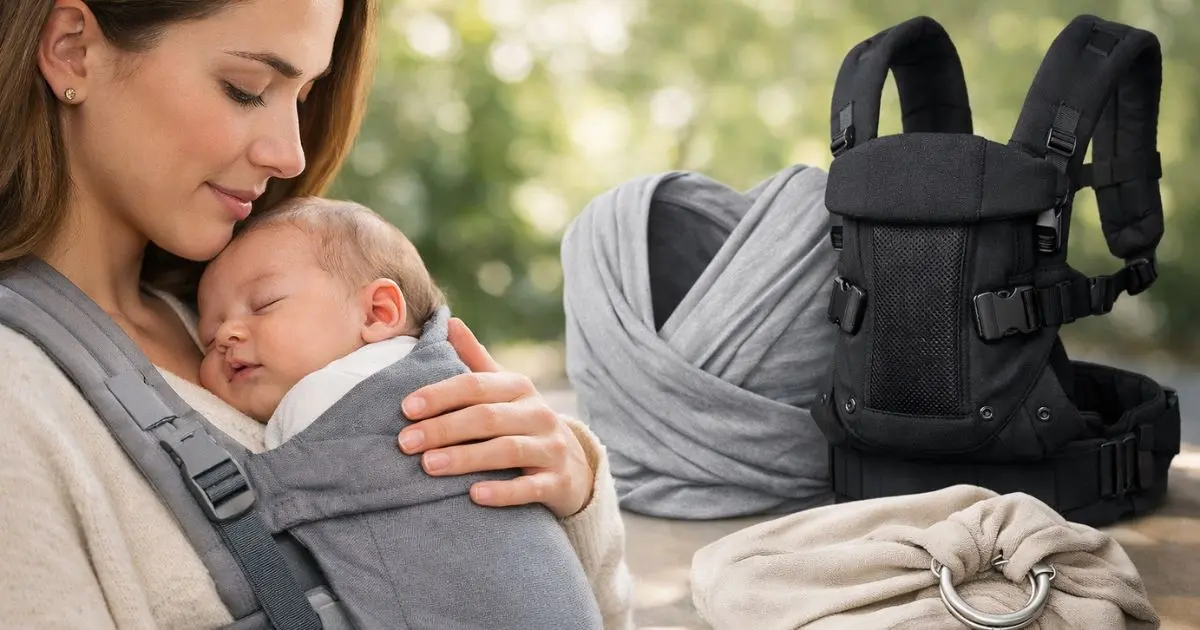
Choosing the best baby carrier for your newborn can seem overwhelming, especially with so many options available in the market. But don’t worry! This guide will walk you through the essentials, helping you make the right choice. A good baby carrier not only offers hands-free convenience but also ensures your little one is comfortable and secure. Let’s break down the essentials of choosing the best baby carrier for newborns.
Why a Baby Carrier is Essential for Newborns
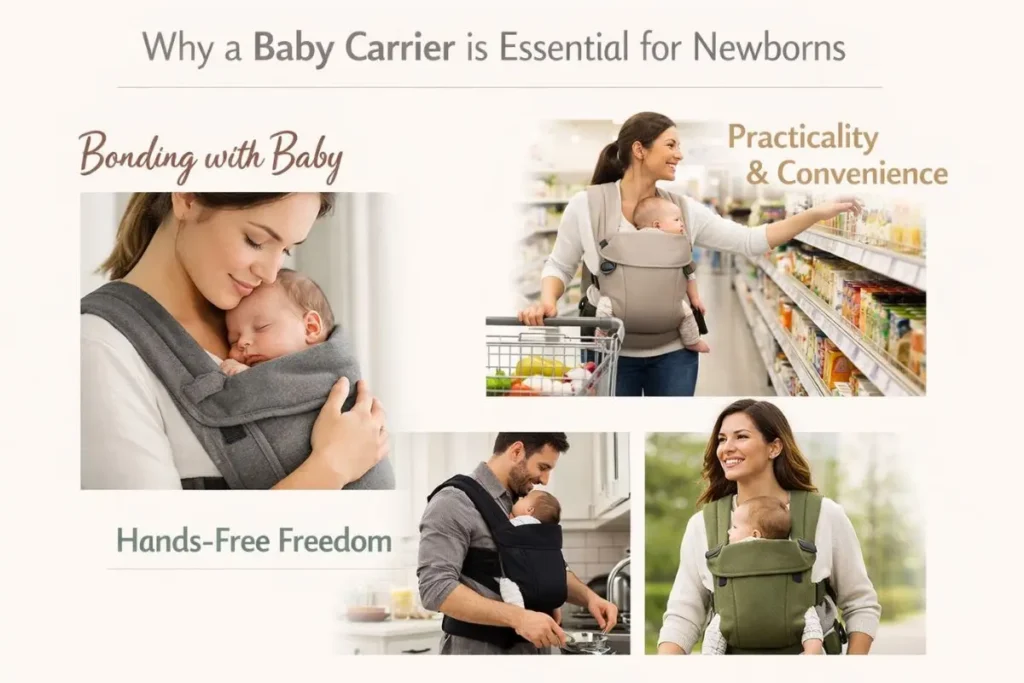
Bonding with Baby
A baby carrier allows you to keep your newborn close to you, forming a strong bond through constant physical contact. Babies thrive on this closeness, as it makes them feel secure, loved, and nurtured. This is important for their emotional and psychological development.
Practicality and Convenience
For busy parents, baby carriers are a true lifesaver. Whether you’re grocery shopping, heading to the park, or tackling household chores, a carrier lets you keep your hands free while ensuring your baby is still within arm’s reach. It’s the ultimate convenience when you need it most!
Hands-Free Freedom
Carrying your baby in a carrier gives you the freedom to move around without worrying about a stroller. Whether it’s cleaning, cooking, or taking a walk, a baby carrier lets you stay active and connected with your newborn.
Types of Baby Carriers for Newborns
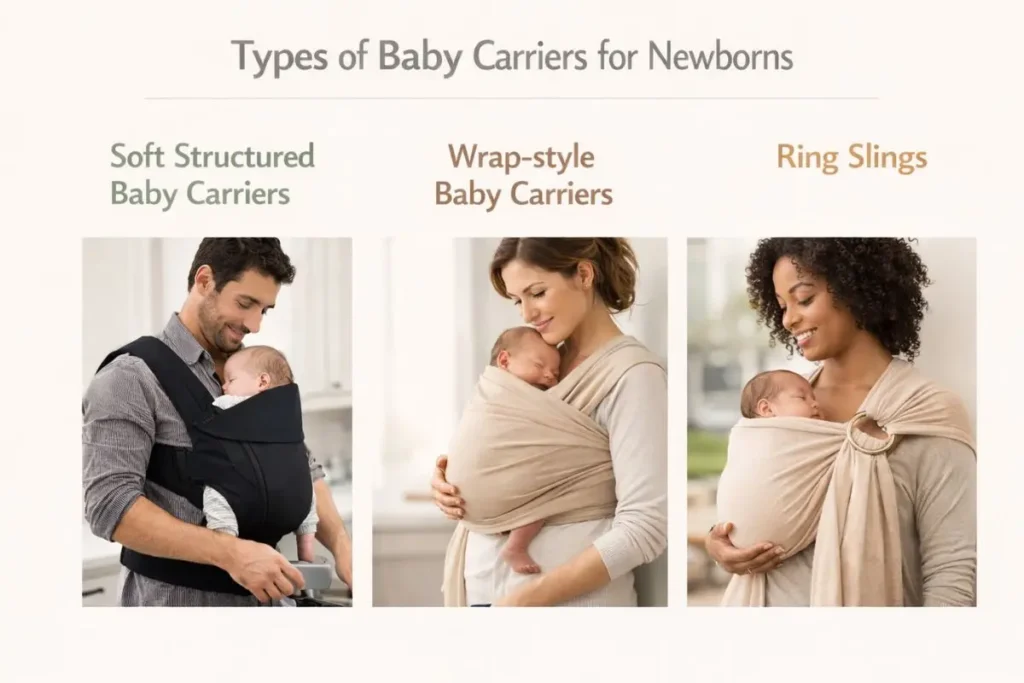
When choosing the best baby carrier for newborns, it’s essential to understand the different types available. Here are the most common ones, including a few extra types to give you a complete overview:
Soft Structured Baby Carriers
Soft structured baby carriers are one of the most popular types for newborns. They are easy to use and provide ample support for both the baby and the parent.
- Pros: Easy to adjust, provides excellent back support, and includes a padded waistband for extra comfort.
- Cons: Some models may not be as breathable, and they can be bulky.
Wrap-style Baby Carriers
Wraps are long pieces of fabric that you tie around your body to securely hold your newborn. They’re great for providing a snug, customized fit for your baby.
- Pros: Perfect for newborns, offers a cozy fit, and is great for breastfeeding.
- Cons: They can be tricky to tie and adjust, and might not provide as much back support for parents.
Ring Slings
A ring sling is a simple piece of fabric that threads through two rings, allowing you to easily adjust it to fit your baby. It’s perfect for quick errands and short-term carrying.
- Pros: Quick to put on, lightweight, and ideal for shorter periods of use.
- Cons: May not be as comfortable for long-term wear, and could cause strain on one shoulder.
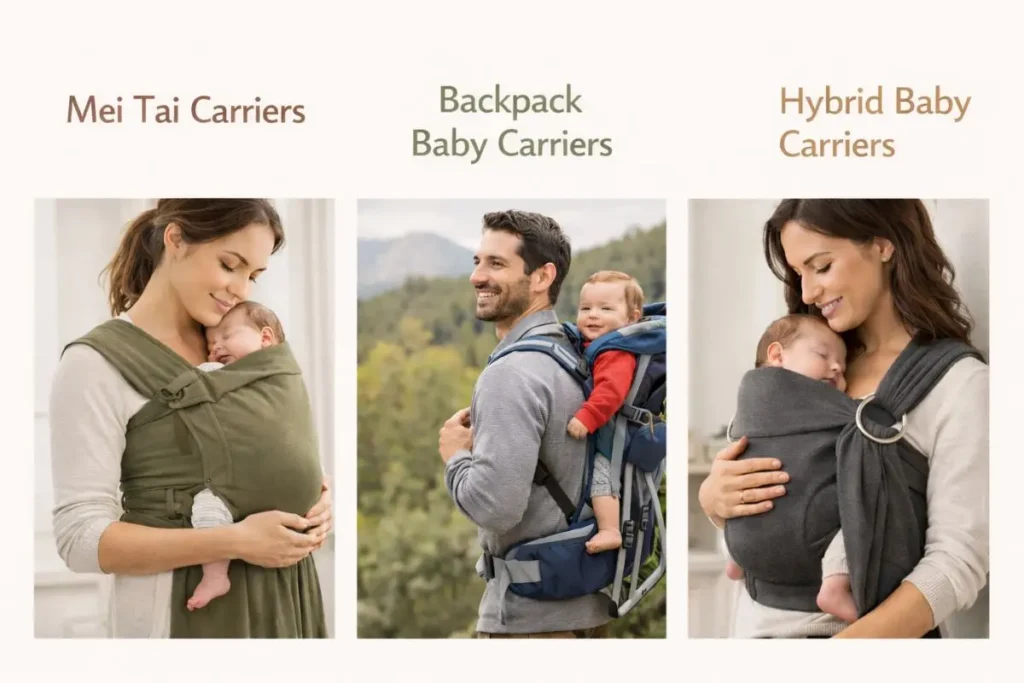
Mei Tai Carriers
A Mei Tai combines the flexibility of a wrap with the structure of a soft carrier. It uses four straps to secure your baby and is typically made from soft cloth.
- Pros: Adjustable, lightweight, and offers a lot of flexibility for different positions.
- Cons: Takes practice to tie, and it may not provide the same level of structure as other carriers.
Backpack Baby Carriers
Backpack-style carriers have a structured frame that allows your baby to sit upright, with a firm back panel providing additional support. These are often preferred for hiking or outdoor activities.
- Pros: Provides great support, distributes weight evenly, and is often equipped with extra storage.
- Cons: Generally bulkier and heavier, not as ideal for quick errands or indoor use.
Hybrid Baby Carriers
Hybrid carriers combine the best features of both soft structured carriers and wraps. They usually offer both structured support and the comfort of a snug, customizable fit.
- Pros: Versatile, often adjustable to fit different body types and stages, and offers a balance of comfort and support.
- Cons: Can be complex to use at first, and might take a little longer to adjust.
Features to Consider When Choosing Baby Carrier
When selecting the best baby carrier for newborns, consider the following key features to ensure both you and your baby are comfortable and safe.
Comfort for Both Parent and Baby
A good baby carrier should be comfortable for both you and your baby. Look for features like adjustable straps, padded shoulder straps, and a well-designed waistband. These will help prevent back and shoulder strain during use.
- Tip: Make sure the carrier has soft padding around the baby’s head and neck for added comfort.
Baby’s Positioning and Safety
Proper positioning is crucial for a newborn’s comfort and safety. Your baby should be placed in an ergonomic position, with their legs in a natural, bent “frog leg” position, and their airways should remain clear at all times.
- Important: Avoid carriers that allow your baby to slump or lean forward, which can restrict airflow and lead to discomfort.
Adjustability and Size Options
The carrier should be adjustable to fit different body types. You’ll need a carrier that grows with your baby, providing support from newborn to toddler stages.
- Tip: Choose a carrier with adjustable straps that can easily switch from newborn to toddler mode.
Fabric and Breathability
Newborns have delicate, sensitive skin, so it’s essential to choose a carrier made from soft, breathable fabrics like cotton, mesh, or organic fibers. These materials ensure your baby doesn’t overheat, especially in warmer climates.
- Tip: If you live in a warmer area, opt for a carrier with a breathable mesh panel to improve airflow.
Ease of Use
Look for a carrier that’s easy to put on and adjust, especially if you plan on using it frequently. The last thing you want is a complicated carrier that’s difficult to manage when you’re on the go.
- Tip: Some carriers feature one-handed adjustments, which can be a lifesaver when you’re holding your baby.
Comfort and Support
Spine and Hip Support
Proper spine and hip support are crucial for newborns. A well-designed baby carrier keeps your newborn in an optimal position that encourages healthy spinal development. Look for ergonomic carriers that evenly distribute your baby’s weight.
- Ergonomic carriers are specifically designed to prevent unnecessary strain on your baby’s spine and hips.
Proper Weight Distribution
Weight distribution is vital for both the parent and the baby. A well-designed carrier will evenly distribute the weight, preventing discomfort in your shoulders, back, and hips.
Tip: Choose carriers with padded shoulder straps and a waist belt that helps distribute the weight more evenly.
How to Choose the Best Baby Carrier
Everyday Use vs. Special Occasions
Consider how often and in what situations you will use the carrier. For everyday use, a soft structured carrier is great for convenience. For travel or hiking, a Mei Tai carrier may be a better option due to its compactness and flexibility.
- Tip: Soft structured carriers are perfect for daily activities, while wrap-style and Mei Tai carriers are ideal for short trips or travel.
Long-Term Usability
Choose a carrier that can grow with your baby. Many carriers are adjustable enough to be used from newborn to toddler stages, allowing for rear-facing and forward-facing options as your baby grows.
- Tip: Opt for a carrier that adapts to your baby’s needs as they grow. This can save you money in the long run.
Common Mistakes
Ignoring Proper Fit
One common mistake is choosing a carrier that doesn’t fit well. Always ensure the carrier is adjustable to suit both you and your baby’s body, and don’t forget to check how easy it is to adjust.
Choosing Fashion Over Function
It’s easy to be tempted by stylish carriers, but it’s important to prioritize comfort, support, and safety. Choose a carrier that will meet your baby’s needs first.