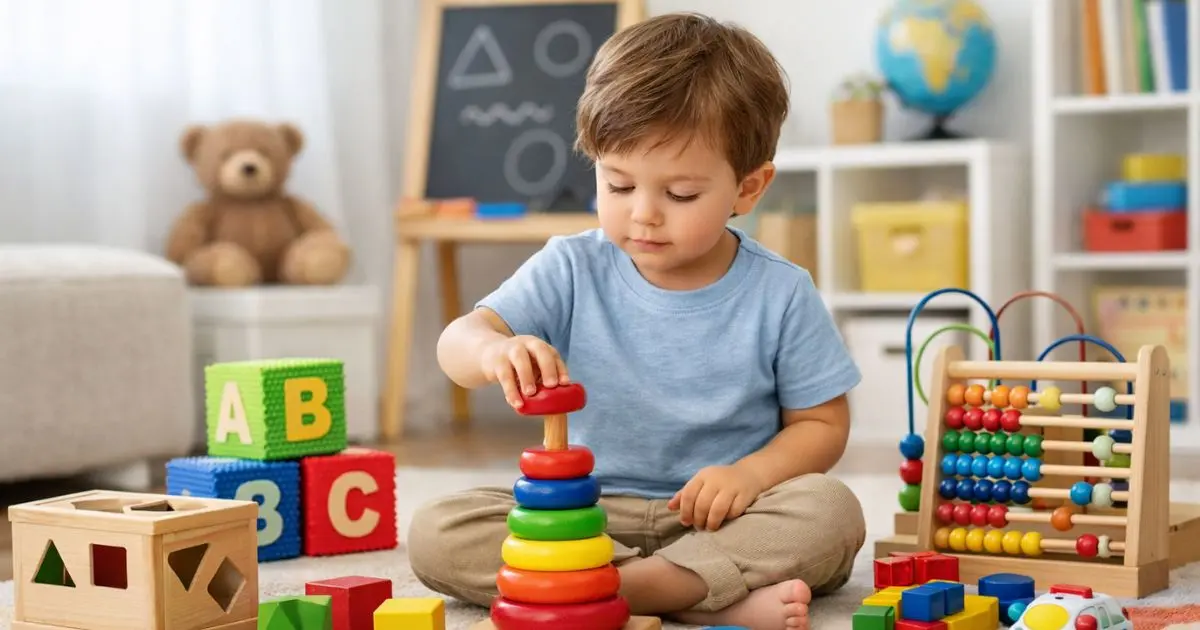
When it comes to raising toddlers, we know how important it is to choose the right toys. Not only do they keep your little one entertained, but they also play a crucial role in development and learning. In this guide, we’ll explore the best toddler toys for development and learning, providing you with a comprehensive overview of what to look for and how these toys can boost your child’s growth.
Why Toddler Toys are Crucial for Early Development
Toddler toys are not just for fun—they are a vital part of your child’s early development. At this stage, children’s brains are like sponges, soaking up information from everything they encounter. Toys designed for learning can help them develop:
- Cognitive skills: Problem-solving, memory, and logic.
- Physical skills: Hand-eye coordination, balance, and fine motor skills.
- Social and emotional skills: Empathy, sharing, and cooperation.
The best toddler toys for development and learning serve more than one purpose. For instance, a simple building block doesn’t just entertain; it also helps toddlers improve their dexterity and spatial awareness.
Factors When Choosing Toddler Toys for Learning
Choosing the best learning toys for toddlers can be tricky with so many options available. Here are some key factors to help guide your decision:
- Age-appropriate: Make sure the toy matches your child’s developmental stage.
- Safety: Look for toys that are non-toxic and free of choking hazards.
- Engagement level: Choose toys that will hold your child’s attention and encourage exploration.
- Durability: Toddlers can be rough on toys, so look for sturdy, long-lasting options.
By keeping these factors in mind, you can find educational toys that will support your child’s growth while providing fun.
How to Safely Introduce New Toys to Your Toddler
Introducing new toys can be exciting, but safety comes first. Follow these steps to ensure the process is smooth and safe:
- Inspect for safety: Always check for small parts that could be a choking hazard.
- Supervise playtime: Especially with new toys, keeping a watchful eye ensures your child’s safety.
- Rotate toys: Too many toys at once can overwhelm a toddler, so rotate toys to keep playtime fresh and exciting.
Best Toys for Brain & Cognitive Development
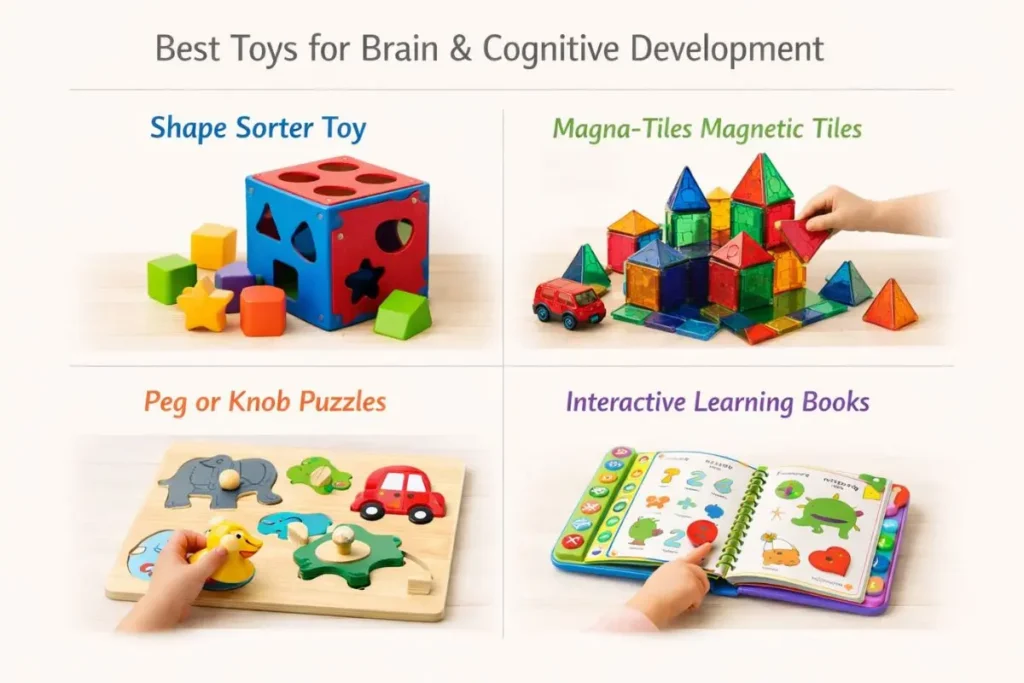
1. Shape Sorter Toy
A classic toy where toddlers place different shapes into matching holes. This encourages early problem-solving as they figure out which shape fits where. Not only does it help toddlers with shape and color recognition, but it also enhances their cognitive skills as they learn to organize and categorize objects.
- Development Benefits: Improves logical thinking and memory, promotes hand-eye coordination, and teaches cause and effect.
- Why It Matters: It lays the foundation for early math skills like recognizing patterns and sorting objects.
2. Magna‑Tiles Magnetic Tiles
These colorful magnetic tiles come in various shapes that can connect to form 3D structures. Magna-Tiles promote spatial awareness and creativity by allowing toddlers to build towers, houses, and geometric shapes.
- Development Benefits: Encourages imaginative play, enhances understanding of geometry, and develops fine motor skills.
- Why It Matters: Magna-Tiles foster creativity and critical thinking, teaching toddlers how to plan and structure their ideas.
3. Peg or Knob Puzzles
Puzzles with large knobs designed for small hands are fantastic for developing problem-solving abilities. Toddlers match puzzle pieces to corresponding slots, learning shape recognition and understanding patterns.
- Development Benefits: Stimulates memory, reasoning, and attention span while promoting fine motor development through grasping and placing pieces.
- Why It Matters: Puzzles are essential for early cognitive development and are great for building concentration and memory retention.
4. Interactive Learning Books
Books with sounds, buttons, or flaps engage toddlers in active learning. These interactive books often feature animals, letters, numbers, and words. As toddlers press buttons to hear sounds or see images, they build early literacy skills.
- Development Benefits: Enhances language development, boosts vocabulary, and aids in comprehension.
- Why It Matters: Storytelling and visual engagement promote reading readiness and communication skills.
Best Toys for Fine Motor Skill Development
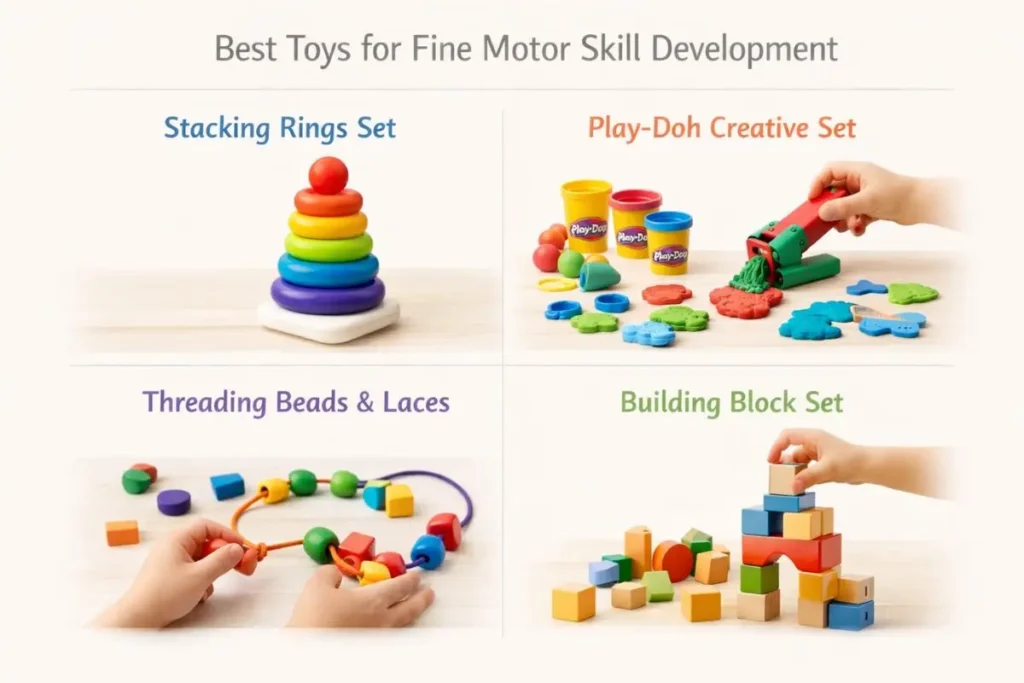
1. Stacking Rings Set
This simple toy features a set of colorful rings that toddlers stack onto a central post, with each ring decreasing in size. This toys works wonders for developing grasping skills, and it introduces toddlers to size sequencing.
- Development Benefits: Strengthens fine motor control, enhances hand-eye coordination, and teaches size recognition.
- Why It Matters: Stacking rings help toddlers learn about organization and dexterity—skills they will use when they start writing or drawing.
2. Play‑Doh Creative Set
Play‑Doh is an excellent tool for toddlers to build hand strength and fine motor skills. As toddlers squish, roll, and shape the dough, they engage in sensory play and enhance their creativity.
- Development Benefits: Builds finger strength, enhances grip control, and encourages artistic expression.
- Why It Matters: It’s a versatile toy for strengthening fine motor skills and promoting imaginative, tactile learning.
3. Threading Beads & Laces
A threading toy typically includes beads of various shapes and sizes and a lace to string them together. This encourages focus, hand-eye coordination, and problem-solving.
- Development Benefits: Improves dexterity, concentration, and pattern recognition.
- Why It Matters: Threading activities also help develop planning and sequencing skills, crucial for early math concepts.
4. Building Block Set
Building blocks come in all shapes and sizes, allowing toddlers to stack, balance, and create their own designs. This promotes fine motor skills as toddlers work on picking up and placing blocks.
- Development Benefits: Enhances dexterity, promotes creative thinking, and teaches cause and effect through construction.
- Why It Matters: Building blocks introduce spatial awareness, help toddlers understand structure, and support problem-solving skills.
Best Toys for Gross Motor Skill Development
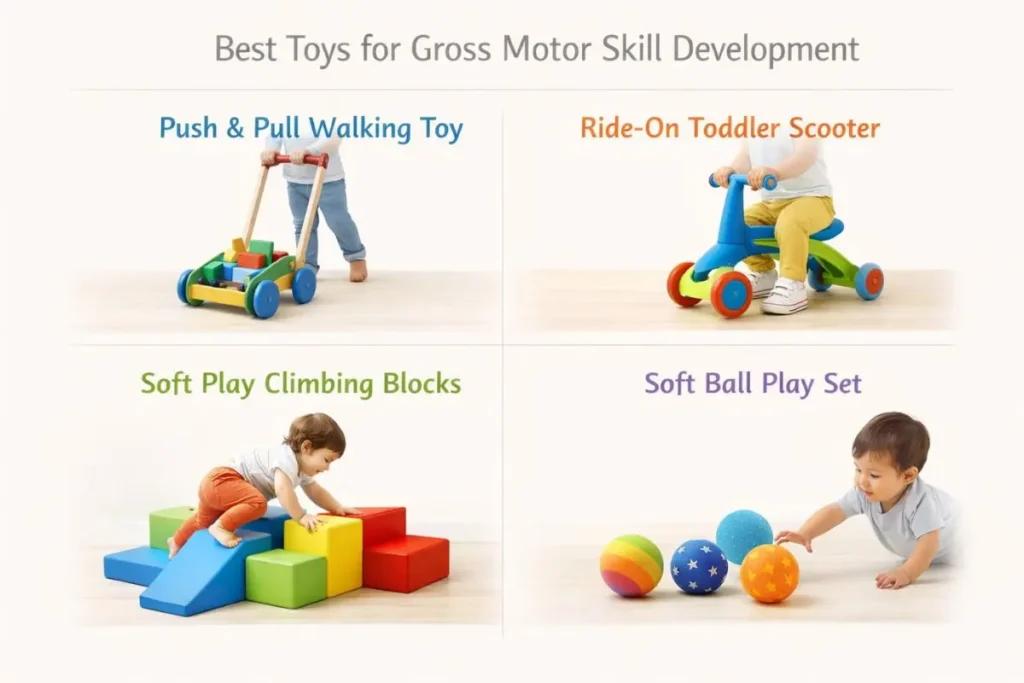
1. Push & Pull Walking Toy
These toys encourage toddlers to walk by either pushing or pulling the toy behind them. It provides excellent support for balance and helps toddlers with their first steps.
- Development Benefits: Strengthens core muscles, enhances balance, and improves walking coordination.
- Why It Matters: Walking toys build confidence in movement, helping toddlers develop the physical strength needed for walking independently.
2. Ride‑On Toddler Scooter
A scooter or ride‑on toy allows toddlers to use their feet to propel themselves forward, which improves leg strength and coordination.
- Development Benefits: Enhances gross motor skills, builds balance and muscle strength, and improves coordination.
- Why It Matters: Ride‑on toys prepare toddlers for more complex physical activities like running, jumping, and dancing.
3. Soft Play Climbing Blocks
These soft blocks are designed for toddlers to climb and explore. Toddlers can climb over them, enhancing core strength and balance.
- Development Benefits: Develops gross motor skills, improves balance, and supports strength and coordination.
- Why It Matters: Climbing toys encourage active play, enhancing physical agility and supporting gross motor growth.
4. Soft Ball Play Set
A set of soft balls encourages throwing, catching, and rolling, which develops gross motor skills and coordination.
- Development Benefits: Enhances muscle coordination, improves eye-hand coordination, and strengthens physical control.
- Why It Matters: Playing with balls teaches basic sports skills and helps toddlers understand social play through interactive games.
Best Toys for Creative & Imaginative Play
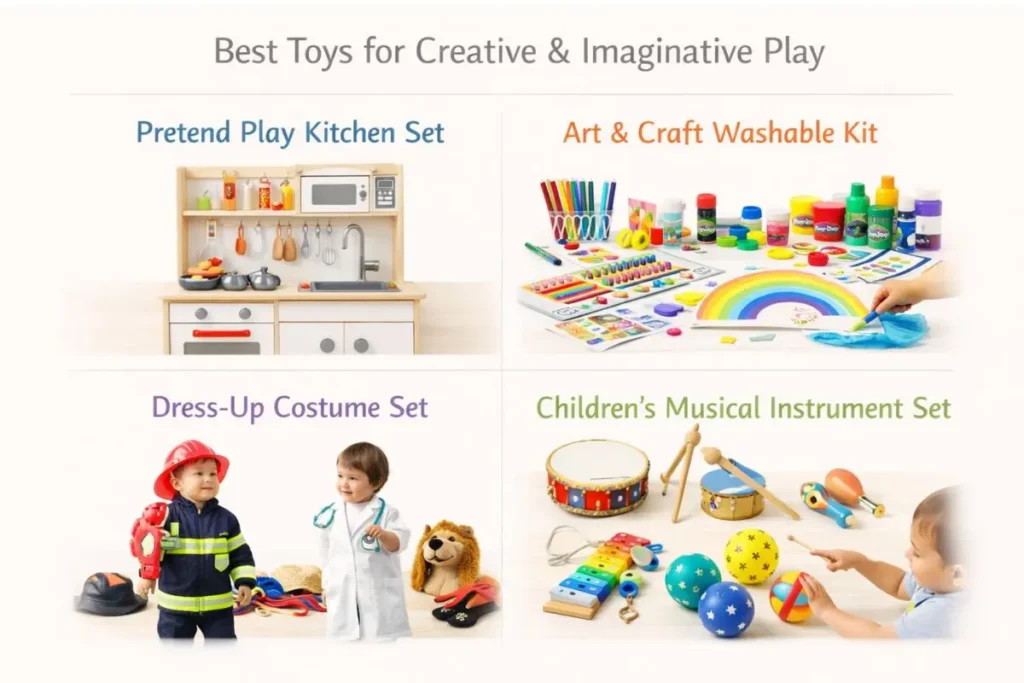
1. Pretend Play Kitchen Set
A toy kitchen set includes miniature kitchen items such as pots, pans, and utensils. This encourages role-playing and creative thinking as toddlers act out real-life scenarios.
- Development Benefits: Boosts imagination, teaches problem-solving, and promotes social skills through pretend cooking.
- Why It Matters: Pretend play helps toddlers understand daily routines, enhances social interactions, and introduces them to life skills.
2. Art & Craft Washable Kit
Markers, crayons, paints, and stickers allow toddlers to explore artistic expression. They can create drawings, paintings, and designs.
- Development Benefits: Encourages creativity, promotes fine motor skills, and helps toddlers learn color recognition.
- Why It Matters: Art activities develop visual-spatial skills and provide a creative outlet, fostering self-expression.
3. Dress‑Up Costume Set
Dress‑up costumes allow toddlers to play pretend, mimicking roles like firefighters, doctors, or animals. This enhances imagination and social play.
- Development Benefits: Encourages role-play, develops empathy, and enhances storytelling skills.
- Why It Matters: Dressing up and role-playing allow toddlers to explore different identities and practice communication.
4. Children’s Musical Instrument Set
A set of musical instruments like drums, xylophones, and tambourines helps toddlers discover rhythm, sound, and music.
- Development Benefits: Promotes auditory development, enhances rhythm, and builds coordination through playing instruments.
- Why It Matters: Early exposure to music boosts cognitive development and encourages emotional expression.
How to Maximize Learning with Toddler Toys
To truly maximize the learning potential of your toddler’s toys, consider the following tips:
- Create a safe and stimulating play area: Keep the toys in an area where your toddler can explore freely, but also ensure the space is free of hazards.
- Encourage open-ended play: Toys like building blocks or dolls can be used in countless ways, sparking creativity and imagination.
- Incorporate social play: Use toys to encourage interaction with other children or family members, promoting social skills.
The key is to keep playtime fun and diverse, which helps your child stay engaged and continue learning.
The Role of Play in Toddler Education
Play is one of the most effective ways toddlers learn. Through play, children develop essential skills that will help them throughout their lives. Here’s how:
- Cognitive Development: Play encourages problem-solving, memory retention, and logical thinking.
- Physical Development: Toys that involve movement or dexterity help toddlers build fine and gross motor skills.
- Emotional Development: Play allows toddlers to express their emotions, learn empathy, and practice social behaviors.
Research has shown that play-based learning is one of the best ways to foster long-term cognitive and emotional growth in young children.