
The first six weeks with a baby are often the most overwhelming and transformative time in a new parent’s life. What most people don’t tell you is that, while it’s an exciting new chapter, the reality of those first weeks can be full of surprises. From sleepless nights to navigating the complexities of feeding and baby care, new parents find themselves adjusting to an entirely new routine.
The challenges of breastfeeding, sleep deprivation, and the emotional rollercoaster of postpartum recovery can be draining. In this article, we’ll dive into what really happens during those first six weeks with a baby. You’ll learn essential tips for coping with sleepless nights, how to bond with your newborn, and what to expect during the first month of baby care.
The Emotional Rollercoaster of the First 6 Weeks
The first 6 weeks with a newborn aren’t just physically demanding—they’re emotionally challenging as well. From hormonal changes to the overwhelming responsibility of caring for your baby, it’s easy to feel like you’re on an emotional rollercoaster.
- The Baby Blues: Many new mothers experience baby blues, a period of mood swings, irritability, and sadness. These feelings are due to hormonal fluctuations as your body adjusts to the post-pregnancy phase.
- Postpartum Depression (PPD): For some, the baby blues turn into something more serious—postpartum depression. If you find yourself feeling hopeless, detached, or unable to cope with daily tasks, it’s essential to seek help from a professional. PPD can affect both mothers and fathers and requires attention.
Tips for Emotional Support:
- Share your feelings with your partner, family, or a counselor.
- Establish a support network early on—whether through online groups or local meetups.
- Practice self-compassion. It’s okay to not feel perfect.
Sleepless Nights and the Impact on Your Well-being

Anyone who’s told you that you’ll get used to sleepless nights in the first six weeks with a baby may be giving you an idealized version of the truth. Sleep deprivation is one of the toughest challenges for new parents.
- Why Newborns Don’t Sleep Through the Night: Babies have tiny stomachs and need to eat frequently, often every 2-3 hours. Their sleep cycle is different from adults, with shorter periods of deep sleep.
- How It Affects You: The lack of sleep can take a toll on your mood, health, and mental clarity. It can also lead to more stress and frustration, making the early weeks feel even more exhausting.
Coping with Sleep Deprivation:
- Sleep When Your Baby Sleeps: Try to nap when your baby is sleeping, even if it’s for a short time.
- Create a Sleep Routine for Your Baby: While it may take time, establishing a bedtime routine can help your baby sleep for longer stretches.
- Ask for Help: Don’t hesitate to accept help from others—having someone watch the baby so you can sleep is invaluable.
Navigating Feeding Challenges
Feeding is one of the most crucial aspects of the first six weeks. Whether you choose to breastfeed or formula-feed, it’s important to understand the challenges you may face and what’s best for you and your baby.
- Breastfeeding Struggles: Many new mothers face difficulties such as sore nipples, latch issues, or worries about milk supply. It’s normal for breastfeeding to take some time to get right.
- Formula Feeding: Formula feeding may seem like an easier option, but it comes with its own set of challenges. You’ll need to prepare bottles frequently, and some babies may struggle with certain formulas due to digestion issues.
Tips for Feeding Success:
- Breastfeeding Tips: Use nipple creams, get help with latch techniques, and reach out to a lactation consultant.
- Formula Feeding Tips: Choose a formula that suits your baby’s needs, and make sure you’re following preparation guidelines precisely.
- Combination Feeding: Some parents find a combination of breastfeeding and formula feeding works best for their baby and lifestyle.
Physical Recovery After Giving Birth
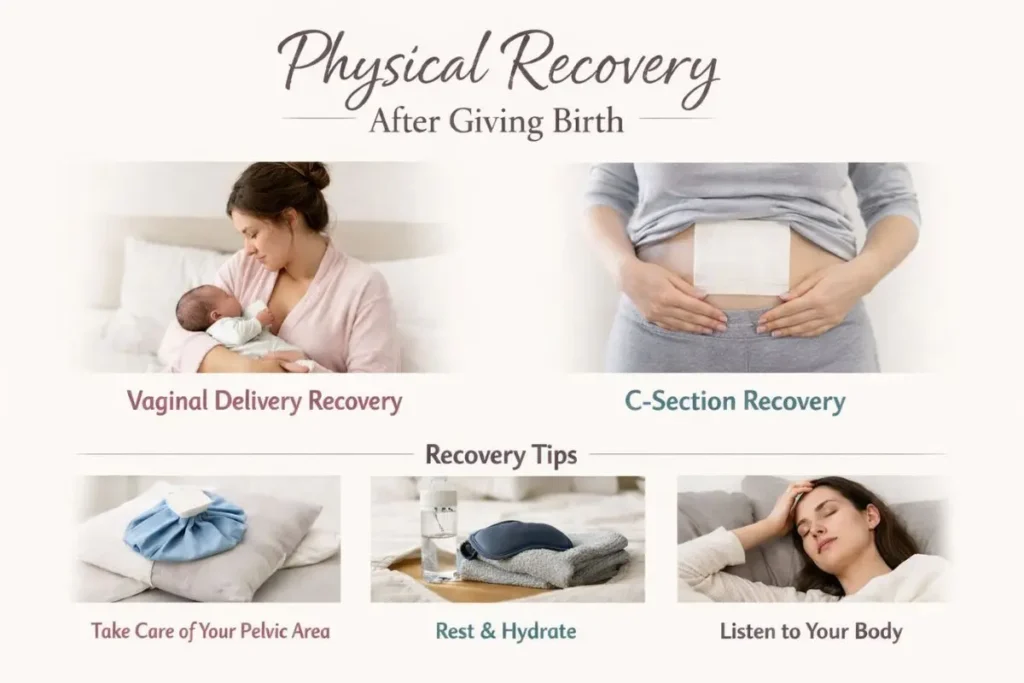
Your body has just gone through a major transformation, and physical recovery after childbirth is no small feat. Many mothers focus on their babies, forgetting to care for themselves during the first six weeks.
- Vaginal Delivery Recovery: Post-birth, you might experience vaginal soreness, bleeding (lochia), and swelling. It’s normal, but it’s also important to rest and take care of your pelvic area.
- C-Section Recovery: If you had a C-section, your recovery will take longer. You’ll have to avoid lifting heavy items and take extra care with your incision.
Recovery Tips:
- Take Care of Your Pelvic Area: Use ice packs, sit on soft surfaces, and consider pelvic floor exercises as you heal.
- Rest and Hydrate: Your body needs time to heal, so prioritize rest and drink plenty of water to stay hydrated.
- Listen to Your Body: Don’t push yourself too hard. If you’re in pain, take it easy and ask for help.
Baby’s Development Milestones
The first six weeks with a newborn is all about learning how your baby grows and changes. It’s crucial to understand that not every baby hits milestones at the same time.
- Physical Growth: Babies will gain weight rapidly during the first six weeks, but there’s no “one-size-fits-all” growth chart. Your baby will likely double their birth weight by the time they reach 6 months, but don’t obsess over the numbers.
- Cognitive Development: You might notice your baby responding to sounds and focusing on faces. They’ll start to make eye contact, but don’t worry if your baby isn’t smiling yet.
What You Can Expect:
- Increased alertness after a few weeks.
- Possible early signs of social development (like following objects with their eyes).
Remember, milestones vary from baby to baby, and they’ll reach them when they’re ready.
Mental Load of Parenthood
New parents often carry the mental load of parenthood without realizing it. From planning meals to managing a baby’s schedule, your mind is constantly occupied.
- Mental Tasks: Managing baby’s feeding, sleep schedule, doctor appointments, and even grocery shopping can leave you feeling drained.
- Managing Stress: It’s easy to feel overwhelmed when trying to balance everything. The first six weeks can feel like a constant juggling act.
How to Manage the Mental Load:
- Delegate Tasks: Don’t be afraid to let your partner or family help with tasks. Parenting is a team effort.
- Organize and Simplify: Use a planner or app to keep track of baby care and other responsibilities. Break big tasks into smaller, manageable chunks.
- Don’t Be Afraid to Ask for Help: Whether it’s asking for help with baby care or mental health support, seeking help is vital.
Balancing Parenthood with Daily Life

Adjusting to life with a newborn requires a significant change in daily routines. Managing life with a newborn often feels like trying to balance a million things at once.
- Housework and Meals: Cleaning and cooking might take a backseat while you focus on your baby. It’s okay to ask for help or let things pile up temporarily.
- Time Management: You’ll quickly realize that time flies when you’re caring for your baby. Learning how to set priorities is crucial.
Tips for Balancing Parenthood:
- Meal Prep: Prepare meals in advance or order takeout on days when you just can’t cook.
- Set Routines: Establish small routines to keep some sense of order. It can help you stay on track with baby care and other tasks.
Navigating Changes in Your Partnership
The arrival of a baby can change your relationship with your partner. Parenting and relationship changes often occur as you both navigate this new chapter of life.
- Communication Challenges: With so much focus on the baby, it’s easy to overlook each other’s needs. Make sure to communicate openly about your feelings, frustrations, and joys.
- Setting Aside Time for Each Other: Even though it’s tough, try to carve out moments for intimacy and bonding as a couple.
How to Navigate Relationship Changes:
- Stay Connected: Even small gestures like holding hands, sharing a laugh, or a quick hug can help maintain your connection.
- Support Each Other: Offer emotional support and share the responsibility of baby care.
Building a Support Network
Building a solid new parents’ support system is essential. This network will provide practical help, emotional support, and guidance.
- Family and Friends: Let family and friends know how they can support you—whether it’s babysitting, running errands, or offering advice.
- Parenting Groups: Online communities or local groups can be invaluable for learning from others going through the same challenges.
How to Build Your Support Network:
- Reach Out: Don’t hesitate to ask for help, whether it’s from family, friends, or a support group.
- Stay Connected: Join online forums, Facebook groups, or community organizations for advice and emotional support.
How to Cope With Postpartum Anxiety
While many are aware of postpartum depression, postpartum anxiety is a lesser-known but equally significant concern for new parents.
- What is Postpartum Anxiety?: It’s a constant sense of worry or fear about your baby’s safety or your own ability to parent. It can cause physical symptoms like a racing heart, dizziness, or nausea.
- Managing Anxiety: Talking to a therapist, practicing mindfulness, and joining support groups can help manage symptoms.
Tips for Managing Anxiety:
- Mindfulness and Breathing Exercises: Try deep breathing techniques to calm your nerves when you’re feeling overwhelmed.
- Talk About It: Don’t bottle up your fears. Sharing your thoughts with someone you trust can lighten the mental load.
Creating a Care Routine
A newborn care routine is essential for making those first six weeks a bit more manageable. Establishing one early on can give you structure and help your baby adjust more easily.
- Feeding: Set up a feeding schedule, whether breastfeeding or formula feeding, to help regulate your baby’s needs.
- Sleeping: Try to establish a bedtime routine that helps signal to your baby that it’s time to sleep.
- Diapering and Bathing: Consistent diaper changes and introducing bath time can create a sense of predictability for your baby.
Dealing with Postpartum Body Image and Acceptance
After giving birth, many mothers struggle with their postpartum body image. Your body may not look or feel the same, and that’s okay.
- Emotional Struggles: It’s natural to feel some level of dissatisfaction with how your body has changed.
- Body Positivity: Embrace your body for the incredible work it did during pregnancy and childbirth.
Tips for Body Acceptance:
- Focus on Health: Instead of focusing on appearance, prioritize healthy habits.
- Take It Slow: Don’t rush the return to your pre-pregnancy body. Give yourself time and grace.