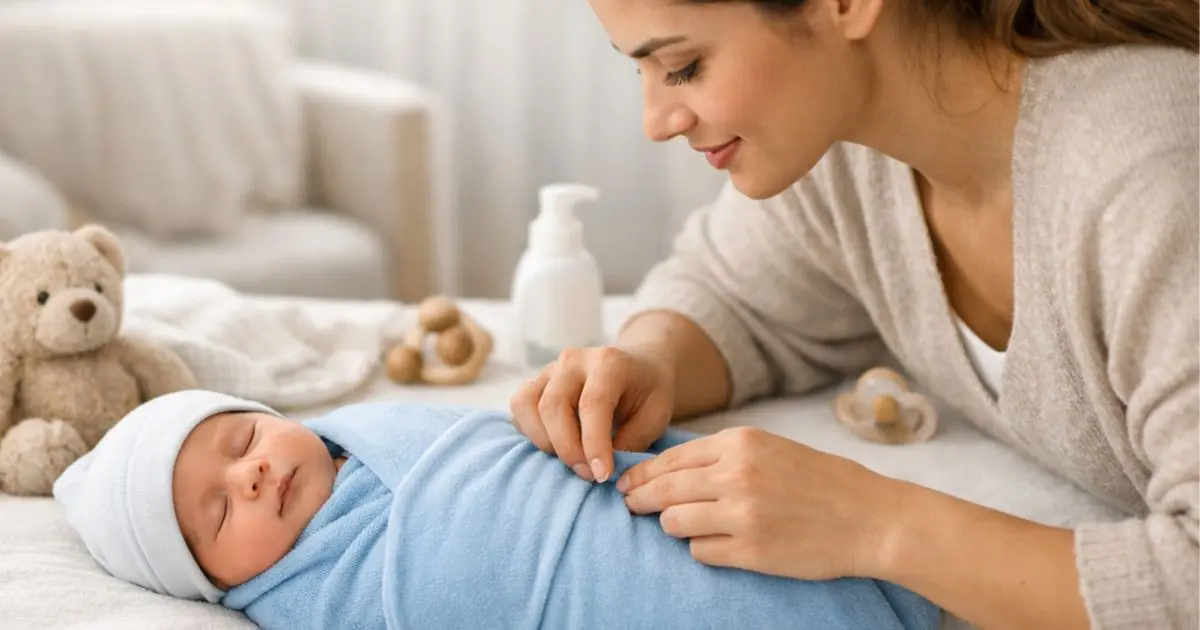
Swaddling is a time-tested technique that has been practiced for centuries, offering a range of incredible benefits for both parents and newborns. Mastering swaddling can be a game-changer, as it not only helps babies feel secure but also promotes better sleep, comfort, and overall well-being. In this detailed guide, we will uncover the secret benefits of swaddling, explore the best practices, and provide easy-to-follow steps for swaddling your baby perfectly every time.
From calming the startle reflex to aiding in sleep training, the benefits of swaddling are numerous, making it an essential skill for new parents. Whether you’re just starting out or looking to improve your technique, this comprehensive swaddling guide will walk you through the process, ensuring your baby experiences the peace and comfort that comes with this ancient practice.
What is It?
Swaddling is the act of wrapping a baby in a blanket or cloth, securely and snugly, to provide comfort and warmth. This practice dates back thousands of years, originating in many cultures around the world, from ancient Egypt to Native American traditions. In essence, it mimics the feeling of being in the womb, offering a sense of security for your baby.
Why Swaddle?
- Comfort & Security: Babies have spent nine months in the tight, secure environment of the womb. Swaddling helps mimic that sensation, creating a safe environment that reduces stress and anxiety.
- Helps with Sleep: Swaddling is known to promote longer and deeper sleep for infants by preventing the startle reflex (Moro reflex), which can wake them up suddenly.
- Reduces Crying: Swaddling has been shown to reduce excessive crying, making it an effective soothing technique for fussy babies.
By swaddling, you provide your newborn with the calm they need to relax and feel secure, helping both you and your baby get a restful night’s sleep.
Incredible Benefits
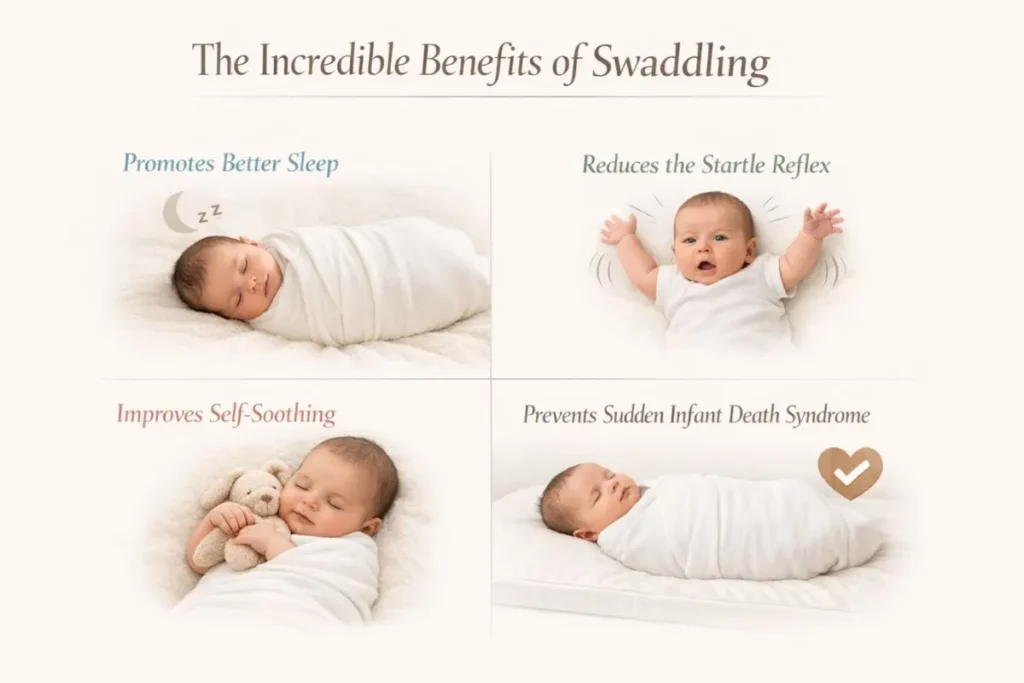
Swaddling provides more than just a warm embrace for your baby. The benefits are wide-ranging, from improving sleep quality to enhancing your baby’s development.
Promotes Better Sleep
Babies have a natural startle reflex, where they suddenly jerk their arms or legs. Swaddling prevents this reflex by securing their limbs, helping them sleep peacefully without the risk of waking up in the middle of the night. Studies have shown that swaddled babies often sleep for longer stretches, allowing them and their parents to rest more effectively.
Reduces the Startle Reflex
The Moro reflex—or the startle reflex—is a natural response that can make babies feel scared and startled, often waking them up in the middle of their sleep. Swaddling helps reduce this reflex, making babies feel more secure and preventing abrupt movements that can disturb their sleep.
Improves Self-Soothing
Swaddling offers babies the ability to self-soothe, a skill that is important for their emotional development. The tightness of the swaddle replicates the feeling of being held, which encourages babies to calm themselves when feeling agitated or restless.
Prevents Sudden Infant Death Syndrome
Proper swaddling has been linked to reducing the risk of SIDS. When swaddled correctly, babies are less likely to roll onto their stomachs, which is a dangerous position for sleeping. Always ensure your baby is placed on their back when swaddled.
When Should You Start?
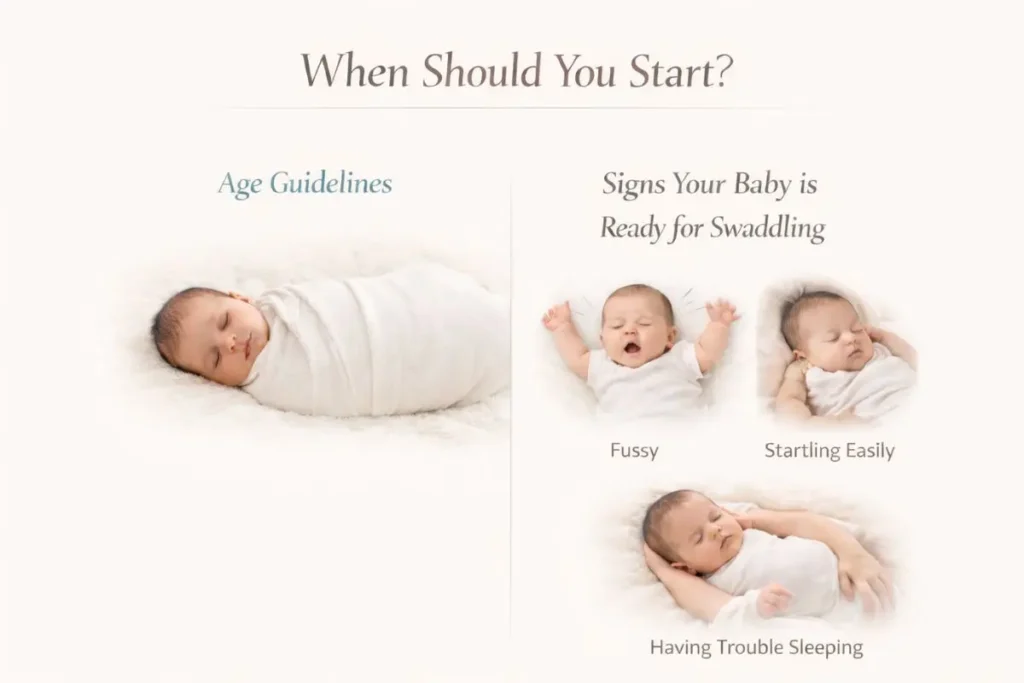
Age Guidelines
Swaddling is most effective when done early in life. Newborns (0-2 months) benefit the most from being swaddled, as it helps them feel secure and comfortable in their first few months.
However, once your baby starts showing signs of rolling over (typically around 2-3 months), it’s time to stop swaddling. This is because babies who can roll over are at risk of suffocation if they are swaddled, as it limits their ability to move freely.
Signs Your Baby is Ready
You’ll notice your baby may be ready for swaddling if they are:
- Fussy and have difficulty settling down.
- Startling easily, waking themselves up with jerky arm movements.
- Having trouble sleeping without being held or rocked to sleep.
How to Swaddle Your Baby
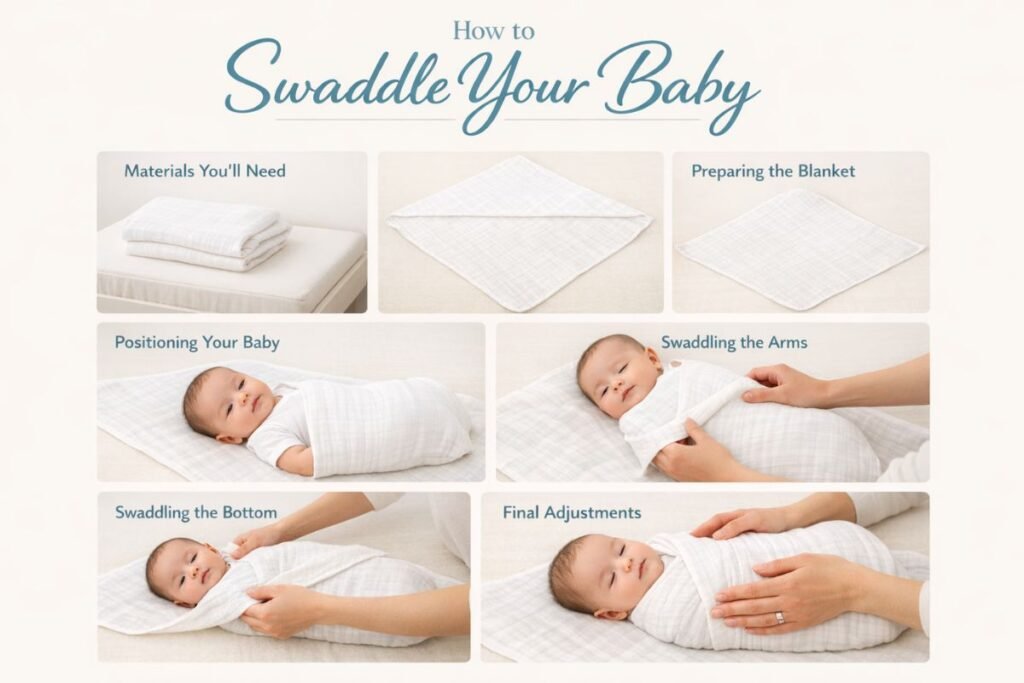
Swaddling is easy to learn, but it’s important to do it right for your baby’s safety and comfort. Follow this step-by-step guide to swaddle your baby securely and comfortably.
Materials You’ll Need
- Swaddling blanket (a soft, breathable fabric such as muslin or cotton is ideal).
- Flat surface (such as a changing table or bed).
Preparing the Blanket
- Lay the swaddling blanket out in a diamond shape on a flat surface.
- Fold down the top corner about 6 inches to create a straight edge.
Positioning Your Baby
- Place your baby on their back, with their head positioned just above the folded edge of the blanket.
Swaddling the Arms
- Gently wrap one side of the blanket over your baby’s arm and chest, tucking the edge of the fabric under their body.
- Repeat with the other side, securing the blanket under their body, leaving enough room for their arms to move naturally but snugly.
Swaddling the Bottom
- Fold the bottom of the blanket up toward your baby’s chin, covering their feet and leaving enough room for their legs to bend slightly. This ensures your baby is comfortable and not restricted.
Final Adjustments
- Check the swaddle to make sure it’s not too tight, especially around your baby’s chest and hips. You should be able to fit two fingers comfortably between the swaddle and your baby’s chest.
Tips and Best Practices
Swaddling is easy, but following the right techniques can ensure your baby’s comfort and safety.
Don’t Over-Swaddle
While it’s important to wrap your baby snugly, over-swaddling can be harmful. The swaddle should not restrict your baby’s chest, hips, or legs. Leave enough space to ensure that your baby can move their hips freely, promoting healthy hip development.
Nighttime vs. Daytime
For nighttime, swaddle your baby to ensure they stay calm and comfortable while they sleep. During the day, swaddle for shorter periods, as babies need time to stretch and develop their muscles.
Avoid Swaddling with Loose Fabrics
Only use safe, breathable fabrics for swaddling. Avoid thick, loose blankets or anything that could come undone while the baby is sleeping. Choose fabrics like muslin or cotton to ensure your baby is comfortable and safe.
Signs of Overheating
Keep an eye on your baby to make sure they’re not overheating in their swaddle. Overheating can be dangerous, so check for signs like:
- Sweating
- Red face or flushed skin
- Warm to the touch
Common Mistakes
Swaddling is safe when done correctly, but there are common mistakes that parents should be aware of:
Swaddling Too Tightly
Make sure the swaddle isn’t too tight around your baby’s chest or hips. Tight swaddling can restrict breathing and impact your baby’s growth, so always leave some room for comfort.
Using Unsafe Fabrics
Avoid using fabrics that could pose a suffocation risk. Loose blankets or thick, non-breathable materials should be avoided for swaddling.
Swaddling When Baby Can Roll Over
Once your baby starts rolling over (around 2-3 months), stop swaddling them. Babies need to be able to move freely to ensure they can reposition themselves if needed.
What to Do If Swaddling Isn’t Working
If your baby resists swaddling, or if it’s no longer safe, there are alternatives to help them feel secure and calm.
Baby Sleep Sacks
Sleep sacks are a great alternative to swaddling. These wearable blankets allow babies to feel secure while giving them freedom to move their arms and legs.
Other Calming Techniques
If swaddling isn’t working, consider these alternatives:
- Rocking or swaddling your baby with a pacifier.
- Playing white noise to soothe your baby.
- Gently patting or rubbing their back to comfort them.