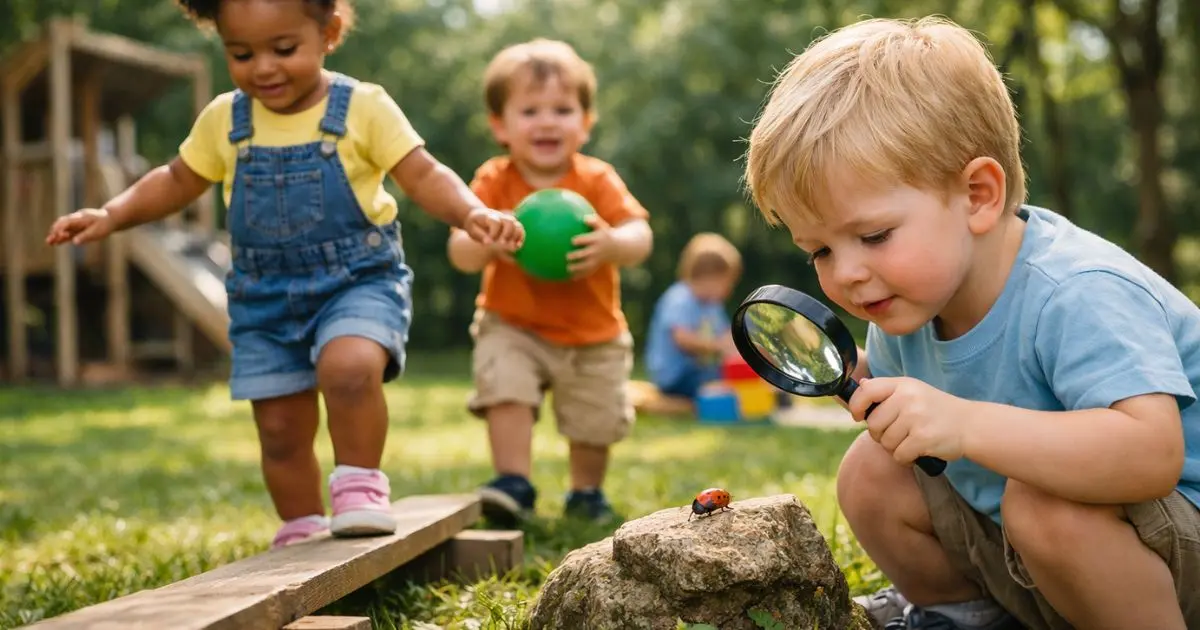
Toddlers need daily outdoor play for development because it plays a crucial role in their physical, emotional, and cognitive growth. Outdoor play provides toddlers with a unique opportunity to explore their environment, promoting physical development by enhancing motor skills, balance, and coordination. As toddlers engage in active play, they develop strength and stamina, which are essential for overall health. Moreover, outdoor play encourages cognitive development by stimulating curiosity, problem-solving, and creativity. It also fosters social development by offering chances to interact with peers, learn sharing, cooperation, and communication skills.
Exposure to nature helps toddlers build resilience, self-confidence, and independence, which are important for their emotional well-being. Additionally, outdoor play promotes a sense of wonder and exploration, supporting a love for learning that continues into later childhood. By encouraging daily outdoor play, parents and caregivers can provide toddlers with experiences that lay the foundation for a lifetime of healthy habits, emotional stability, and cognitive growth, preparing them for the challenges of the future.
Physical Benefits
When toddlers play outside, they get to run, jump, climb, and explore, all of which help improve their muscle strength, coordination, and balance. Activities like these build a foundation for fine and gross motor skills, which are crucial for their physical development. These skills support a toddler’s ability to walk, run, and perform everyday tasks as they grow older.
- Strengthens the immune system: Spending time outside allows toddlers to be exposed to natural elements, which helps their immune systems fight off illnesses.
- Boosts bone health: Outdoor play helps toddlers absorb Vitamin D from sunlight, which is essential for strong bones and healthy teeth.
Strengthens the Immune System
Outdoor play is more than just fun—it also provides health benefits that last a lifetime. Exposure to fresh air and natural elements strengthens toddlers’ immune systems, helping them build resilience against colds and other common childhood illnesses. The exposure to different microbes in nature can also help toddlers’ bodies adapt and grow stronger.
- Vitamin D from sunlight supports the immune system and helps the body fight off infections.
- Fresh air enhances respiratory health by clearing out toxins and pollutants.
Cognitive and Emotional
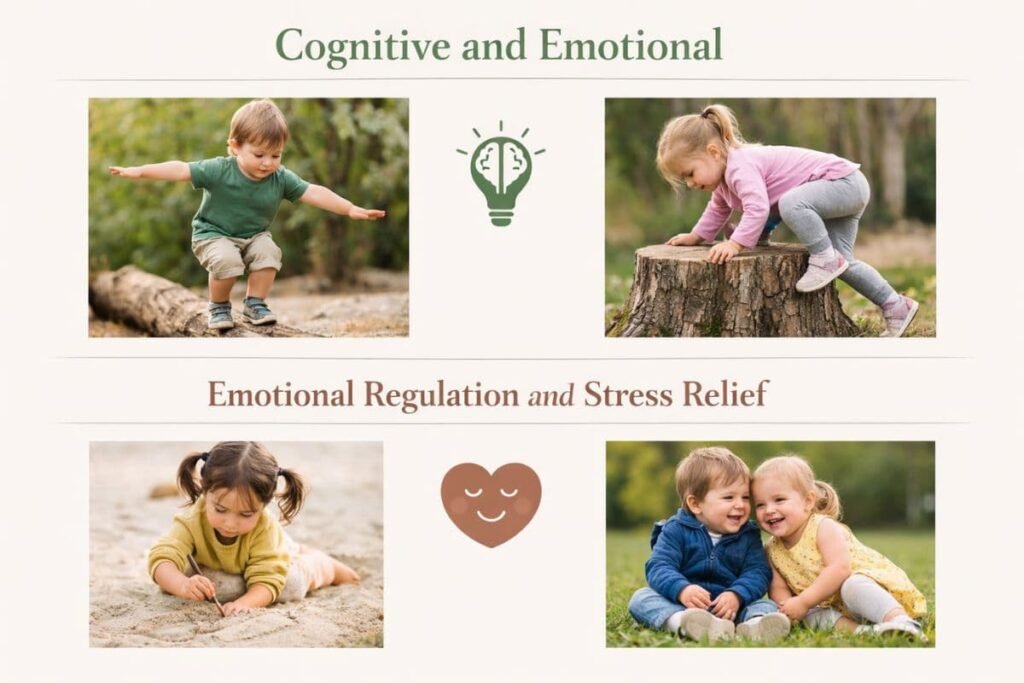
Outdoor environments offer toddlers unstructured play opportunities, where they can engage in problem-solving and critical thinking. For example, figuring out how to balance on a log or how to climb a tree stump requires concentration and creativity. These small challenges help toddlers build cognitive skills that they will use throughout their lives.
- Improved focus and attention: Time spent in nature helps toddlers improve their attention span, which has a lasting effect on their learning ability.
- Cognitive flexibility: As toddlers engage with different natural environments, they develop the ability to adapt to various situations, which builds their problem-solving abilities.
Emotional Regulation and Stress Relief
Outdoor play offers toddlers a safe space to express emotions and manage stress. Whether they are playing with friends or enjoying a solo activity like drawing in the sand, outdoor play helps toddlers practice emotional regulation. Studies have shown that green spaces can reduce stress levels and provide calming effects on children’s moods.
- Improved emotional well-being: Nature helps toddlers calm down and better control their emotions when feeling upset.
- Reduced anxiety and depression: Regular outdoor play can lessen the chances of future mental health issues, such as anxiety and depression, by promoting emotional balance.
Social Benefits
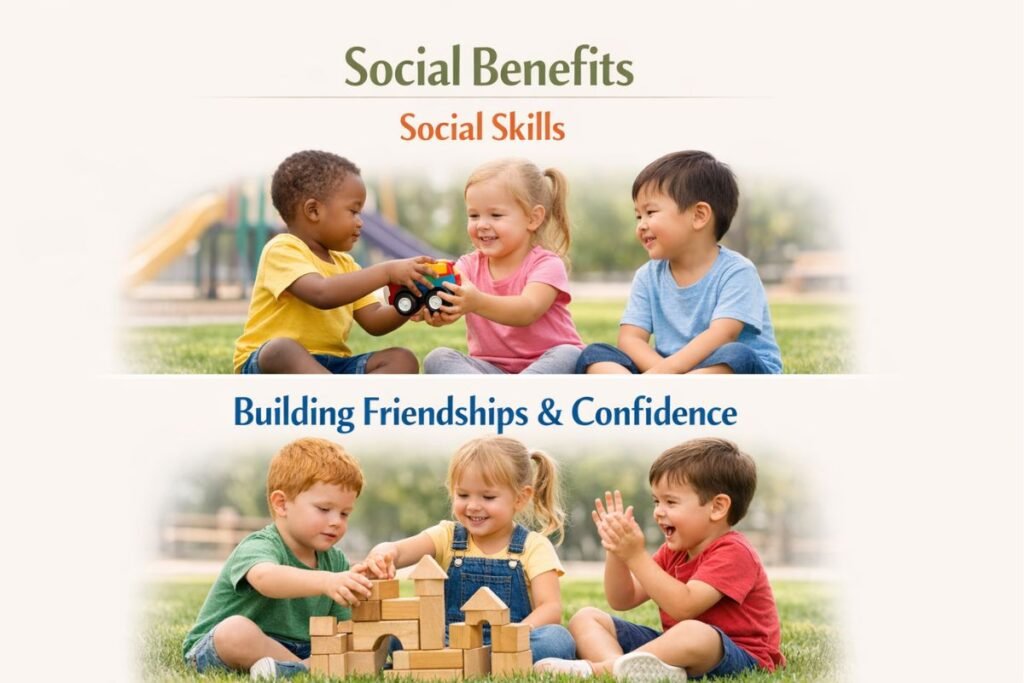
Social Skills
Outdoor play fosters social interactions, teaching toddlers valuable skills like sharing, taking turns, and cooperating. When toddlers play with peers, they have to communicate, solve problems together, and follow rules. These skills form the foundation for building strong friendships and working well with others later in life.
- Learning to cooperate: Sharing toys, negotiating rules, and resolving conflicts are all part of outdoor play, which teaches teamwork.
- Encourages empathy: Outdoor play allows toddlers to connect with their peers on an emotional level, promoting understanding and empathy.
Building Friendships and Confidence
The social nature of outdoor play enables toddlers to build friendships and self-confidence. By interacting with other children, they learn how to navigate social situations and express their needs and feelings in a group setting. These early social experiences have a lasting impact on how they interact with others as they grow.
- Making connections: Engaging in group games or building something together helps toddlers feel connected and accepted by their peers.
- Boosting self-esteem: Successfully participating in group activities helps toddlers feel confident and proud of their social abilities.
How Stimulates Creativity and Imagination
Fosters Imagination
Outdoor environments provide toddlers with endless opportunities for creative exploration. Without the restrictions of structured indoor play, toddlers can use their surroundings to fuel their imagination. A pile of leaves becomes a fort, and a stick turns into a sword. This imaginative play is not only fun, but it also promotes cognitive and emotional development.
- Unstructured play encourages toddlers to come up with their own games and stories, expanding their creative thinking.
- Nature as inspiration: The natural world, including trees, animals, and changing weather, gives toddlers rich materials to explore through pretend play.
Encourages Hands-On Learning
Outdoor play helps toddlers engage in hands-on learning experiences. Whether they’re planting flowers, building a sandcastle, or collecting rocks, these activities foster a sense of curiosity and help toddlers learn about the world around them.
- Sensory experiences: Toddlers interact with the environment through all five senses, which aids in the development of their sensory processing skills.
- Problem-solving: Building structures or creating art from natural materials helps toddlers practice spatial awareness and critical thinking.
Overcoming Challenges
Busy Schedules
Today’s busy lifestyle often leaves parents struggling to make time for outdoor play. However, setting aside even 15-30 minutes a day for outdoor play can significantly impact a toddler’s development. Making outdoor time a regular part of the daily routine, such as after breakfast or before dinner, can create a consistent habit.
- Routine: Make outdoor play part of your daily routine, so it becomes an expected and enjoyable activity for your toddler.
- Flexible scheduling: Even on busy days, try to fit in short bursts of outdoor play, such as a quick walk around the block or playing in the backyard.
Weather Concerns
While some may avoid outdoor play due to weather concerns, it’s possible to make outdoor play enjoyable in any condition. In colder months, toddlers can enjoy snow play, while in rainy weather, they can have fun jumping in puddles or exploring nature with an umbrella.
- Rainy day adventures: Embrace the rain by dressing your toddler in waterproof clothing and exploring puddles or finding slugs and worms.
- Winter play: Encourage activities like snowball fights, building snowmen, or sledding for wintertime fun.
Practical Tips to Encourage
Make it Fun and Engaging
For toddlers to enjoy outdoor play, it’s important to make the experience fun and interactive. Set up simple games, like chasing bubbles, playing with a ball, or organizing a nature scavenger hunt. These activities make outdoor time exciting and help toddlers develop both physically and mentally.
- Be playful: Get involved in the fun by joining your toddler in the outdoor activities.
- Variety: Change up the activities regularly to keep outdoor play fresh and stimulating.
Example
Toddlers are more likely to engage in outdoor play if they see their parents doing the same. Lead by example and take part in outdoor activities together, whether it’s gardening, hiking, or simply walking around the park. When parents join in, toddlers are more likely to adopt the behavior themselves.
- Be active together: Go for walks, play sports, or even have a picnic to make outdoor time enjoyable for everyone.
- Positive reinforcement: Encourage your toddler’s efforts with praise and excitement.
Fun Outdoor Play Ideas
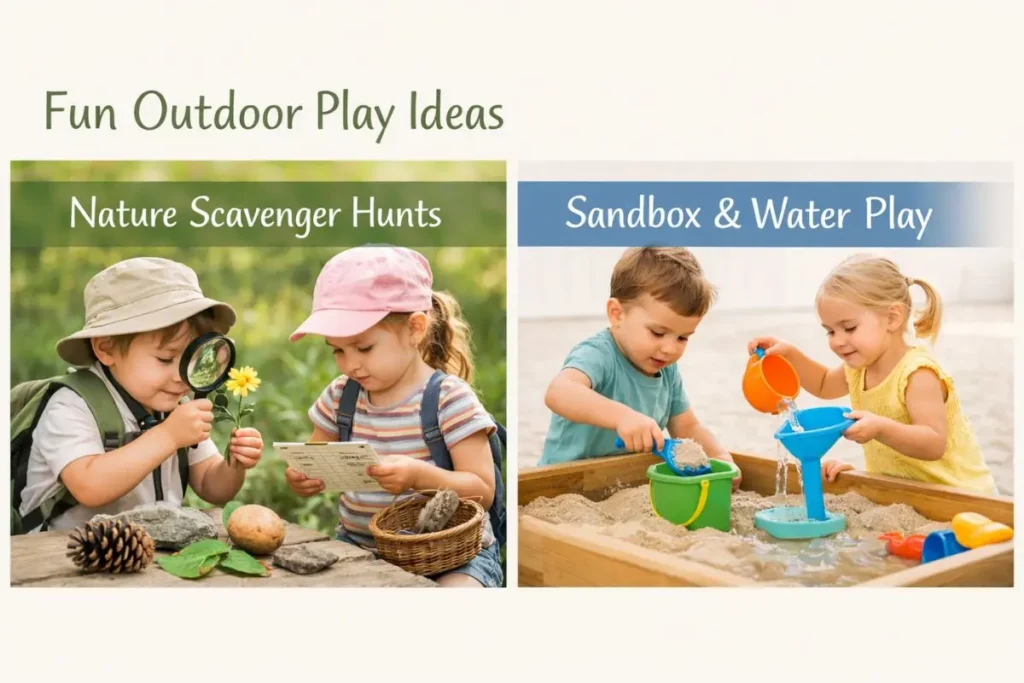
A scavenger hunt is a fun and educational way to engage toddlers in outdoor exploration. Create a list of natural items to find, like a leaf, a flower, or a rock. This encourages toddlers to explore their surroundings and learn about nature.
- Learning opportunity: Toddlers learn to identify plants, animals, and natural objects during the hunt.
- Improves focus: Searching for specific items helps toddlers develop attention skills.
Sandbox and Water Play
Setting up a sandbox or water table gives toddlers the opportunity to explore textures and improve fine motor skills. They can scoop, pour, and mold shapes, enhancing both their creativity and physical coordination.
- Sensory play: Sand and water provide an opportunity for sensory experiences that are crucial for toddler development.
- Outdoor exploration: Playing outdoors in a sandbox or with water provides a hands-on learning experience.
Long-Term Benefits
Healthy Habits for Life
Outdoor play helps toddlers establish lifelong habits of physical activity. Encouraging outdoor play at an early age can lead to healthier lifestyles as they grow into children, teens, and adults.
- Prevents obesity: Daily outdoor play helps fight childhood obesity by encouraging active play.
- Promotes lifelong fitness: Developing active habits early on ensures that toddlers grow up enjoying physical activity.
Positive Mental Health
Long-term, regular outdoor play helps reduce the chances of mental health issues such as anxiety and depression. The benefits of outdoor play, including better sleep and lower stress, continue as toddlers grow into school-age children.
- Reduces stress: Outdoor play in natural environments can have a calming effect on toddlers, helping them cope with anxiety.
- Improves mood: Physical activity outdoors boosts mood and promotes positive emotional health.