Newborn vision is a gradual yet remarkable process, with babies initially experiencing blurry vision and limited visual abilities. At birth, a newborn’s eyesight is far from fully developed, and they can only perceive light, shadows, and high-contrast images. Over the first few months of life, newborn eyesight rapidly improves, with the ability to focus on objects, track movement, and recognize faces. As their eyesight develops, babies begin to see more clearly and distinguish colors.
Understanding the stages of newborn vision and its development is vital for ensuring healthy eyesight. In this article, we will explore essential facts about newborn vision, common milestones, and helpful tips for supporting healthy eyesight during early infancy.
Understanding Newborn Vision
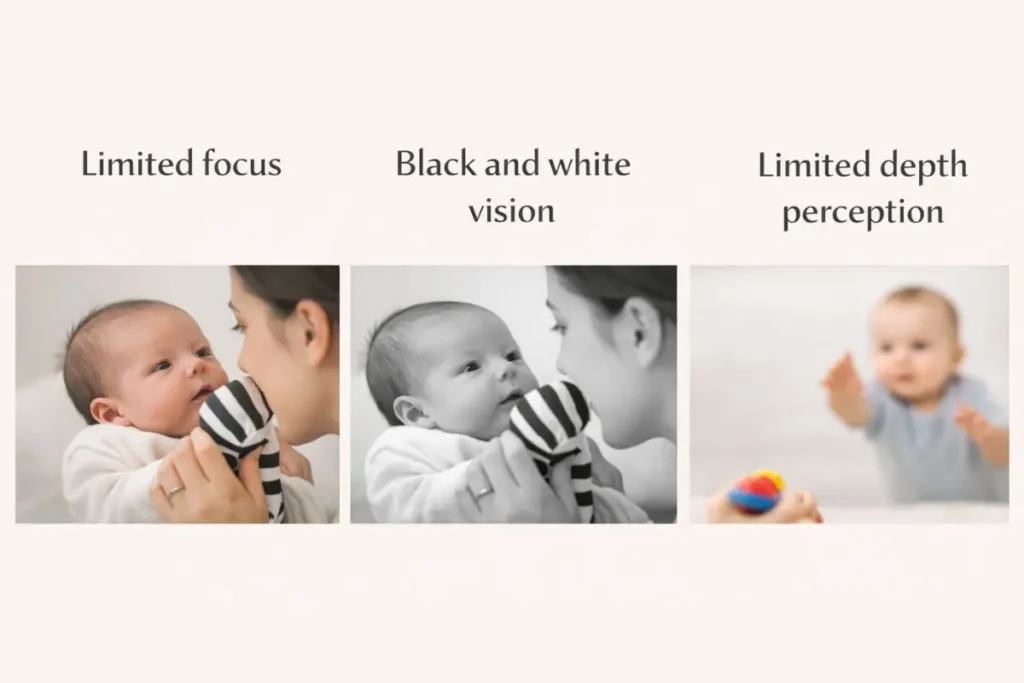
At birth, your baby’s vision is far from perfect. While newborns can detect light and motion, their world is still blurry. Let’s break down the key aspects of a newborn’s vision:
- Limited focus: Newborns can only see objects up to 8-12 inches away, which is the perfect distance for gazing at their parent’s face during feedings.
- Black and white vision: Babies at birth see in shades of black, white, and gray. They can’t distinguish between different colors yet.
- Limited depth perception: At first, babies can’t judge how far away objects are. They rely on their ability to focus on close objects.
Although it seems limited, this early eyesight is essential as it helps your baby bond with caregivers and understand the world around them.
Stages of Newborn Vision Development
Your baby’s vision development progresses quickly during the first year. Here’s a detailed look at how their eyesight evolves:
0-2 Months
In the first two months, a newborn’s vision is still blurry. They can only see things that are close, typically around 8-12 inches away, which allows them to see their parents’ faces clearly during feedings. Their eyes also struggle to focus and move together.
- Focus: They focus on high-contrast objects, like faces and simple patterns.
- Tracking: Babies at this stage may follow an object with their eyes for short distances.
3-5 Months
Around the third month, newborn eyesight begins to improve. Babies start recognizing primary colors, with red being the first they can distinguish. They also begin to develop depth perception, allowing them to judge how far away things are.
- Color recognition: Babies start seeing red, followed by other primary colors.
- Depth perception: They begin understanding the space between objects and how far away they are.
6-9 Months
Between six and nine months, babies’ eyes can focus on objects at various distances. Their ability to track moving objects improves significantly. They can also begin to understand the concept of object permanence, meaning they realize that objects still exist even when out of sight.
- Tracking: Babies can follow moving objects, such as toys or hands.
- Eye coordination: Their eyes start working together better, reducing the likelihood of crossed eyes.
10-12 Months
By the time your baby turns one, they can see full colors and have developed full depth perception. Their eyesight is now almost as good as an adult’s, allowing them to interact with the world in much the same way adults do.
- Full color vision: They can now see all colors and differentiate between them.
- Depth perception: Their ability to gauge distances and depth improves significantly.
Facts About Newborn Vision
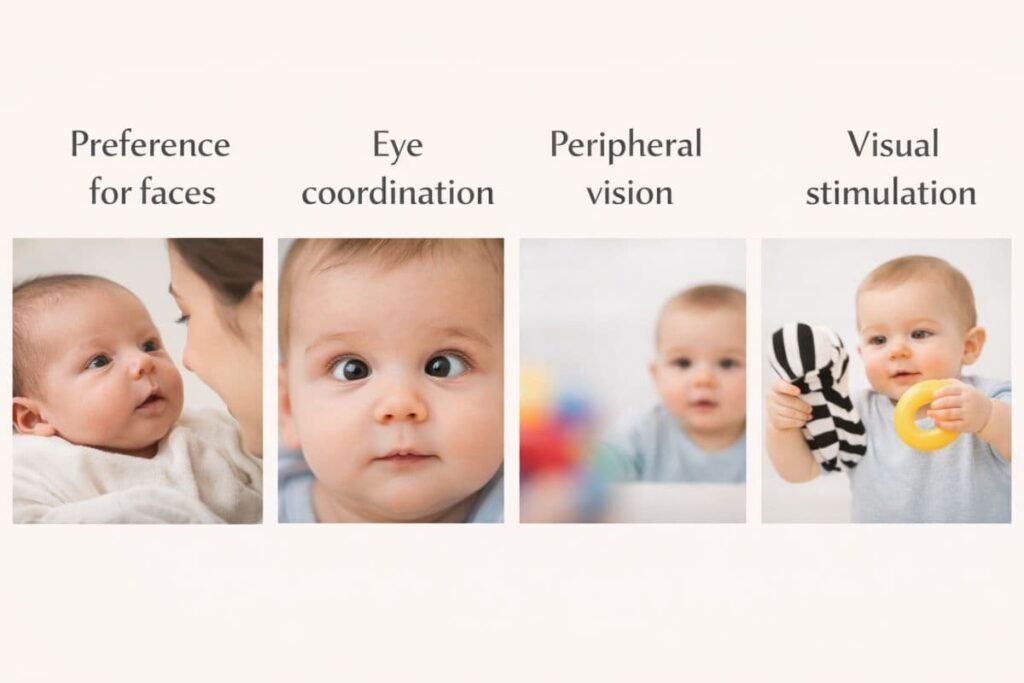
Understanding the facts about newborn eyesight helps you support your baby’s vision development and catch any potential issues early. Here are a few things to keep in mind:
- Preference for faces: Newborns are naturally attracted to human faces. This is critical for social bonding.
- Eye coordination: Babies’ eyes may not work together well in the beginning. It’s common for babies to experience crossed eyes, but this typically resolves as their eyes strengthen.
- Peripheral vision: Newborns can only see things directly in front of them. Their peripheral vision (side vision) develops over time.
- Visual stimulation: Providing your baby with varied visual stimuli, such as bright toys or black-and-white patterns, will help them strengthen their eyesight.
The Importance of Vision in Your Baby’s Growth
Vision plays a pivotal role in your baby’s overall development. From helping them bond with you to supporting physical and cognitive growth, here’s why newborn eyesight matters:
- Cognitive development: As babies begin recognizing faces, objects, and colors, they’re building the brain power needed for learning and interaction.
- Motor skills: Good vision supports the development of motor skills, such as reaching for toys or crawling.
- Social bonding: Babies use their eyesight to connect with caregivers. They learn facial expressions and begin to recognize and respond to different emotions.
- Emotional development: The ability to see and engage with their surroundings helps babies build trust and comfort in the world around them.
Common Issues
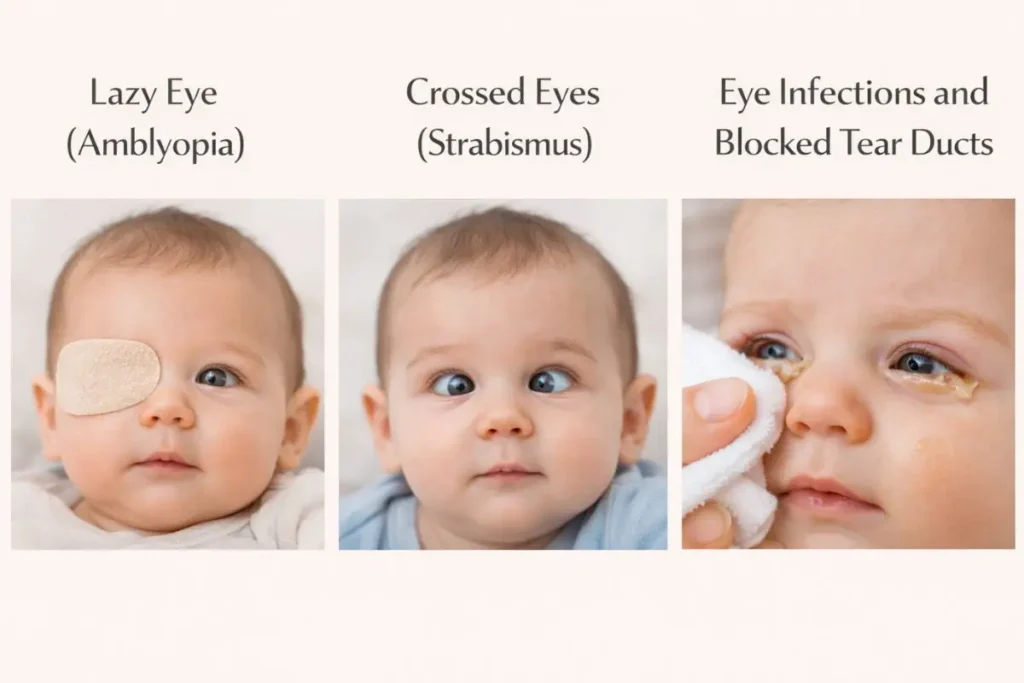
While most babies develop healthy vision, some may experience vision problems. Here are a few common eye issues and signs to watch for:
Lazy Eye (Amblyopia)
Lazy eye, or amblyopia, occurs when one eye doesn’t develop properly. This can result in one eye becoming weaker than the other. Early detection and treatment, often involving corrective lenses or patching the stronger eye, can help improve vision.
- Signs to watch for: A baby who consistently favors one eye, or whose eyes don’t appear aligned.
Crossed Eyes (Strabismus)
At birth, it’s common for babies to have slightly crossed eyes. However, this typically resolves by the time they are 6 months old. If your baby’s eyes continue to cross after this age, it might indicate strabismus, which requires medical attention.
- Signs to watch for: If your baby’s eyes remain crossed after 6 months or appear misaligned.
Eye Infections and Blocked Tear Ducts
Blocked tear ducts are another common issue for newborns. They occur when the tear ducts don’t fully open, causing tears to accumulate and possibly lead to infection.
- Signs to watch for: Yellow or green discharge from the eyes, redness, or swelling.
Genetics, Eye Exams, and Early Detection in Newborn
Genetics play a crucial role in newborn vision development. Certain inherited conditions can affect eyesight, and knowing your family history can be beneficial in understanding potential risks
- Inherited eye conditions: Some babies may be born with conditions like retinopathy of prematurity (ROP) or congenital cataracts, which are passed down through genes.
- Genetic testing: In cases where there is a family history of eye problems, early testing can help detect any issues sooner.
Role of Pediatric Eye Exams
Routine eye exams are essential for ensuring your baby’s vision develops properly. Here’s why they matter:
- Early detection: Regular eye exams help identify problems like lazy eye or strabismus early, which can be treated more effectively.
- Eye health: Pediatricians will check for things like eye infections, blocked tear ducts, and other issues that may affect your baby’s vision.
- Retinal health: Doctors may also check your baby’s retina to ensure there are no underlying health conditions.
Pediatric eye exams are quick and non-invasive, and they can help keep your baby’s eyes healthy as they grow.
Impact of Prematurity
Premature babies often experience challenges with vision development. Since their eyes aren’t fully formed at birth, they are at higher risk for conditions like retinopathy of prematurity (ROP), a condition where blood vessels in the retina grow abnormally.
- Premature eye care: Babies born before 32 weeks of gestation should undergo regular eye screenings to monitor their vision and detect potential problems early.
Nutrition Affects
The right nutrition is essential for your baby’s vision development. Key nutrients like vitamin A, DHA, and essential fatty acids support healthy eye growth and development.
- Vitamin A: Vital for healthy vision and retinal function.
- DHA (Docosahexaenoic acid): A fatty acid that supports brain and eye development, found in breast milk or formula.