
In today’s fast-paced world, family dinner time is more important than ever. It provides an opportunity for families to connect, share their day, and enjoy a meal together. The importance of family dinner time extends beyond just the meal itself. It strengthens family bonds, improves communication, and helps create a sense of security for children. Research has shown that regular family dinners are linked to better mental health, stronger relationships, and even higher academic performance in children.
However, making family dinner time work in today’s busy schedules can be a challenge. By prioritizing family meals, setting a consistent dinner time, and making the experience enjoyable and distraction-free, families can reap the full benefits of this important ritual.
Why Family Dinner Time Matters

Emotional Connection and Bonding
In a world where families are constantly on the go, it’s easy for emotional connections to fade. However, family dinners provide the perfect setting for bonding. When you eat together, you have time to talk, laugh, and listen to each other. This regular interaction fosters family time and helps strengthen emotional connections among family members.
- Active Listening: Family meals allow everyone to share their thoughts, worries, and joys. It builds emotional trust and allows everyone to feel heard.
- Shared Experiences: Whether discussing school, work, or personal achievements, these shared moments foster deeper understanding and a sense of belonging.
As the family gathers around the table, the conversations build stronger relationships, creating a positive emotional atmosphere. Over time, this strengthens family ties and promotes a sense of togetherness.
Academic and Cognitive Benefits for Children
Did you know that children who have regular family dinners tend to perform better academically? Studies have shown that children who eat with their families have better grades, improved problem-solving abilities, and stronger cognitive skills. Here’s how:
- Improved Communication Skills: Family dinner time encourages children to speak up, improving their vocabulary and communication skills. This helps them express themselves clearly both at home and in school.
- Better Focus and Concentration: Eating together as a family also helps children develop better attention spans, which can have a positive effect on their schoolwork.
- Positive Role Modeling: When parents engage in thoughtful conversation, children learn how to communicate in a respectful and productive manner.
Research also shows that children from families who eat together are less likely to engage in risky behaviors, such as substance abuse, and more likely to build healthy relationships with their peers.
Healthy Eating Habits and Nutrition
Family dinners create the perfect opportunity for families to enjoy home-cooked meals filled with nutritious food. Unlike dining out or eating on the go, family meals allow families to make informed decisions about the food they consume. Some benefits of family meals include:
- Balanced Meals: Family dinners often include vegetables, lean proteins, and whole grains. This promotes healthy meals and helps children learn about good nutrition from an early age.
- Increased Fruit and Vegetable Intake: Families who eat together are more likely to consume fruits and vegetables regularly, which is important for both children and adults.
- Family Meal Planning: When everyone contributes to meal planning, families are more likely to choose healthier options.
The Struggles in Modern Life
Busy Schedules and Lack of Time
In today’s world, families have hectic schedules, and finding time to eat together can seem impossible. Between work, school, and extracurricular activities, busy families are often left with little time to spend together. Here are some common hurdles:
- Long Work Hours: Parents often return home late, and children have evening activities, making it difficult to gather for dinner.
- School Projects and Homework: With increasing academic demands, children may have little free time to enjoy family meals.
However, setting a designated family meal time, even if it’s just a few times a week, can help create a routine that families can rely on. You don’t need to have a gourmet meal every night—simple and quick meals can be just as effective.
Distractions from Technology and Devices
In an age of constant notifications, social media, and streaming services, technology distractions can easily interfere with family dinner time. It’s common for family members to be glued to their phones or watching TV during dinner. This leads to disengagement, as people are more focused on their screens than on the conversation.
To address this, consider the following:
- Set Clear Boundaries: Make dinner a phone-free zone. Put devices in another room and turn off the TV to encourage focus on the meal and conversation.
- Create Tech-Free Rituals: Establish traditions such as no phones during dinner or no TV in the dining room, so that everyone can fully engage with each other.
Picky Eaters and Dietary Preferences
Not every family member will enjoy the same types of food. Picky eaters or dietary preferences (vegan, gluten-free, etc.) can make family meal planning challenging. Here’s how to make family meals work for everyone:
- Get Creative with Meal Choices: Try introducing new recipes and variations of familiar dishes. For example, if someone doesn’t like broccoli, try roasting it with different seasonings or making a fun vegetable dip.
- Involve Everyone in Cooking: Get everyone involved in preparing meals. This gives children a sense of ownership over their food, which may make them more willing to try new things.
How to Make Family Dinner Time Work
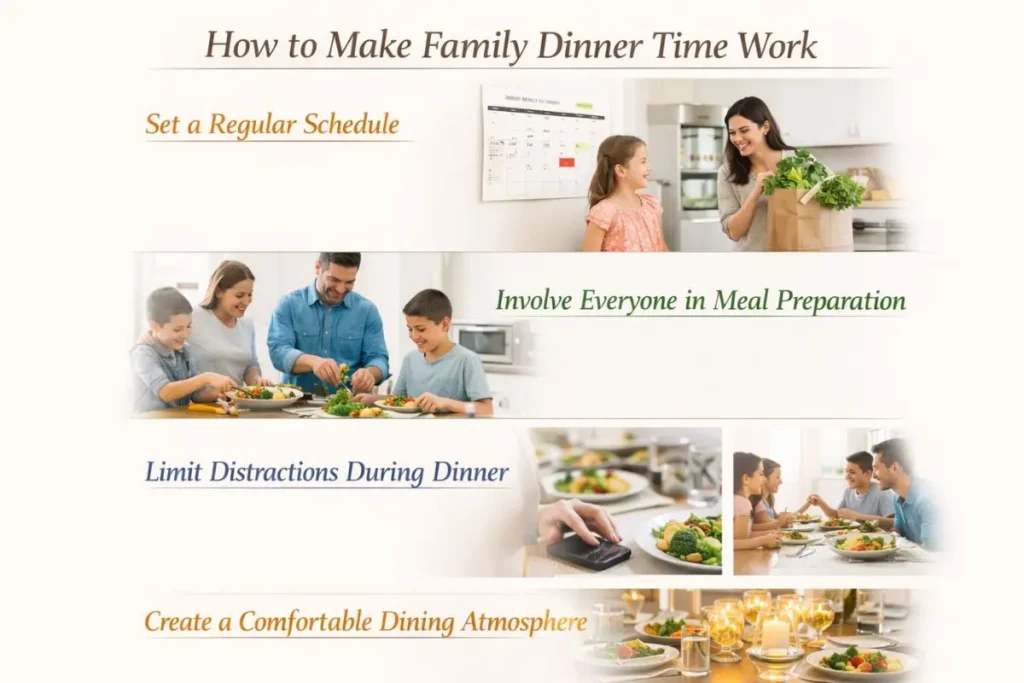
Set a Regular Schedule
One of the best ways to ensure family dinners happen regularly is by scheduling them. When you have a set time each day or week, it becomes part of your family’s routine.
- Start Small: If you’re new to family dinners, start with two or three times a week and gradually increase it as it becomes a habit.
- Plan Ahead: Busy families can benefit from meal planning. Having a set menu for the week helps ensure everyone knows what to expect and saves time when preparing meals.
Involve Everyone in Meal Preparation
Family meal prep can be a fun and educational experience for children and adults alike. When everyone helps, it’s easier to prepare a meal and encourage healthier eating. Here’s why:
- Teaches Responsibility: Children can learn to set the table, wash vegetables, or even help with cooking. These small tasks teach responsibility and teamwork.
- Promotes Bonding: Cooking together gives family members the chance to talk and bond in a relaxed environment. It’s a chance to share stories, make jokes, and build connections.
Limit Distractions During Dinner
Setting aside distractions is key to making family dinner time work. It’s important to create an environment where everyone can connect.
- Enforce Rules: Make it a family rule to avoid phones, tablets, or television during dinner. You can also use this time to share stories, talk about your day, or plan for upcoming events.
- Use Conversation Starters: If dinner conversations tend to stall, use conversation starters to keep things going. For example, ask everyone about their favorite part of the day or what they’re most looking forward to in the coming week.
Create a Comfortable Dining Atmosphere
The dining environment should feel inviting and comfortable for everyone. Here are some ideas to set the tone:
- Set a Relaxing Mood: Dim the lights, add a tablecloth, and use candles to make the dining area feel cozy and welcoming.
- Make It Special: Use fun table settings, unique dinnerware, or a rotating theme to make each dinner special and exciting.
The Science Behind Meals
Family meals aren’t just about tradition—they offer tangible benefits backed by science. Studies have shown that children who eat dinner with their families are less likely to develop mental health issues, engage in risky behaviors, and have better academic performance. These meals contribute to better overall development by creating an emotionally supportive atmosphere.
- Social Benefits: Family meals help teach children how to interact socially, listen actively, and contribute to group conversations.
- Mental Health: Regular family meals help reduce stress levels, anxiety, and feelings of loneliness, especially for teenagers.
How Improves Mental Health

Family dinner time is a protective factor against mental health challenges. Spending quality time together and sharing a meal has been shown to reduce anxiety, help with emotional regulation, and improve overall mental health.
- Support System: Regular meals provide an opportunity to discuss feelings, challenges, and successes, offering emotional support.
- Reduces Stress: Sitting down for a meal without the distractions of work, school, or technology provides a break, allowing everyone to unwind and relax.
Time Traditions Around the World
Around the world, family dinner time varies, but the importance of sitting down together is universal. Different cultures have unique traditions and meal rituals that make family meals special.
- Italy: Families often gather around the table for long, relaxed meals with multiple courses, emphasizing the importance of conversation.
- Mexico: Dinner time is a social event, with the family sitting together to enjoy fresh, homemade meals like tacos or tamales.
- Japan: Dinner is a time to appreciate the seasonality of food and enjoy dishes like sushi or ramen, often shared with multiple family members.
These traditions help build stronger family relationships and provide a sense of security and unity.
Tips for Busy Families
For families with tight schedules, here are some quick dinner tips to make meals more manageable:
- Meal Prepping: Prepare meals in advance on weekends. Chop vegetables, marinate meats, and plan for easy-to-cook meals.
- Quick Recipes: Focus on 30-minute meals or slow cooker options that require minimal hands-on time.
- Take Turns Cooking: Assign different family members to cook, so the responsibility doesn’t fall on one person.